Fronus Titan 24V 100Ah (2.56 kWh LiFePO4)
Rs 120,000 verified 2 Aug 2026 — prices in Pakistan move weekly
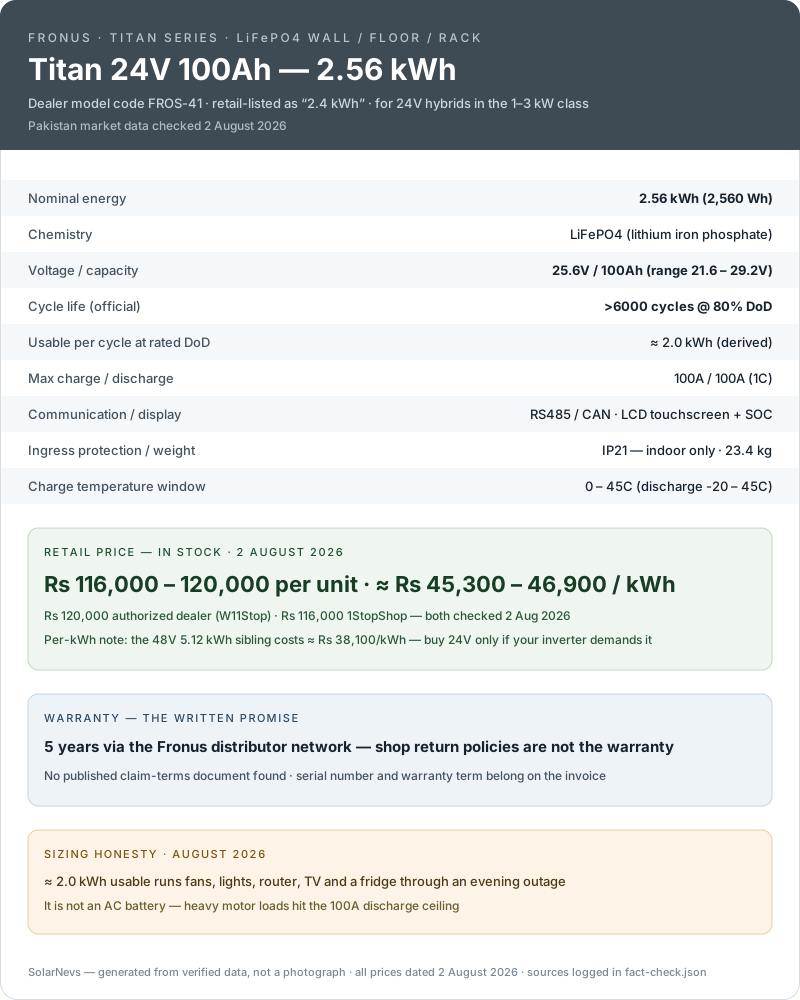
Specifications
| chemistry | LiFePO4 (lithium iron phosphate) |
|---|---|
| nominalEnergy | 2.56 kWh (2560 Wh) — retail-listed as 2.4 kWh |
| nominalVoltage | 25.6V (operating 21.6-29.2V) |
| capacity | 100Ah |
| cycleLife | >6000 cycles @ 80% DoD (official spec page) |
| maxChargeDischarge | 100A / 100A (1C) |
| communication | RS485 / CAN |
| display | LCD touchscreen + status light + SOC indicators |
| ingressProtection | IP21 (indoor) |
| weight | 23.4 kg net |
| dealerModelCode | FROS-41 (W11Stop) |
| Warranty | 5 years per Fronus's official Titan 2.56kW spec page (checked 2 Aug 2026), claimed through the dealer/distributor network. 1StopShop sells it with only a 7-day shop return policy on top — the manufacturer warranty is the one that matters; get it on the invoice. |
The Fronus Titan 24V 100Ah is the small-system entry in Fronus's lithium wall-mount range — a 2.56 kWh nameplate (retailed as 2.4 kWh) LiFePO4 pack for the 24V hybrid inverters that run Pakistan's 1-3 kW budget solar setups. As of 2 August 2026 it costs Rs 120,000 at the authorized dealer and Rs 116,000 at 1StopShop, both in stock.
It is the same story as its 5.12 kWh sibling in a smaller box: SolaX-design hardware under a Pakistani brand, real LiFePO4 chemistry, a 5-year written warranty, and a per-kWh price that — while the cheapest brand-name option at this size — is still meaningfully worse than stepping up to 48V.
Specifications
Spec | Value |
|---|---|
Chemistry | LiFePO4 (lithium iron phosphate) |
Nominal energy | 2.56 kWh (2,560 Wh); retail-listed as 2.4 kWh |
Nominal voltage / capacity | 25.6V / 100Ah |
Operating voltage range | 21.6-29.2V (float 28.8V, cutoff 21.6V) |
Cycle life | >6000 cycles at 80% DoD (official spec page) |
Usable per cycle at rated DoD | ~2.0 kWh (derived: 2.56 x 0.80) |
Max charge / discharge current | 100A / 100A (1C) |
Communication | RS485 / CAN |
Display | LCD touchscreen, status light, SOC indicators |
Ingress protection | IP21 — indoor only |
Operating temperature | Charge 0-45C; discharge -20-45C |
Mounting | Wall / floor / rack |
Weight | 23.4 kg net |
Certifications (listed) | IEC 62477, 62619, 60730, 63056, 61000; UN38.3 |
Warranty | 5 years |
Source: Fronus official Titan 25.6V 2.56kW spec page, checked 2 August 2026. Note the honest wrinkle in the family's cycle ratings: this 24V unit is rated >6000 cycles at 80% DoD while the 48V Titan claims >8000 at only 70% DoD — different promises that retail listings flatten into one "ultra-long cycle life" line.
Honest assessment
Pros. It is the cheapest brand-name LiFePO4 at this size in the market, it carries the same listed IEC 62619/UN38.3 certifications, RS485/CAN ports, and touchscreen as the bigger units, and at 23.4 kg one person can actually mount it. For the huge installed base of 24V Voltronic-family hybrids (including Fronus's own Eco 4200 line), it is a drop-in lithium upgrade path from a dying tubular bank. Delivered-energy math: if the rating held, Rs 120,000 over 6,000 cycles x 2.0 kWh is Rs 10 per kWh delivered; at half the claimed cycles, Rs 20/kWh — still a third of Rs 50-65 evening grid power.
Cons. Per kWh it is poor value next to its own sibling: Rs 46,900/kWh nameplate versus Rs 38,100 for the 48V unit. IP21 restricts it to genuinely dry indoor walls. The 100A ceiling (1C) is fine for essentials but leaves no headroom for motor-start surges on bigger loads. Official documentation is thin — no published parallel-expansion limit or warranty terms document — so any "you can add more later" promise from a dealer needs to be in writing. And as with all Fronus lithium, the design is rebadged SolaX and the warranty entity is the local distributor chain.
Who should buy. Owners of an existing 24V hybrid inverter replacing a tubular bank, or buyers of a deliberately minimal 1-3 kW essentials-only system. Anyone specifying a new system from scratch should compare the total cost of a 48V inverter plus the Titan 48V 100Ah before defaulting to 24V — the per-kWh gap usually pays for the better inverter.
Pakistan reality check
The tubular-upgrade trap. This battery's core market is people replacing 2 x 12V tubular batteries on an existing 24V inverter. That swap fails more often from protocol mismatch than from any hardware fault: an inverter left on tubular charge settings will overcharge lithium, and a BMS that cannot talk to the inverter reports garbage SOC. Our BMS guide documents these failures. Before paying, confirm your inverter model supports this battery via RS485/CAN or has a correct lithium voltage profile — and make the installer demonstrate SOC reporting on the inverter screen at handover.
Heat and placement. Charge window 0-45C per the official spec. Indoor, shaded wall, away from the inverter's own heat exhaust. A west-facing garage wall in Sindh summer will push cell temperature past the comfort zone daily — heat is what actually kills batteries here, not cycling.
Warranty-claim reality. 5 years via the Fronus distributor network; the warranty comparison table explains why the cycle number is not a claimable term. 1StopShop's 7-day return window is a shop policy, not the warranty. Invoice with serial number, compliant installation, and the dealer's name on record — that is the whole claim file. Do the payback math with the 5-year horizon, not the 6,000-cycle one; if it still pays, the cycles are upside.
Sizing honesty. 2.0 kWh usable is an essentials battery. Run through how many kWh you actually need before buying one of these to "run the AC a bit" — it will not, and that mismatch is the most common buyer regret at this size.
Price context vs rivals (August 2026)
Small lithium option | Price (dated) | ~Rs/kWh nameplate |
|---|---|---|
Fronus Titan 24V 100Ah (2.56 kWh) | Rs 116,000-120,000 (2 Aug 2026) | 45,300-46,900 |
Fronus Titan 48V 100Ah (5.12 kWh) | Rs 185,000-195,000 (2 Aug 2026) | 36,100-38,100 |
Fronus VRLA tubular 12V 220Ah x2 in series (5.28 kWh nameplate, roughly half usable at tubular-safe DoD) | Rs 137,800/pair (W11Stop, 2 Aug 2026) | ~26,100 nameplate — cheap on paper, far worse per delivered kWh once DoD and cycle life are priced in |
Knox / Dyness / Pylontech 5.12 kWh class | Rs 227,000-310,000 (14 Jul 2026) | 44,300-60,500 |
There is no meaningful brand-name 2.5 kWh lithium competition at this price — the real competitors are a pair of tubulars (Fronus's own 220Ah pair actually costs more upfront than this battery; cheaper generic tubular pairs exist, but all of them are brutal on the Rs-per-cycle math) and Fronus's own 48V unit (better value if your inverter allows it). See the Fronus hub for the full lineup and the rebadging story.
Frequently asked questions
What is the Fronus Titan 24V 100Ah battery price in Pakistan today?
Rs 120,000 at Fronus's authorized dealer W11Stop (listing stamped "updated on August 2, 2026", in stock) and Rs 116,000 at 1StopShop, checked the same day. Both are single-unit retail prices.
Is it 2.4 kWh or 2.56 kWh?
Nameplate is 2,560 Wh (25.6V x 100Ah) per Fronus's official spec page; W11Stop retails it as "2.4 kWh". At the official 80% depth-of-discharge rating, usable energy per cycle is about 2.0 kWh — that is the number to size against, not either headline figure.
What can 2.56 kWh actually run during load shedding?
On a 24V hybrid in the 1-3 kW class it covers the classic essentials load — fans, lights, router, TV, one refrigerator — for a typical evening outage at roughly 2 kWh usable. It is not an AC battery, and heavy motor loads will hit the 100A discharge ceiling.
Why is the 48V Titan better value per kWh?
The 24V unit costs about Rs 46,900 per nameplate kWh (Rs 120,000 / 2.56) against roughly Rs 38,100 for the 48V 5.12 kWh unit. Small batteries always carry a packaging premium. Buy the 24V only because your existing inverter is 24V — if you are buying both new, a 48V inverter plus the 5.12 kWh unit is the better system.
How long will it last in Pakistani conditions?
The official rating is >6000 cycles at 80% DoD with a 5-year written warranty. The charge window tops out at 45C on the official spec, so an indoor, shaded mounting spot matters more than any spec number. There is no independent long-term field data on Fronus packs yet — the written 5 years is the promise to price against.
References
- W11Stop — Titan 2.4kWh 24V 100Ah product page — accessed 2 Aug 2026
- W11Stop — Fronus brand catalogue — accessed 2 Aug 2026
- Fronus official — Titan 25.6V 2.56kW spec page — accessed 2 Aug 2026
- 1StopShop — Fronus Titan 24V 100Ah — accessed 2 Aug 2026
- SolaX Power official — Triple Power battery line — accessed 2 Aug 2026