Solar Installation Checklist. 40 Points to Verify
Updated 2 August 2026 · By SolarNevs Research Desk, Dealer surveys + verified sources · 3 sources · Method ↗
Solar Installation Checklist for 40 Verification Points
{/* visual_plan. checklist */}
Key Takeaways
- Verify DC and AC Surge Protection Devices (SPDs) and dual earthing pits before approving final contractor payments.
- Scan tier-1 panel serial barcodes using manufacturer mobile apps to verify authentic A-grade warranty coverage.
- Ensure mounting structure gauge meets minimum 14-gauge galvanized iron specifications anchored with chemical bolts.
- Confirm DC copper cable sizing meets 6mm sq standards protected within UV-resistant conduit pipes.
- Verify earthing pit resistance measures below 5 ohms using calibrated earth testers.
What are the critical DC and AC electrical safety points on the checklist?
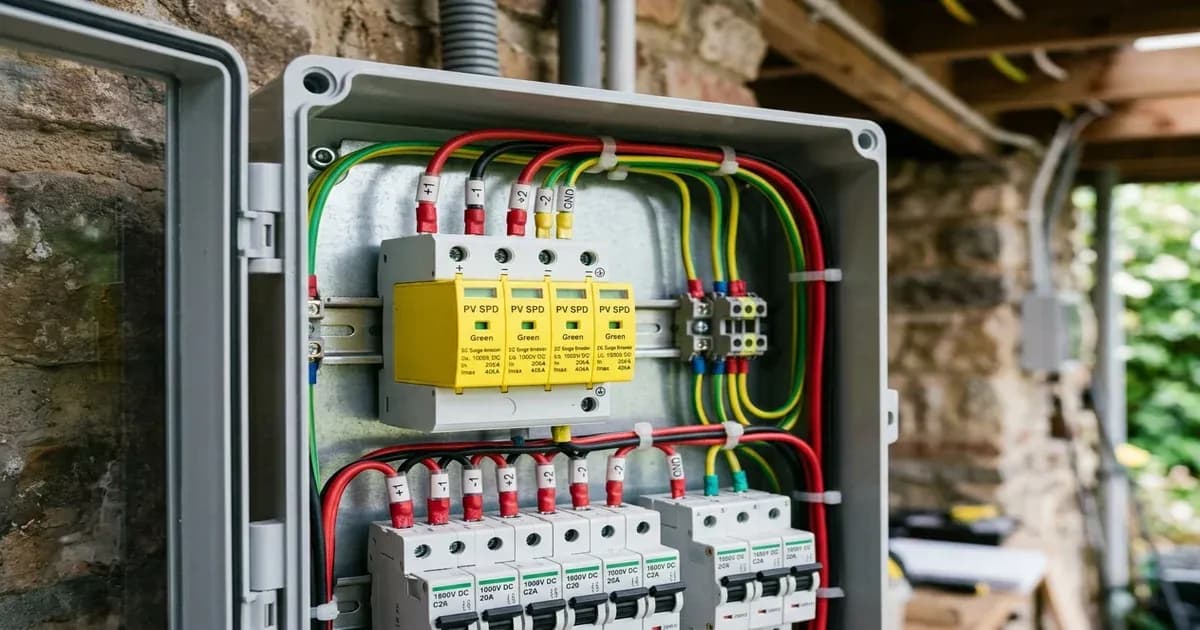
Electrical safety represents the most critical aspect of any solar installation. Homeowners must physically verify protection components before signing project sign-off documents.
The installation must feature separate DC and AC breaker distribution boxes. DC breaker boxes isolate high-voltage solar panel strings, while AC breaker boxes protect the inverter connection to your main distribution board.
Class II Surge Protection Devices (SPDs) must be installed on both DC and AC sides, costing around Rs 25,000 to Rs 35,000 (July 2026) in quality turn-key packages. SPDs divert voltage spikes caused by lightning strikes directly to ground.
How should panel mounting structures and tilt angles be inspected?
Mounting structures support solar panel arrays against heavy monsoon wind uplift. Homeowners should verify that structure steel sections feature hot-dip galvanization to prevent rust corrosion.
The mounting frame must be anchored into concrete roof pillars using chemical anchor bolts rather than rawl plugs. Frames should be tilted southward at an angle of 25 to 30 degrees to maximize annual solar capture in Pakistan.
The table below summarizes key structural inspection criteria.
Structural Property | Minimum Specification | Verification Method | Common Failure Risk |
|---|---|---|---|
Frame Material | 14-Gauge Galvanized Iron | Gauge Meter or Magnet Test | Premature Rust and Bending |
Anchor Bolts | Chemical Anchor M12 Bolts | Physical Bolt Inspection | Roof Detachment in Storms |
Solar Tilt Angle | 25° to 30° South Facing | Solar Compass or Inclinometer | 15% Reduced Annual Output |
Cable Conduit | UV-Resistant Corrugated Pipe | Visual Inspection | Cable Degradation from Sun |
What earthing pit and lightning protection requirements must be verified?
A professional solar installation requires dual independent earthing pits. one dedicated to DC solar array frames and lightning spikes, and one dedicated to AC inverter grounding.
Earthing pits use 10-foot chemical copper bonded rods embedded in conductive salt and charcoal mixture. Total electrical resistance across earthing pits must measure below 5 ohms.
Installers should demonstrate earthing resistance values using a digital earth resistance meter during commissioning handover testing.
What inverter configuration and battery safety checks are required before handover?
Before finalizing payment, homeowners must verify inverter operating parameters and battery communications.
Inspect the inverter display to confirm that grid voltage limits, battery charging currents, and MPPT operating voltages match manufacturer specifications. For hybrid installations, verify that battery management system (BMS) communications function without warning alarms.
Test emergency backup transition by turning off main utility grid breakers. The hybrid inverter must seamlessly switch household backup circuits to battery power within 10 milliseconds.
The complete 40-point verification checklist summary for Pakistani solar owners
Review the following 40-point inspection summary before making final contractor payments. 1. Panel barcode serial numbers verified on manufacturer app.
- Zero physical glass cracks or frame scratches on solar modules.
- Panels mounted facing south at 25-30 degree tilt angle.
- Mounting frame constructed from 14-gauge galvanized iron.
- Chemical anchor bolts used for roof slab fixing.
- Structure rust protection applied to all cut edges.
- DC copper cables sized at 6mm sq minimum rating.
- Cable runs encased in UV-resistant conduit piping.
- MC4 connectors crimped with professional solar tools.
- Drip loops installed where cables enter building walls.
- DC isolator switch installed near solar inverter.
- Class II DC Surge Protection Device (SPD) present.
- Class II AC Surge Protection Device (SPD) present.
- AC circuit breaker matched to inverter output rating.
- Main distribution board connected via copper wiring.
- Dual independent earthing pits installed.
- Earthing pit resistance measured below 5 ohms.
- Copper earthing strip connected to panel frames.
- Inverter mounted in shaded, well-ventilated space.
- Inverter clearance space matches manual guidelines.
- Inverter firmware updated to latest release.
- Grid overvoltage disconnect parameters calibrated.
- Inverter monitoring Wi-Fi dongle connected to home router.
- Monitoring app account setup with owner email.
- Battery cables sized at 35mm sq or 50mm sq copper.
- Battery DC isolator breaker installed.
- BMS communication cable connected to hybrid inverter.
- Battery installed on insulated rubber mat base.
- Emergency backup changeover switch operational.
- Grid trip test verified under load conditions.
- Neutral-earth voltage gap measured below 2V AC.
- All distribution box terminals torque tightened.
- Danger warning labels affixed to high-voltage boxes.
- Single-line diagram (SLD) provided by contractor.
- As-built wiring schematic delivered in project folder.
- Warranty certificates stamped by authorized dealer.
- LESCO net billing application file copy handed over.
- Installer 1-year free workmanship warranty signed.
- Roof area cleaned and construction debris removed.
- Final invoice itemization verified against contract quote.
Frequently Asked Questions
What are the most critical items on a solar installation checklist?
Critical inspection points include verifying panel barcode serial numbers, checking DC/AC Surge Protection Devices (SPDs), inspecting mounting structure gauge, and measuring earthing pit resistance.
What earthing resistance level is acceptable for a solar system in Pakistan?
Earthing resistance for solar installations must measure below 5 ohms on a calibrated earth resistance meter to ensure safety against short circuits and lightning strikes.
Why is panel tilt angle verification important during solar installation?
Verifying optimal panel tilt (25 to 30 degrees south) ensures maximum annual solar generation and allows natural rainwater cleaning of dust.
References
Frequently asked questions
What are the most critical items on a solar installation checklist?
Critical inspection points include verifying panel barcode serial numbers, checking DC/AC Surge Protection Devices (SPDs), inspecting mounting structure gauge, and measuring earthing pit resistance.
What earthing resistance level is acceptable for a solar system in Pakistan?
Earthing resistance for solar installations must measure below 5 ohms on a calibrated earth resistance meter to ensure safety against short circuits and lightning strikes.
Why is panel tilt angle verification important during solar installation?
Verifying optimal panel tilt (25 to 30 degrees south) ensures maximum annual solar generation and allows natural rainwater cleaning of dust.
References
- Solar Citizen — accessed 25 July 2026
- W11Stop — accessed 25 July 2026
- NEPRA — accessed 25 July 2026
Related guides
More from sizing, net billing & installation.