Solar panel price history Pakistan 2022–2026 (the Rs 92→27→45/W story
Updated 2 August 2026 · By SolarNevs Research Desk, Dealer surveys + verified sources · 4 sources · Method ↗
Solar Panel Price History Pakistan
{/* visual_plan: stat_block */}
Key Takeaways
- The peak price was Rs 92 (July 2026) per watt in 2022 due to import constraints.
- The price dropped to an all-time low of Rs 27 (July 2026) per watt in 2024 due to global oversupply.
- Prices stabilized at around Rs 45 (July 2026) per watt in 2026 due to the 10% import GST.
- Serial verification via official barcodes is essential to prevent grey market warranty rejection.
What is the solar panel price history in Pakistan from 2022 to 2026?
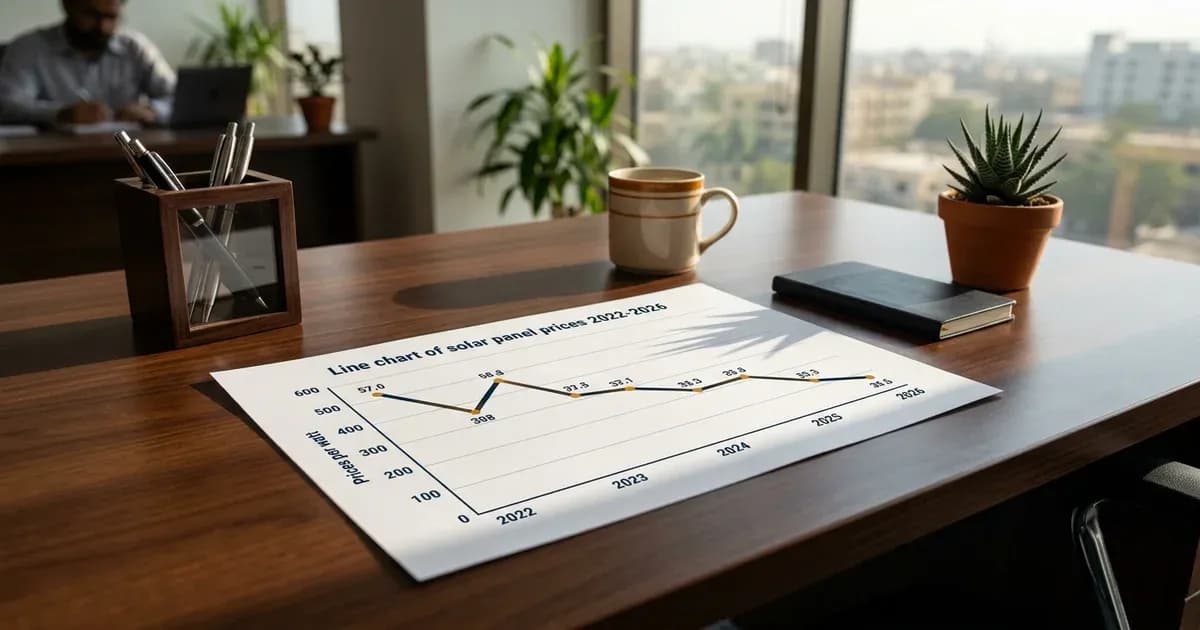
The solar panel price history in Pakistan reflects standard global supply dynamics and local currency shifts. In 2022, strict import limits and dollar shortages caused prices to rise, reaching a peak of around Rs 92 (July 2026) per watt. This high rate meant a standard residential panel cost more than Rs 50,000 (July 2026).
By 2024, global silicon manufacturing capacity expanded, leading to a worldwide supply surplus. This glut caused local rates to fall to an all-time low of Rs 27 (July 2026) per watt. In 2026, the market stabilized around Rs 45 (July 2026) per watt, largely due to the implementation of the 10% general sales tax on solar imports.
Year | Market Condition | Price per Watt | Panel Price (585W) |
|---|---|---|---|
2022 | Import limits / USD shortage | Rs 92 | Rs 53,820 |
2024 | Global supply surplus | Rs 27 | Rs 15,795 |
2026 | GST implementation | Rs 45 | Rs 26,325 |
Figures as of July 2026.
Why did prices drop to all-time lows in 2024?
The price drop in 2024 was caused by a combination of global manufacturing growth and high inventory levels in local warehouses. Chinese cell factories produced more panels than global markets could absorb, pushing wholesale prices down.
Local distributors in Pakistan had ordered large volumes of panels when import regulations eased. The sudden arrival of these shipments created a supply glut, forcing dealers to sell inventory near cost to maintain cash flow.
This period of low prices accelerated residential solar adoption across Punjab and Sindh, as payback periods shortened to less than three years.
What factors shape historical price shifts in the local market?
Several local and global factors influence the retail cost of panels in Pakistan. The Finance Act 2025 applied a 10% general sales tax to solar imports, raising the final cost for retail consumers. This import tax is fully integrated into current dealer price lists.
China manufacturing supply levels remain the largest driver of wholesale rates. Since standard cells are produced in China, global supply surpluses keep raw import prices low. However, local cargo handling fees and shipping container rates can fluctuate, altering local rates weekly.
Local dollar liquidity also shifts retail prices. Because import letters of credit are settled in US dollars, any change in the exchange rate shifts the local rupee price list. When the local currency stabilizes, panel costs remain predictable.
How does net billing alter your solar investment returns over time?
The current NEPRA net billing rules have changed the return on investment math for solar systems. Exporting excess power to the national grid pays around Rs 11 (July 2026) per kWh. Meanwhile, purchasing grid electricity costs between Rs 50 and Rs 65 (July 2026) per kWh, depending on consumption brackets.
This rate gap makes storing generated energy highly beneficial. Simply exporting excess power is no longer as profitable as it was under the old net metering rules. Homeowners install battery storage to hold daytime generation for use at night, reducing utility purchases.
Tubular battery setups offer a cheaper entry cost but require replacement within a few years. Lithium batteries demand higher upfront investments but supply better cycle lifetimes and efficiency in warm weather. Choosing the correct battery capacity helps maximize the value of your solar plate system.
How can you verify original panels in local retail stores?
Verifying the authenticity of panels is necessary to secure official warranty coverage. The grey market contains many copycat or B-grade panels that do not carry manufacturer warranties. Distributors have established online portals for barcode verification.
Every original panel has a unique barcode sealed under the front glass and printed on the frame label. Buyers must scan this barcode using the official mobile tool before accepting delivery. The portal will confirm if the module is a genuine Tier-1 product registered for the Pakistani region.
Purchasing from authorized dealers is the best way to avoid fake modules. Authorized distributors supply original packaging and warranty certificates that are accepted by local service centers.
Where are the primary wholesale markets for solar equipment?
Lahore hosts the largest retail market for equipment in Punjab. Hall Road features numerous specialized retailers and distributors who compete directly on price. This competition keeps profit margins low, helping retail customers find competitive deals.
Karachi houses major import storage depots near the port, making it a key distribution center for Sindh and Balochistan. Dealers in Karachi purchase inventory directly from shipping containers, ensuring fresh manufacturing batches.
Before shopping, buyers should research current retail price guides online. Understanding baseline per-watt costs helps consumers avoid counterfeit deals or inflated retail markups.
What was the highest solar panel price in Pakistan?
The highest solar panel price in Pakistan was around Rs 92 per watt in 2022 (July 2026).
What was the lowest solar panel price in Pakistan?
The lowest solar panel price in Pakistan dropped to around Rs 27 per watt in 2024 (July 2026).
What is the net billing export rate for solar systems in Pakistan?
Under the NEPRA prosumer rules, the export rate is around Rs 11 per kWh (July 2026).
References
Frequently asked questions
What was the highest solar panel price in Pakistan?
The highest solar panel price in Pakistan was around Rs 92 per watt in 2022 (July 2026).
What was the lowest solar panel price in Pakistan?
The lowest solar panel price in Pakistan dropped to around Rs 27 per watt in 2024 (July 2026).
What is the net billing export rate for solar systems in Pakistan?
Under the NEPRA prosumer rules, the export rate is around Rs 11 per kWh (July 2026).
References
- Solar Citizen — accessed 25 July 2026
- W11Stop — accessed 25 July 2026
- NEPRA — accessed 25 July 2026
- FBR — accessed 25 July 2026
Related guides
More from solar & panel prices in pakistan.