Solar Plate Price in Pakistan
Updated 2 August 2026 · By SolarNevs Research Desk, Dealer surveys + verified sources · 4 sources · Method ↗
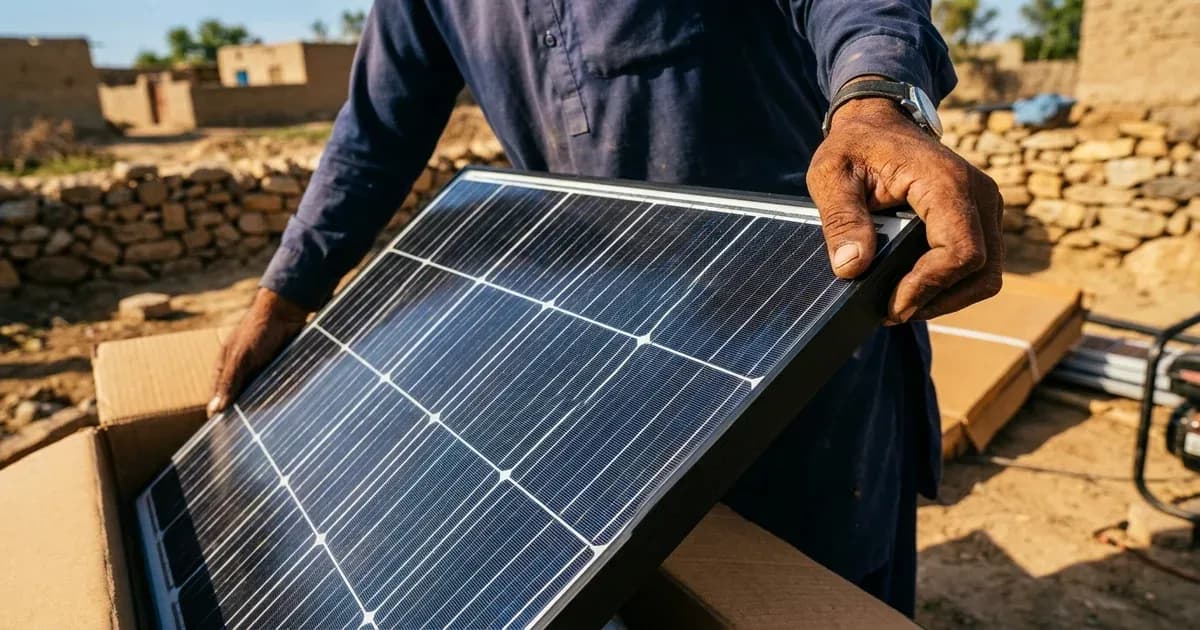
Solar Plate Price in Pakistan
{/* visual_plan: stat_block */}
Key Takeaways
- The current retail rate for solar plates ranges from Rs 39 to Rs 46 (July 2026) per watt.
- Single premium 585W solar plates cost between Rs 22,815 and Rs 26,910 (July 2026) in local markets.
- The term solar plate is the standard local vernacular for solar panels in Pakistani retail hubs.
- New net billing rules export electricity at Rs 11 (July 2026) per kWh, making storage systems essential.
What is the current solar plate price in Pakistan today?
The solar plate price in Pakistan today ranges from Rs 39 to Rs 46 (July 2026) per watt for premium N-type TOPCon modules. This retail rate structure means that a standard 585W solar plate costs between Rs 22,815 and Rs 26,910 (July 2026). The local retail market uses the term plate interchangeably with panel, especially among local electrical traders and buyers.
For residential buyers comparing equipment, understanding the per-watt rate is the most reliable way to calculate costs. Budget-friendly solar plates, including older PERC designs, retail at lower rates from Rs 38 to Rs 42 (July 2026) per watt. High-efficiency segments, such as Heterojunction solar plates, occupy the premium tier, reaching up to Rs 46.2 (July 2026) per watt. The table below outlines the current market rates.
Technology Type | Cell Structure | Price per Watt | Plate Price (585W) |
|---|---|---|---|
Premium Tier | HJT / HPBC | Rs 41 to Rs 46.2 | Rs 23,985 to Rs 27,027 |
Standard Tier | N-Type TOPCon | Rs 39.3 to Rs 43.45 | Rs 22,990 to Rs 25,418 |
Budget Tier | PERC / Poly | Rs 38 to Rs 42 | Rs 22,230 to Rs 24,570 |
Figures as of July 2026.
How much do Tier-1 solar plates cost per brand?
Premium Tier-1 solar plates are highly sought after in local markets due to their efficiency and performance. A Jinko Tiger Neo 585W solar plate costs Rs 25,418 (July 2026) in typical retail outlets. Jinko utilizes advanced N-type TOPCon cell technology, which provides superior generation in hot summers and offers a long product lifespan.
A LONGi Hi-MO X7 585W solar plate is priced at Rs 26,796 (July 2026) in major retail stores. LONGi plates feature specialized structural coatings that resist dust accumulation, a common issue in dry regions. JA Solar DeepBlue 4.0 solar plates of similar capacity retail for Rs 24,650 (July 2026). Trina Vertex N 585W plates cost Rs 24,657 (July 2026). Canadian Solar TOPCon 585W plates retail for Rs 26,680 (July 2026).
Verifying the authenticity of solar plates is vital for buyers. Many substandard or re-labeled plates are sold at discount rates in local markets. Homeowners should request original tax invoices and verify serial barcodes on the manufacturer portals before making payments.
What factors drive solar plate prices in the local market?
Several economic elements shape the final retail cost of solar plates. The Finance Act 2025 applied a 10% general sales tax to solar plate imports, which led to a minor rise in retail costs. This tax is now factored into all official price lists.
China manufacturing supply levels also play a major role. Because Chinese factories produce the vast majority of global solar plates, high output has helped keep import costs low. However, local shipping and transport logistics can offset these global price drops. Local distributors adjust their lists weekly to match these shipping changes.
Rupee exchange rate stability is another critical variable. Because equipment is imported using US dollars, changes in the USD-PKR rate shift local retail costs quickly. When the exchange rate remains steady, local prices stabilize, whereas currency drops result in immediate price rises.
How does net billing impact your solar plate investment?
The transition from net metering to net billing has changed how consumers calculate their payback periods. Under the NEPRA prosumer regulations of 2026, electricity exported back to the grid from solar plate systems receives around Rs 11 (July 2026) per kWh. However, buying power from the grid costs between Rs 50 and Rs 65 (July 2026) per kWh depending on monthly slab consumption.
This rate gap makes storing generated energy highly beneficial. Simply exporting excess power is no longer as profitable as it was under the old system. Homeowners use battery storage systems to hold daytime generation for use at night, reducing utility purchases.
Tubular battery setups offer a cheaper entry cost but require replacement within a few years. Lithium batteries demand higher upfront investments but supply better cycle lifetimes and efficiency in warm weather. Choosing the correct battery capacity helps maximize the value of your solar plate system.
How can you select the right solar plates for your system?
Choosing the correct solar plates involves comparing different cell technologies and performance specs. N-type TOPCon technology is generally superior to older PERC designs because it retains higher output levels when ambient temperatures rise.
Selecting the right plate wattage is also important. Residential roofs commonly use 585W plates because they balance size and power output. Larger commercial setups often choose plates over 650W to simplify mounting structures.
System design must take local dust and heat into account. Regular cleaning is needed because dust blocks sunlight and lowers power output. Buyers should select plates with low temperature coefficients to ensure stable power generation during summer peaks.
Where are the primary solar plate retail centers located?
Lahore is the primary commercial hub for solar equipment in Punjab. Hall Road features numerous specialized retailers and distributors who compete directly on price. This competition keeps profit margins low, helping retail customers find competitive deals.
Karachi houses major import storage depots near the port, making it a key distribution center for Sindh and Balochistan. Dealers in Karachi purchase inventory directly from shipping containers, ensuring fresh manufacturing batches.
Before shopping, buyers should research current retail price guides online. Understanding baseline per-watt costs helps consumers avoid counterfeit deals or inflated retail markups.
What is the average solar plate price in Pakistan today?
The average solar plate price in Pakistan today ranges from Rs 39 to Rs 46 per watt (July 2026), depending on the manufacturer and model.
How much does a 585W Jinko solar plate cost?
A 585W Jinko Tiger Neo solar plate costs approximately Rs 25,418 (July 2026) in local retail markets.
What is the NEPRA export rate for solar plate systems?
Under the 2026 NEPRA rules, solar systems under net billing export power to the grid at around Rs 11 per kWh (July 2026).
References
Frequently asked questions
What is the average solar plate price in Pakistan today?
The average solar plate price in Pakistan today ranges from Rs 39 to Rs 46 per watt (July 2026), depending on the manufacturer and model.
How much does a 585W Jinko solar plate cost?
A 585W Jinko Tiger Neo solar plate costs approximately Rs 25,418 (July 2026) in local retail markets.
What is the NEPRA export rate for solar plate systems?
Under the 2026 NEPRA rules, solar systems under net billing export power to the grid at around Rs 11 per kWh (July 2026).
References
- Solar Citizen — accessed 25 July 2026
- W11Stop — accessed 25 July 2026
- NEPRA — accessed 25 July 2026
- FBR — accessed 25 July 2026
Related guides
More from solar & panel prices in pakistan.