Solar for Mosques and Schools in Pakistan: Government Programs
Updated 15 September 2026 · By SolarNevs Research Desk, Dealer surveys + verified sources · 2 sources · Method ↗
Key Takeaways
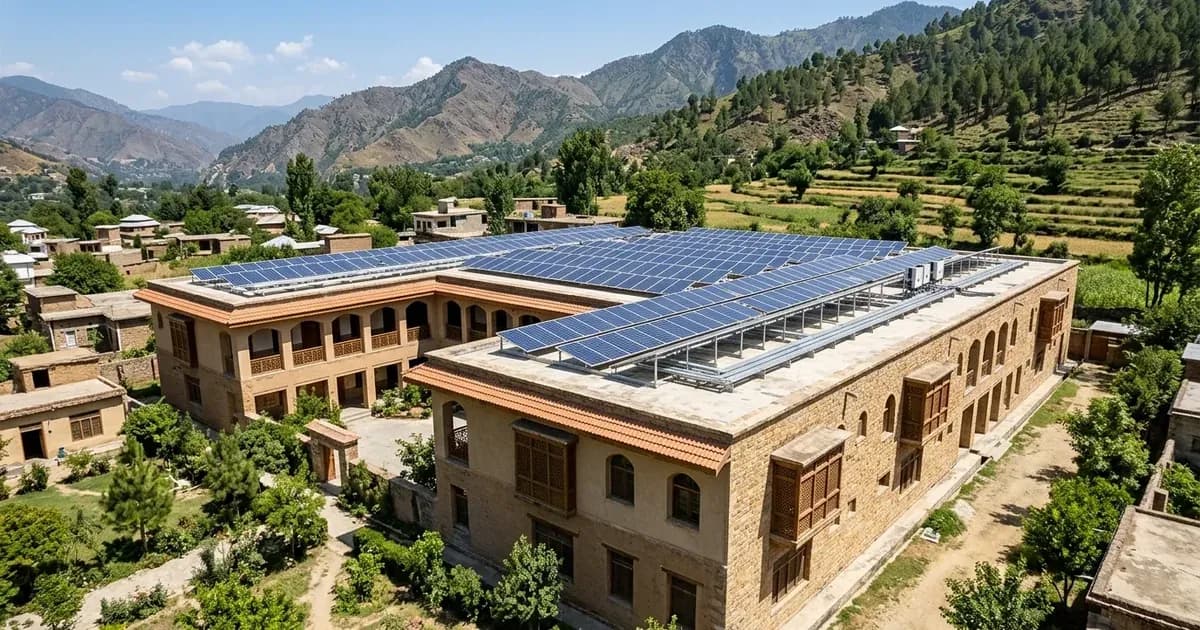
- The Pakhtunkhwa Energy Development Organization (PEDO) manages the "Solarization of 2000 Masajid in Merged Area" program in Khyber Pakhtunkhwa.
- The Sindh Solar Energy Project (SSEP) includes a "Distributed Solar" component for public sector buildings, including schools and health facilities.
- Specific application processes for institutional solar programs are often not published online; direct contact with the provincial energy department is typically required.
- We read the official websites of PEDO and SSEP on 26 August 2026 to gather this information.
Are there government solar programs for mosques and schools in Pakistan?
Yes, provincial governments in Pakistan have initiated specific programs to solarize mosques, schools, and other public sector buildings. These initiatives are distinct from household solar schemes and are managed by provincial energy development organizations. For example, the Pakhtunkhwa Energy Development Organization (PEDO) in Khyber Pakhtunkhwa is implementing the "Solarization of 2000 Masajid in Merged Area" program. Similarly, the Sindh Solar Energy Project (SSEP) includes a component for installing solar PV systems on public sector buildings across Sindh Province.
What the programs actually are
These programs are government-led initiatives aimed at providing solar power to public institutions. They typically focus on increasing energy access, reducing electricity costs for public facilities, and promoting renewable energy adoption at a provincial level.
Khyber Pakhtunkhwa: PEDO's Mosque Solarization
The Pakhtunkhwa Energy Development Organization (PEDO) is responsible for energy development in Khyber Pakhtunkhwa. One of its institutional programs is the "Solarization of 2000 Masajid in Merged Area". This specific initiative aims to provide solar energy to 2000 mosques located in the Merged Areas of the province. PEDO also lists other specific institutional solarization projects, such as the "Solarization of Judicial Academy and Peshawar High Court Bench Peshawar" and the "Solarization of Mosque/ Masajid/ Madrasa/ Janazgah & Eid-Gah at Uc’s Balkot, Shingal Dra, Bartoni, Harnail, Shatal, Judba, Manjakot, Palosa, Kand Akazai, Mera Mada Khel, Shadag of District Torghar". These projects highlight a focus on providing sustainable energy solutions to public and religious institutions within the province.
Sindh: SSEP's Public Sector Solarization
The Sindh Solar Energy Project (SSEP), supported by the World Bank, aims to increase solar power generation and access to electricity in Sindh Province. Its "Component II – Distributed Solar" specifically targets public sector buildings. The objective is the "installation of solar PV systems... on rooftops and other available space on and around public sector buildings." This includes a target for "at least 20 MW of distributed solar PV on the rooftops and other available space on and around public sector buildings in Karachi, Hyderabad and other districts of Sindh Province." The project also includes the solarization of "248 primary health facilities to be given electricity through Solar PV technology" and public hospitals providing coronavirus treatment facilities. The Sindh government has also stated its intention to launch a project to "solarise all govt buildings in Karachi, Hyderabad".
These institutional programs differ significantly from household schemes like the CM Punjab Free Solar Panel Scheme, which targets individual residential consumers based on their electricity consumption and sanctioned load. Institutions typically have different energy requirements and application procedures. For a broader overview of provincial schemes, you can refer to our guide on roshan-gharana-other-provincial-schemes-roundup.
The application process
The official websites for PEDO and SSEP do not detail a direct application route for institutional programs like the mosque or public sector building solarization initiatives. These projects appear to be managed directly by the respective provincial energy departments or implemented through procurement processes with pre-qualified firms.
For PEDO, while a "Free Solar Registration Application" portal at freesolar.pedokp.gov.pk exists, it was noted to be under maintenance or experiencing temporary downtime as of December 26, 2024, and January 26, 2025. This portal is primarily associated with household solarization initiatives.
Institutions interested in participating in or proposing solarization projects should directly contact the Pakhtunkhwa Energy Development Organization (PEDO) for Khyber Pakhtunkhwa or the Energy Department, Government of Sindh, for projects under the Sindh Solar Energy Project (SSEP).
Documents and fees
The official sources for PEDO and SSEP do not publish specific application forms, required documents, or fees for their institutional solarization programs.
Item | What the source states | Source |
|---|---|---|
Application Fee (PEDO Institutional Programs) | No direct application route for household or institutional programs found on official portal. | https://pedokp.gov.pk/ |
Application Fee (SSEP Institutional Programs) | No direct application route for SHS found on official portal. | https://ssep.gos.pk/ |
What is set provincially and what is not
The solarization programs for mosques, schools, and other public buildings discussed here are provincial initiatives. The "Solarization of 2000 Masajid in Merged Area" is specific to Khyber Pakhtunkhwa and managed by PEDO. The "Distributed Solar" component of the Sindh Solar Energy Project is specific to Sindh Province and managed by the Energy Department, Government of Sindh.
These provincial programs define their own objectives, target beneficiaries, and implementation strategies. While national bodies like NEPRA (National Electric Power Regulatory Authority) set overall regulations for net metering and electricity tariffs, these provincial schemes are distinct in their funding and execution. If any of these institutional solar systems were to export surplus electricity to the grid, the NEPRA Prosumer Regulations 2026 would apply, governing how exports are purchased and imports are billed. You can learn more about these regulations in our guide on nepra-prosumer-regulations-2026-in-plain-urdu-english.
What the published rules do not tell you
The official websites for the Pakhtunkhwa Energy Development Organization (PEDO) and the Sindh Solar Energy Project (SSEP) do not provide detailed information on the specific application processes, eligibility criteria, or timelines for their institutional solarization programs.
For PEDO's household solarization initiatives, the "Free Solar Registration Application" portal at freesolar.pedokp.gov.pk was under "Scheduled Maintenance" on December 26, 2024, and experienced "Temporary System Downtime" on January 26, 2025. As of our last access, this portal served a default XAMPP welcome page, indicating it was not operational for registration. This means that even for household schemes, the online application channel was not consistently available. For institutional programs, no specific online application portal or detailed procedure is mentioned.
Similarly, the official application process and detailed eligibility criteria for the Sindh Solar Energy Project's institutional components are not clearly outlined on ssep.gos.pk. This lack of published detail means that interested institutions would need to make direct inquiries to the respective provincial government departments.
Want an installer who handles the net-metering paperwork?
We introduce you to installers who file the DISCO application for you and quote against our surveyed prices.
How this pays for the site: installers pay SolarNevs a fixed introduction fee when we pass them a genuine enquiry. They cannot pay to appear higher, and our surveyed prices are published before any introduction. You can also take our dated price tables straight to any installer.
Frequently asked questions
Are there government solar programs for mosques in Pakistan?
Yes, the Pakhtunkhwa Energy Development Organization (PEDO) in Khyber Pakhtunkhwa has a program for the 'Solarization of 2000 Masajid in Merged Area'.
Does the Sindh government offer solar for schools and other public buildings?
Yes, the Sindh Solar Energy Project (SSEP) includes a 'Distributed Solar' component for installing solar PV systems on public sector buildings in Karachi, Hyderabad, and other districts.
How do institutions apply for these solar schemes?
Specific application processes for institutional programs are often not detailed on official websites. Interested institutions should contact the relevant provincial energy departments directly.
What is the objective of PEDO's mosque solarization program?
PEDO's program aims to provide solar power to 2000 mosques in the Merged Areas of Khyber Pakhtunkhwa.
What is the scope of Sindh's public sector solarization under SSEP?
The Sindh Solar Energy Project aims for the 'installation of solar PV systems... on rooftops and other available space on and around public sector buildings' with a target of 'at least 20 MW'.
References
- PEDO - Solar ongoing projects (Schools in Merged Area, 2000 Masajid in KP, 5000 Masajid & Worship places) — accessed 15 September 2026
- Sindh Solar Energy Project - About us (Component II: Distributed Solar on public sector buildings) — accessed 15 September 2026
Related guides
More from sizing, net billing & installation.