ACT Solar Feed-in Tariff and Metering Registration Guide
Updated 19 September 2026 · By SolarNevs Research Desk, Dealer surveys + verified sources · 7 sources · Method ↗
Key Takeaways
- All new solar and battery installations, or changes to existing systems in the ACT, require a Special Connection Request (SCR) submitted via the Evoenergy DER Portal.
- You are responsible for engaging an accredited metering service provider through your electricity retailer for bi-directional metering.
- A Certificate of Electrical Safety (CES) is mandatory for solar installations and must be submitted to Access Canberra by your licensed electrician.
- Replacing components on systems with fixed feed-in tariffs has strict rules regarding capacity to maintain premium rates.
Understanding Solar Feed-in Tariffs and Metering in the ACT
In the Australian Capital Territory (ACT), connecting solar to the grid involves specific processes managed by Evoenergy, the electricity distribution network operator, and Access Canberra for electrical safety. While Evoenergy handles connection requirements and metering standards, specific feed-in tariff rates are determined by electricity retailers like ActewAGL. This guide outlines the essential steps and requirements for solar owners in the ACT.
The ACT Solar Connection Process
Connecting a new solar or battery system, or making changes to an existing one, requires formal approval from Evoenergy. This process ensures your system complies with network rules and contributes safely to the grid.
- Special Connection Request (SCR) via DER Portal: Your solar installer must submit an SCR application through Evoenergy's Distributed Energy Resource (DER) Portal. This is required for all new embedded generation systems and any alterations, including warranty replacements of inverters.
- Information Collection: The SCR application collects mandatory information for approval and supply to the Australia Energy Market Operator (AEMO). This includes system specifications, settings, and operation modes.
- Post-Commissioning Updates: Once your SCR reaches the commissioning stage, your installer must update the portal with installation details, including voltage readings and inverter photos.
- Connection Contract: Proponents proposing to become an embedded generator are required to enter into a connection contract with Evoenergy.
- AEMO DER Register Reporting: Since December 2019, Evoenergy shares information about every Distributed Energy Resource (DER) connected to its network with AEMO’s DER Register.
Application Fees
- Residential Systems: New PV systems without a battery or export limit, and like-for-like replacements, do not incur a processing fee. However, complex residential applications, such as those with a battery, an export limit, or additional capacity, will incur a processing fee. The specific fee amounts are available in Evoenergy's Schedule of Charges.
- Commercial Systems: All commercial embedded generation applications incur fees, which vary based on system size and complexity.
Metering Requirements for Solar in the ACT
Accurate metering is crucial for solar systems, allowing for both electricity consumption and solar export to be measured. Evoenergy outlines specific requirements for metering installations in the ACT.
Bi-directional Metering
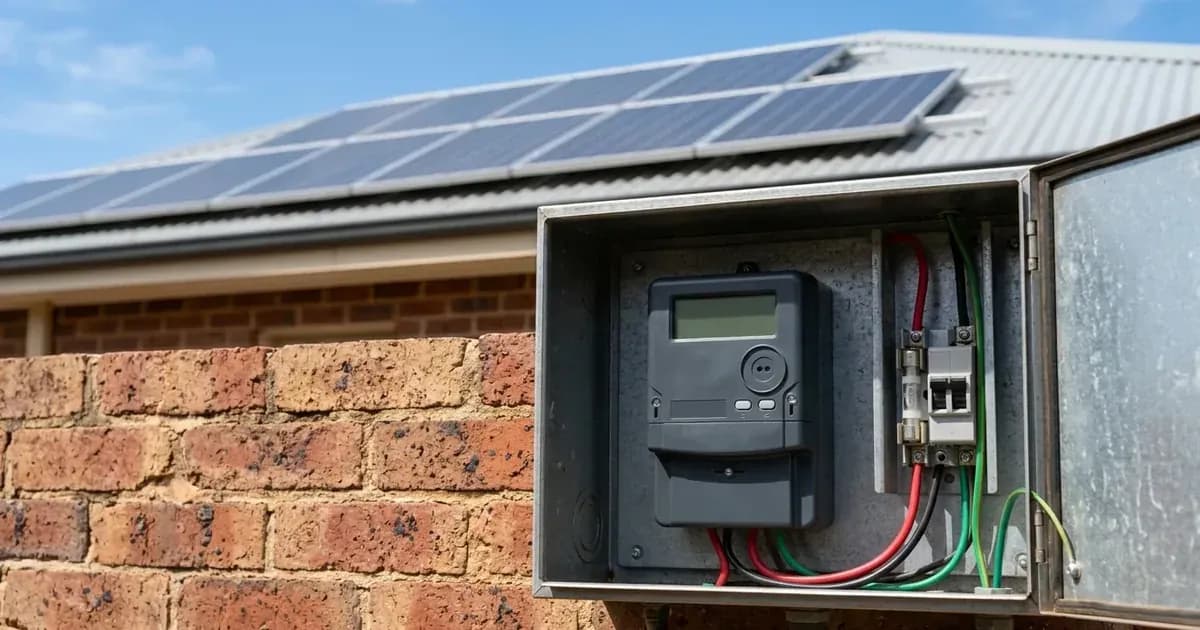
Two forms of bi-directional metering are possible: ‘Net’ or ‘Gross’. This type of meter records both the electricity you draw from the grid and the electricity your solar system exports to the grid.
Metering Location and Responsibility
The location of the bi-directional meter must comply with the Evoenergy Electricity Service & Installation Rules and be as close as practical to the network connection point. You, as the proponent or installer, are responsible for:
- Ensuring adequate space to accommodate the new metering arrangement in the meter box.
- Carrying out any meter box or metering upgrade work at your expense, performed by a licensed electrician.
- Engaging an accredited metering service provider through your electricity retailer.
Current Transformer (CT) Metering
Current metering equipment is required for all embedded generating units connecting to the network that are rated at 60 kW or greater.
Certificate of Electrical Safety (CES) and Access Canberra
The Certificate of Electrical Safety (CES) is a critical document in the ACT, ensuring that all electrical work, including solar installations, meets safety standards.
CES Purpose and Requirement
The CES is an important requirement set by Access Canberra for new electrical work, alterations, or repairs to existing electrical systems. Its purpose is to verify that the electrical work done on your property has been completed by a licensed electrician and meets the required safety standards.
Issuance and Submission
A CES can only be issued by a licensed electrician or an Access Canberra electrical inspector. After completing any electrical work, your electrician should provide you with a copy of the certificate and submit it to Access Canberra.
For small embedded generation systems, the installation must be approved by the ACT Government Electrical Inspectorate, and the completed CES must be included in the Inverter Energy System (IES) manual. For Low Voltage (LV) or High Voltage (HV) systems, your principal contractor or installer must notify the ACT Government Electrical Inspectorate that the generating unit installation is ready for inspection by filing the CES.
Re-energisation Requirements
If power has been disconnected for more than 6 months, a safety inspection by a licensed electrician and a compliance check by an Access Canberra electrical inspector are required before Evoenergy can reconnect supply.
Fixed Feed-in Tariff System Replacements
For solar owners in the ACT who benefit from a fixed feed-in tariff, specific rules apply to component replacements to ensure the premium rate continues. These rules are in accordance with the Electricity Feed-in (Renewable Energy Premium) Act 2008.
Inverter Replacement
In the event of an inverter failure for a system with a fixed feed-in tariff, the generator must replace it with a compliant inverter of equal or lesser generating capacity. If a "like-for-like" compliant inverter is not technically available, Evoenergy may consider an appropriately sized replacement inverter with a generation limit enabled. This generation limit must be set to be the same or less than the rating of the existing approved inverter capacity for the IES.
Panel Replacement
Panel replacements for fixed feed-in tariff systems must always be strictly the same size or less in order to continue receiving the premium rate.
FiT System Removal Consent
If you propose to remove a fixed feed-in tariff system, your written consent must be attached to the SCR application. This consent must confirm your understanding that:
- Faulty fixed feed-in tariff systems can be replaced like for like.
- Both a fixed feed-in tariff system and a net system can be installed at the same time.
- You will stop being paid the premium rate if the fixed feed-in tariff system is removed.
Mandatory Inverter Settings for Evoenergy Network
Inverters connecting to the Evoenergy network in the ACT must adhere to specific mandatory settings to ensure grid stability and power quality. Your installer is responsible for configuring these settings correctly:
Grid Protection / Response Mode | Voltage Threshold | Mandatory Inverter Action |
|---|---|---|
Volt-Watt Response Mode | 253V to 260V | Linearly reduces power output from 100% down to 20% |
Volt-VAr Response Mode | Network standard | Mandatory power quality response mode enabled |
Sustained Over-Voltage Trip | > 265V | Automatic disconnection from network within 1 second |
Instantaneous Over-Voltage Trip | > 275V | Instantaneous disconnection from network |
- Volt-watt power quality response mode: This mode must be enabled to linearly reduce the inverter's output from 100% to 20% as the voltage increases from 253V to 260V.
- Volt-var power quality response mode: This mode must be enabled.
- Network Disconnection:
- The inverter must disconnect itself from the network within 1 second when the voltage exceeds 265V.
- The inverter must disconnect itself from the network instantaneously when the voltage exceeds 275V.
These settings are crucial for managing voltage fluctuations and maintaining a stable electricity supply within the ACT network.
What you can check yourself, and what you cannot
As a solar system owner in the ACT, your primary role is to ensure your system is installed and maintained by licensed professionals who adhere to Evoenergy's and Access Canberra's requirements.
What you can check yourself:
- Electricity bills: Monitor your electricity bills to understand your consumption and any feed-in credits you receive from your retailer.
- System monitoring: Use your inverter's or solar retailer's monitoring app to check your system's performance and ensure it is generating as expected.
- Documentation: Keep copies of your Special Connection Request (SCR) approvals, Certificate of Electrical Safety (CES), and any connection contracts.
- Retailer tariffs: Regularly check with your electricity retailer (e.g., ActewAGL) for current feed-in tariff rates, as these can change.
What you cannot check or change yourself:
- Inverter settings: Grid-protection settings, such as volt-watt or volt-var response modes and voltage disconnection thresholds, are configured by accredited installers according to Evoenergy's mandatory requirements. Changing these yourself can breach your connection agreement and compromise grid safety.
- Metering installations: Any work on your meter box or the installation of bi-directional meters must be performed by a licensed electrician and an accredited metering service provider.
- Electrical wiring or components: All electrical work related to your solar installation, including repairs or alterations, must be carried out by a licensed electrician.
- SCR applications: Only your solar installer can submit and update Special Connection Requests (SCRs) through the Evoenergy DER Portal.
Always consult with your licensed solar installer or electricity retailer if you have questions about your system's operation, metering, or connection requirements.
What the published sources do not tell you
While Evoenergy and Access Canberra provide clear guidelines for solar connections and safety in the ACT, certain details are not publicly available or vary by provider.
- Specific Feed-in Tariff Rates: The provided sources do not detail specific feed-in tariff rates for electricity retailers like ActewAGL. Evoenergy explicitly states it does not administer feed-in tariffs, directing inquiries to energy retailers. The ActewAGL page linked Under network connection rules for solar feed-in tariffs returned a "Page Not Found" error, indicating this information would need to be sourced directly from retailers.
- ActewAGL Smart Metering Specifics: While Evoenergy documents discuss general metering requirements (bi-directional, net/gross, CT metering), specific details about "ActewAGL smart metering" or any unique features offered by ActewAGL for smart meters were not found. The documents focus on Evoenergy's network metering requirements.
- Solar Buyback Rates: No specific solar buyback rates were found in the provided documents, as this information falls under retailer tariffs.
- Schedule of Charges: Although mentioned as the source for application fees for complex residential and commercial systems, the actual "Schedule of Charges" document was not provided, so specific fee amounts for Evoenergy's connection applications could not be extracted.
- Detailed CES Guidelines: The Evoenergy CES page refers to the Access Canberra website for detailed guidelines on work requiring a CES, but the specific external URL for these detailed guidelines was not provided Under network connection rules.
Frequently asked questions
What is the Evoenergy DER Portal used for in the ACT?
The Distributed Energy Resource (DER) Portal is where solar installers in the ACT submit and track Special Connection Requests (SCRs) for new solar and battery installations, or changes to existing systems.
Who is responsible for solar metering upgrades in the ACT?
The proponent or installer is responsible for ensuring adequate space for new metering arrangements and for carrying out any meter box or metering upgrade work at their expense. They must also engage an accredited metering service provider through their electricity retailer.
What is a Certificate of Electrical Safety (CES) for solar in the ACT?
The Certificate of Electrical Safety (CES) is an Access Canberra requirement for new electrical work, alterations, or repairs. For small embedded generation systems, the installation must be approved by the ACT Government Electrical Inspectorate, and the completed CES included in the Inverter Energy System (IES) manual.
What are the rules for replacing an inverter on a fixed feed-in tariff system in the ACT?
If an inverter fails on a system with a fixed feed-in tariff, it must be replaced with a compliant inverter of equal or lesser generating capacity, as per the Electricity Feed-in (Renewable Energy Premium) Act 2008. Panel replacements must also be the same size or smaller to retain the premium rate.
What are the mandatory inverter settings for connecting to the Evoenergy network in the ACT?
Inverters must have volt-watt mode enabled to reduce output from 100% to 20% as voltage increases from 253V to 260V. Volt-var mode must also be enabled. Disconnection from the network is required within 1 second if voltage exceeds 265V, and instantaneously if it exceeds 275V.
References
- Evoenergy: Distributed Energy Resource Portal — accessed 26 August 2026
- Evoenergy: Embedded Generation Connection Requirements — accessed 26 August 2026
- Evoenergy: Small Embedded Generation Technical Requirements — accessed 26 August 2026
- Evoenergy: Certificate of Electrical Safety — accessed 26 August 2026
- Evoenergy: Power Quality — accessed 26 August 2026
- Evoenergy: Embedded Generation Classifications — accessed 26 August 2026
- Evoenergy: LV Embedded Generation Technical Requirements — accessed 26 August 2026
Related guides
More from schemes, subsidies & financing.