South Australia Virtual Power Plant Vpp And Inverter Export Guide
Updated 19 September 2026 · By SolarNevs Research Desk, Dealer surveys + verified sources · 1 source · Method ↗
Key Takeaways
- Unveiled in 2018, SA VPP is demonstrating how virtual power plants can help reduce energy costs for participating residential households.
- Tenants of more than 6,500 SA Housing Trust homes already benefit from SA VPP, with the capacity to deliver substantial community bill savings.
- SA VPP was the first virtual power plant in Australia to help stabilise frequency levels in the grid during severe contingency events.
- Ownership transitions record that Tesla originally designed and developed SA VPP, and transferred ownership of the project to AGL in 2025.
- The VPP operator uses WiFi technology and sophisticated software to charge or discharge energy from the batteries and trade it on the National Energy Market (NEM).
The Establishment of South Australia's Virtual Power Plant
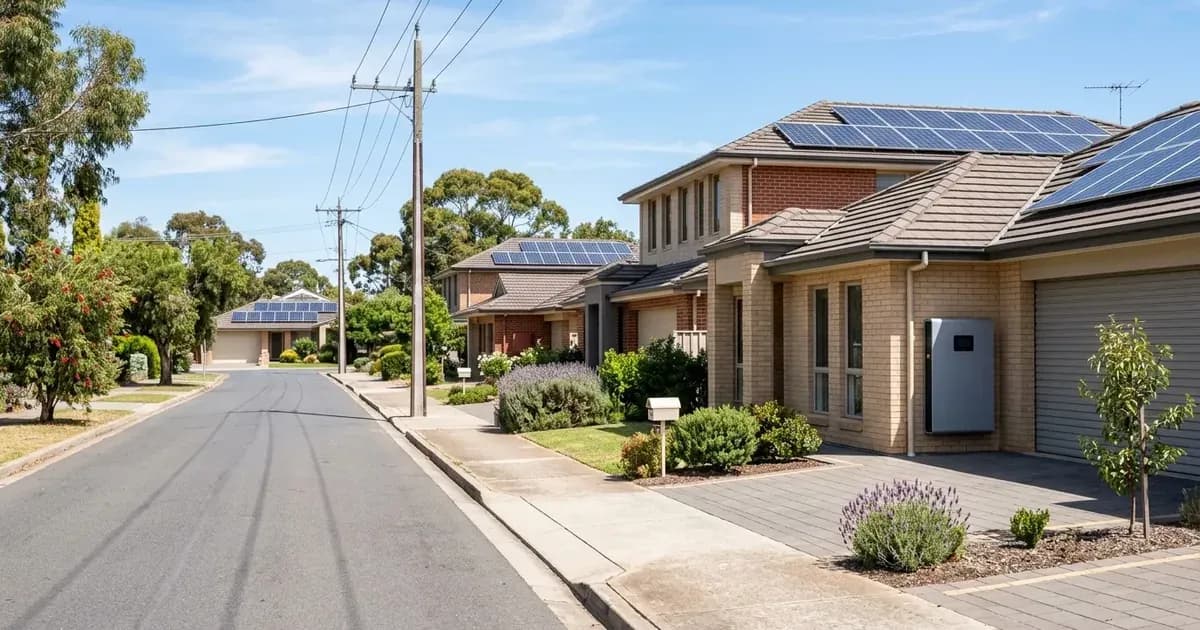
South Australia pioneered large-scale distributed battery aggregation to support clean energy transitions. A virtual power plant (VPP) is a network of distributed energy resources – such as homes with solar and battery systems – all working together as a single power plant.
Program development milestones trace back to the launch of the project: unveiled in 2018, SA VPP is demonstrating how virtual power plants can help reduce energy costs for South Australians. A core pillar of the scheme focuses on public housing equity: tenants of more than 6,500 SA Housing Trust homes already benefit from SA VPP, with the capacity to expand further.
Governance and operational leadership evolved over time: Tesla originally designed and developed SA VPP, and transferred ownership of the project to AGL in 2025. Following this transfer, AGL is the electricity provider and retailer for all households participating in SA VPP.
Public Investment and Financing Architecture
The roll-out of home solar and battery systems across thousands of residential roofs was made possible through coordinated public investment:
- State funding: The Government of South Australia supported earlier phases of the project through a $2 million grant.
- Federal grant funding: An $8 million grant provided by the Australian Renewable Energy Agency (external site) helped accelerate network rollouts.
- Debt financing: A $30 million loan provided by the Clean Energy Finance Corporation (external site) supported commercial equipment procurement.
Fleet Orchestration and National Electricity Market Trading
The aggregated battery network operates through real-time telecommunications and smart battery controllers. The VPP operator uses WiFi technology and sophisticated software to charge or discharge energy from the batteries and trade it on the National Energy Market (NEM).
Aggregation unlocks significant commercial generation capability:
- Individual impact: With many systems working together, small amounts of energy stored in individual home batteries can become large amounts of energy to help support the grid in times of need.
- Utility parity: The capacity and power of a VPP can sometimes match or even exceed a traditional power station.
Real-World Grid Stability and Emergency Response
SA VPP has repeatedly proven its value during severe power system disruptions. SA VPP was the first virtual power plant in Australia to help stabilise frequency levels in the grid.
Documented emergency grid responses include:
- Bushfire protection: Providing power to Port Lincoln residents during catastrophic fire conditions in November 2019.
- Transmission contingencies: Managing outages of interconnectors between South Australia and Victoria in November 2019, January 2020.
These emergency interventions demonstrate how aggregated home batteries absorb sudden frequency fluctuations and prevent cascading statewide blackouts.
What You Can Check Yourself, and What You Cannot
Tenants and homeowners participating in VPP schemes can check their smartphone monitoring apps to view real-time solar generation, home consumption, and battery charge levels. Customers can also check that their home Wi-Fi network remains online to support battery telemetry.
However, participants cannot choose the specific 5-minute trading intervals during which battery power is dispatched into the National Electricity Market. Homeowners must not attempt to rewire battery isolators or modify the inverter communication gateway.
What the Published Sources Do Not Tell You
Published government guides do not disclose the exact wholesale margin splits earned by aggregators when trading battery power across Frequency Control Ancillary Services (FCAS) markets. While social housing participants receive discounted retail rates, the underlying commercial bidding strategies used in NEM spot markets remain confidential.
Frequently asked questions
What is South Australia's Virtual Power Plant (SA VPP)?
A virtual power plant (VPP) is a network of distributed energy resources – such as homes with solar and battery systems – all working together as a single power plant.
How many homes participate in SA VPP?
Tenants of more than 6,500 SA Housing Trust homes already benefit from SA VPP, with the capacity to support network stability.
Who owns and operates the SA VPP project?
Tesla originally designed and developed SA VPP, and transferred ownership of the project to AGL in 2025, with AGL acting as the electricity provider and retailer for participating households.
What major grid events has SA VPP supported?
SA VPP was the first virtual power plant in Australia to help stabilise frequency levels in the grid, providing power to Port Lincoln residents during catastrophic fire conditions in November 2019 and managing outages of interconnectors between South Australia and Victoria.
References
- Department for Energy and Mining - South Australia's Virtual Power Plant — accessed 26 August 2026
Related guides
More from schemes, subsidies & financing.