Drip Irrigation and Solar Combo Economics in Pakistan Agriculture
Updated 2 August 2026 · By SolarNevs Research Desk, Dealer surveys + verified sources · 2 sources · Method ↗
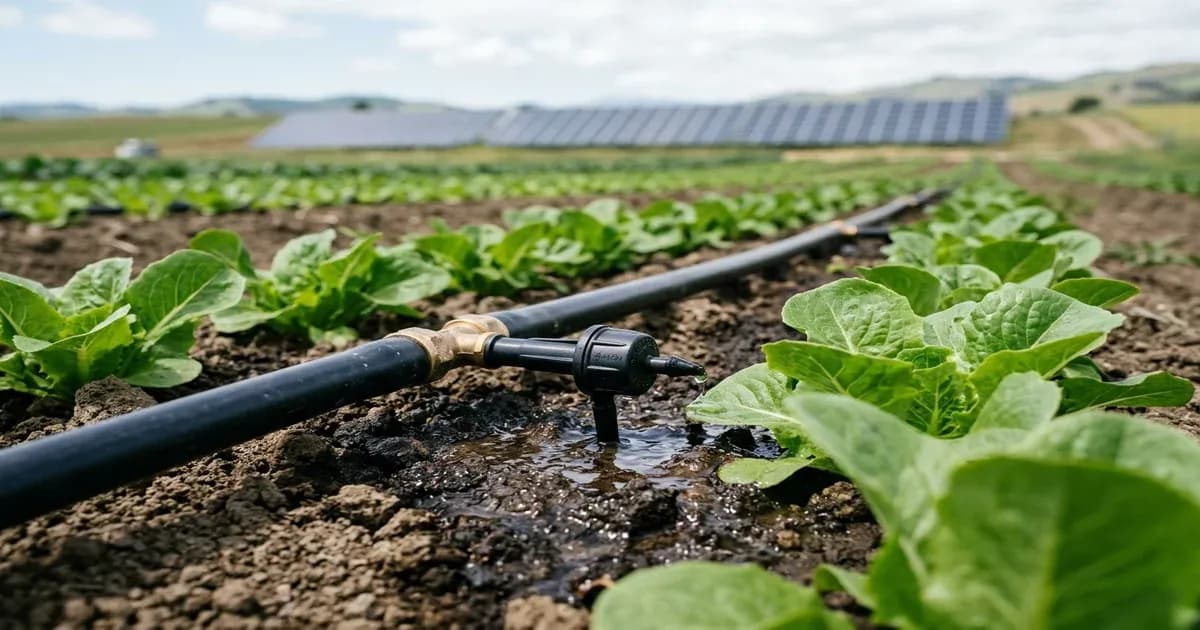
Drip Irrigation and Solar Combo Economics in Pakistan Agriculture
{/* visual_plan: stat_block */}
Key Takeaways
- Combining solar pumps with drip irrigation cuts agricultural water consumption by 45 to 55 percent.
- Lower water pressure requirements reduce solar panel array sizes by 30 percent, cutting system capital cost.
- Government HEIS subsidies cover 60 percent of drip piping installation costs for high-value orchards and crops.
- Precise fertigation through solar drip networks increases crop yield by over 25 percent while lowering labor costs.
Introduction
Pairing solar water pumps with High Efficiency Irrigation Systems (HEIS), particularly drip and micro-sprinkler networks, represents the modern frontier of sustainable agriculture in Pakistan. By delivering water directly to crop root zones, solar drip systems optimize water use while minimizing required solar array capacity.
How does drip irrigation lower solar pump sizing requirements?
Traditional flood irrigation requires massive water flow, necessitating 15HP to 25HP heavy pumps. Drip irrigation operates on low-volume continuous pressure.
A farm requiring a 20HP solar pump for flood irrigation can achieve superior crop coverage using a 7.5HP solar pump paired with a drip irrigation network.
Irrigation Method | Required Pump Size | Solar Array Size | System Capital Cost |
|---|---|---|---|
Flood Irrigation (10 Acres) | 15 HP Pump | 17.5 kW Solar Array | Rs 1,980,000 (July 2026) |
Drip Irrigation (10 Acres) | 5 HP Pump | 6.5 kW Solar Array | Rs 850,000 (July 2026) |
These capital figures in July 2026 demonstrate how water efficiency directly reduces solar hardware expenditure.
What crop yield improvements do solar drip systems deliver?
Solar drip systems allow integrated fertigation, dissolving water-soluble fertilizers directly into irrigation lines.
This targeted root application prevents weed growth in crop inter-rows, reduces soil salinity build-up, and delivers 25 percent higher crop yields in cotton, maize, citrus, and vegetable farming.
Summary and Recommendations
Maximize farm productivity with smart solar irrigation. Read more on SolarNevs.
Frequently Asked Questions
What is the benefit of combining drip irrigation with a solar tube well?
Combining solar pumps with drip irrigation reduces required water volumes by up to 50 percent, allowing smaller, less expensive solar panel arrays to irrigate larger crop land.
What government subsidy is available for high-efficiency drip irrigation in Pakistan?
Provincial agriculture departments offer up to a 60 percent financial subsidy on installing High Efficiency Irrigation Systems (HEIS) like drip and sprinkler networks.
How much crop yield increase can farmers expect from solar drip irrigation?
Targeted water and fertilizer delivery via solar-powered drip systems increases crop yields by 20 percent to 35 percent compared to traditional flood irrigation.
References
Frequently asked questions
What is the benefit of combining drip irrigation with a solar tube well?
Combining solar pumps with drip irrigation reduces required water volumes by up to 50 percent, allowing smaller, less expensive solar panel arrays to irrigate larger crop land.
What government subsidy is available for high-efficiency drip irrigation in Pakistan?
Provincial agriculture departments offer up to a 60 percent financial subsidy on installing High Efficiency Irrigation Systems (HEIS) like drip and sprinkler networks.
How much crop yield increase can farmers expect from solar drip irrigation?
Targeted water and fertilizer delivery via solar-powered drip systems increases crop yields by 20 percent to 35 percent compared to traditional flood irrigation.
References
- AgriPure — accessed 16 July 2026
- Punjab Agriculture Department — accessed 12 July 2026
Related guides
More from sizing, net billing & installation.