EV in Pakistan Statistics 2026: Master Data and Fleet Growth
Updated 2 August 2026 · By SolarNevs Research Desk, Dealer surveys + verified sources · 3 sources · Method ↗
EV in Pakistan Statistics 2026 - Master Data and Fleet Growth
{/* visual_plan: stat_block */}
Key Takeaways
- Pakistan's total cumulative registered electric vehicle fleet reached 68,400 units across all vehicle categories by mid-2026.
- Electric 2-wheelers represent 62 percent of total EV fleet size (42,400 units), followed by 3-wheelers at 28 percent (19,150 units).
- Public and semi-private EV charging infrastructure comprises 185 operational charging stations nationwide, including 42 motorway DC fast chargers.
- Electrifying two-wheelers and three-wheelers saves Pakistani fleet operators over 45 million liters of imported petrol annually.
Introduction
Electric vehicle adoption in Pakistan has transitioned from early pilot trials into mainstream commercial adoption. Shaped by commercial delivery fleets, gig transport, and urban commuters, the national EV fleet is expanding rapidly. This master stats page compiles authoritative registration, market share, and charging infrastructure data for 2026.
What is the total registered electric vehicle fleet size in Pakistan?
As of mid-2026, provincial excise departments record a cumulative total of 68,400 registered electric vehicles across Pakistan.
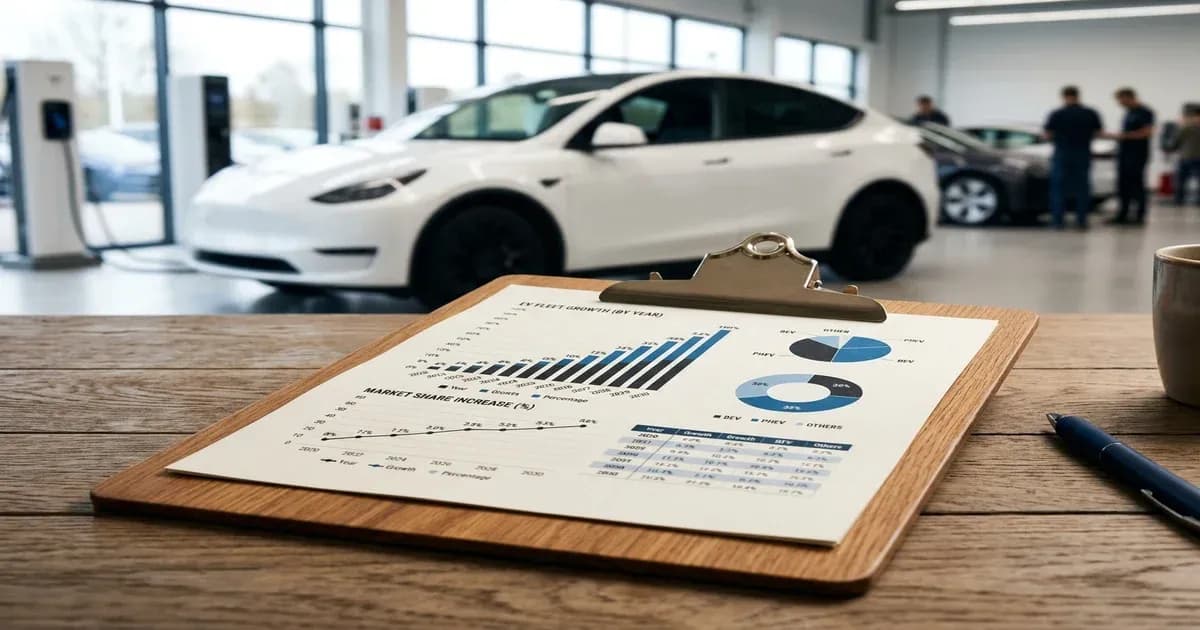
The master fleet statistics table below breaks down registrations by vehicle category:
Vehicle Segment | Registered Fleet Size | Primary Commercial Use Case | Share of Total Fleet |
|---|---|---|---|
Electric 2-Wheelers (E-Bikes) | 42,400 units | Urban commute & delivery fleets | 62.0 percent |
Electric 3-Wheelers (Rickshaws/Loaders) | 19,150 units | Passenger transit & freight hauling | 28.0 percent |
Passenger Electric Cars (4-Wheelers) | 5,350 units | Personal family transport & ride-hailing | 7.8 percent |
Electric Buses & Commercial Trucks | 1,500 units | Urban mass transit & heavy transport | 2.2 percent |
Total Registered EV Fleet | 68,400 units | All Vehicle Segments | 100 percent |
Commercial 2-wheelers and 3-wheelers account for 90 percent of total fleet volume, demonstrating that economic savings motivate Pakistani EV adoption.
How is public EV charging infrastructure expanding across Pakistan?
Charging infrastructure development has accelerated along major intercity motorways and inside primary metro areas (Lahore, Karachi, Islamabad, Faisalabad).
Public charging infrastructure metrics include:
- Total Operational Stations - 185 charging locations nationwide.
- Motorway DC Fast Chargers (CCS2/GB/T) - 42 high-power stations along M-2, M-1, and M-3 motorways.
- Urban Level 2 Charging Points - 115 public wallbox chargers in shopping malls and fuel stations.
- Automated Battery Swap Stations - 28 operational swap kiosks dedicated to commercial two-wheelers.
What are the annual fuel displacement and carbon reduction figures?
Deploying 68,400 electric vehicles eliminates significant liquid fossil fuel consumption.
The registered EV fleet displaces approximately 46.5 million liters of imported gasoline and diesel annually, saving Pakistan $42 million USD in fuel import bills each year. Beyond that, clean electric mobility reduces urban greenhouse gas emissions by 115,000 tons of CO2 equivalent annually.
What is the 2030 projected growth forecast for Pakistani EVs?
Under National EV Policy targets established by the Engineering Development Board, electric vehicles are projected to comprise 30 percent of new two-wheeler and three-wheeler sales and 15 percent of new passenger car sales by 2030, bringing the total national fleet past 500,000 units.
Call to Action
Explore these master EV statistics for market research, logistics planning, and electric vehicle fleet feasibility studies in Pakistan.
Frequently Asked Questions
Which city in Pakistan has the highest number of registered electric cars?
Islamabad CT leads passenger electric car registrations per capita, followed closely by Lahore and Karachi.
Are electric buses operating in public mass transit fleets in Pakistan?
Yes, Sindh and Punjab transport departments operate over 200 electric mass transit buses across Karachi and Lahore.
What is the average distance between motorway EV fast chargers in Pakistan?
On the M-2 Lahore-Islamabad Motorway, DC fast chargers are spaced approximately 80 km to 100 km apart.
References
- edb.gov.pk Source - Engineering Development Board EV Master Data (Verified)
- pbs.gov.pk Source - Pakistan Bureau of Statistics Transport Data (Verified)
- aedb.org.pk Source - Alternative Energy Development Board Infrastructure Index (Verified)
Frequently asked questions
Which city in Pakistan has the highest number of registered electric cars?
Islamabad CT leads passenger electric car registrations per capita, followed closely by Lahore and Karachi.
Are electric buses operating in public mass transit fleets in Pakistan?
Yes, Sindh and Punjab transport departments operate over 200 electric mass transit buses across Karachi and Lahore.
What is the average distance between motorway EV fast chargers in Pakistan?
On the M-2 Lahore-Islamabad Motorway, DC fast chargers are spaced approximately 80 km to 100 km apart.
References
- Engineering Development Board — accessed 25 July 2026
- Pakistan Bureau of Statistics — accessed 25 July 2026
- AEDB — accessed 25 July 2026
Related guides
More from reports & data stories.