Lithium Battery Price in Pakistan
Updated 2 August 2026 · By SolarNevs Research Desk, Dealer surveys + verified sources · 4 sources · Method ↗
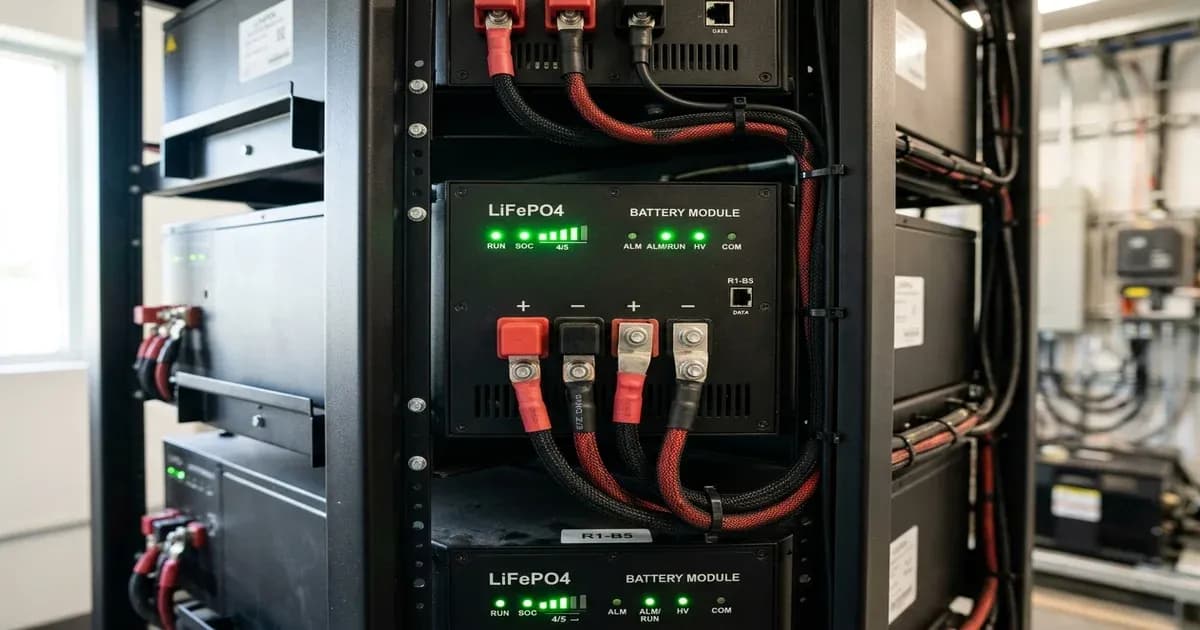
Lithium Battery Price in Pakistan
{/* visual_plan. stat_block */}
Key Takeaways
- The retail price for a 5.12 kWh (48V 100Ah) LiFePO4 battery ranges from Rs 350,000 to Rs 480,000 (July 2026).
- Larger 10.24 kWh (48V 200Ah) lithium battery packs sell for between Rs 700,000 and Rs 920,000 (July 2026).
- The average price per kWh for residential lithium storage in Pakistan sits at Rs 74,218 per kWh (July 2026).
- Under NEPRA net billing, storing power saves Rs 50 (July 2026) per kWh versus exporting at Rs 11 (July 2026) per kWh, accelerating battery payback.
What is the current lithium battery price in Pakistan?
The lithium battery price in Pakistan ranges from Rs 350,000 (July 2026) for an entry-level 48V 100Ah (5.12 kWh) wall-mounted module to Rs 480,000 (July 2026) for premium Tier-1 brands. Larger residential battery banks with a total capacity of 10.24 kWh (48V 200Ah) sell for between Rs 700,000 and Rs 920,000 (July 2026). Growing demand for solar energy storage has expanded the availability of Lithium Iron Phosphate (LiFePO4) options across major retail hubs in Lahore, Karachi, and Islamabad.
For homeowners selecting solar storage, comparing the price per kWh provides the clearest financial picture. Standard 5.12 kWh lithium batteries carry an effective price of Rs 68,359 per kWh to Rs 93,750 per kWh (July 2026). Premium models feature advanced Battery Management Systems (BMS) with active cell balancing, LCD displays, and integrated DC circuit breakers. The following table provides an overview of current market pricing across capacity tiers.
Battery Capacity | Voltage & Ampere | Average Price Range | Target System Size |
|---|---|---|---|
2.56 kWh | 25.6V 100Ah | Rs 185,000 to Rs 230,000 | 3 kW Hybrid Systems |
5.12 kWh | 51.2V 100Ah | Rs 350,000 to Rs 480,000 | 5 kW to 6 kW Systems |
10.24 kWh | 51.2V 200Ah | Rs 700,000 to Rs 920,000 | 8 kW to 12 kW Systems |
14.3 kWh | 51.2V 280Ah | Rs 980,000 to Rs 1,250,000 | 15 kW Commercial Systems |
Figures as of July 2026.
How do 48V 100Ah and 200Ah lithium battery prices compare by brand?
Brand reputation, cell origin, and local warranty support heavily influence lithium battery pricing in Pakistan. Established international brands like Pylontech command a premium rate of Rs 440,000 (July 2026) for their US5000 4.8 kWh module due to proven long-term cycle performance and extensive inverter compatibility. In contrast, brands such as Dyness offer 5.12 kWh modules at Rs 385,000 (July 2026), providing strong performance at a lower initial outlay.
Local and regional distribution brands, including Inverex and Fronus, have expanded their market share with competitive pricing structures. An Inverex PowerWall 5.12 kWh battery retails for Rs 395,000 (July 2026), supported by nationwide service centers and direct firmware integration with Inverex Nitrox hybrid inverters. Fronus 5.12 kWh lithium packs sell for approximately Rs 340,000 (July 2026), appealing to budget-conscious buyers seeking LiFePO4 safety.
Brand | Model | Capacity | Retail Price | Warranty |
|---|---|---|---|---|
Pylontech | US5000 | 4.8 kWh | Rs 440,000 | 10 Years |
Dyness | BX51100 | 5.12 kWh | Rs 385,000 | 10 Years |
Inverex | PowerWall 100Ah | 5.12 kWh | Rs 395,000 | 5 Years |
Fronus | LiFePO4 100Ah | 5.12 kWh | Rs 340,000 | 5 Years |
Livoltek | BFX-51100 | 5.12 kWh | Rs 375,000 | 5 Years |
Maxpower | SolarMax 100Ah | 5.12 kWh | Rs 350,000 | 5 Years |
Figures as of July 2026.
What is the price per kWh for lithium solar batteries in Pakistan?
Calculating the price per kWh allows buyers to evaluate battery value independently of pack size. In July 2026, the average price per kWh for residential LiFePO4 batteries in Pakistan sits at Rs 74,218 per kWh (July 2026). When factoring in a total lifespan of 6,000 cycles at 80% depth of discharge, the levelized cost of storage drops significantly compared to conventional lead-acid options.
A 5.12 kWh lithium pack costing Rs 380,000 (July 2026) delivers roughly 24,576 kWh of usable electricity over its 15-year operational lifecycle. This yields an effective storage cost of Rs 15.46 per kWh (July 2026) stored and discharged. In contrast, lead-acid tubular batteries require replacement every 3 to 4 years, resulting in higher long-term cumulative expenses despite lower initial purchase costs.
Import duties and government tax policies directly affect per-kWh prices. Following the Finance Act 2025 guidelines from FBR, a 10% sales tax applies to imported battery modules. Fluctuations in the US dollar exchange rate also shift weekly wholesale distribution prices in local markets.
Why are homeowners switching from tubular to lithium batteries under net billing?
The adoption of net billing policies by NEPRA has altered the financial return on residential solar investments. Under current prosumer rules, grid operators credit exported solar energy at a baseline rate of Rs 11 per kWh (July 2026). Meanwhile, grid power imports during peak evening hours cost consumers between Rs 50 per kWh and Rs 65 per kWh (July 2026).
This substantial price gap makes selling excess daytime energy to the grid far less profitable than storing it for evening household consumption. By installing a 5.12 kWh lithium battery costing Rs 380,000 (July 2026), a household can store 5 kWh of solar generation daily instead of exporting it for Rs 55 (July 2026). Offsetting 5 kWh of peak grid power saves Rs 250 (July 2026) per day, producing net daily savings of Rs 195 or Rs 71,175 per year (July 2026).
Lithium technology supports deep discharges up to 90% without degrading cell chemistry, allowing homeowners to use nearly all stored energy each night. Tubular lead-acid batteries are limited to a 50% depth of discharge, requiring double the nominal capacity to achieve identical usable storage.
What key features should you check before buying a lithium battery in Pakistan?
Selecting the right lithium battery requires careful evaluation of cell quality, BMS features, and installer expertise. Buyers must verify that the battery uses genuine LiFePO4 (Lithium Iron Phosphate) prismatic cells rather than lower-grade pouch cells or refurbished second-life modules. Genuine Tier-1 cells offer superior thermal stability, resisting ambient room temperatures that exceed 40 degrees Celsius during Pakistani summer months.
The Battery Management System (BMS) acts as the main defense mechanism for the cell pack. verify the BMS supports active cell balancing and includes RS485 (July 2026) or CAN bus communication ports. Proper communication allows the battery to share live voltage, temperature, and state-of-charge data with hybrid inverters from brands like Deye, Solis, or Voltronic.
Warranty coverage requires explicit verification. Reliable importers provide a written warranty detailing cycle count limits and end-of-life capacity retention. Always request serial number validation through official distributor portals to avoid grey-market imports that lack warranty coverage in Pakistan.
Frequently Asked Questions
What is the average lithium battery price in Pakistan?
A standard 48V 100Ah (5.12 kWh) lithium battery in Pakistan costs between Rs 350,000 and Rs 480,000 (July 2026) depending on the brand and BMS features.
How long does a lithium solar battery last in Pakistan?
A quality LiFePO4 lithium battery lasts 10 to 15 years, delivering 4,000 to 6,000 charge cycles at 80% depth of discharge.
Is a lithium battery cheaper than a tubular battery long term?
Yes, lithium batteries cost around Rs 13.7 per delivered kWh cycle (July 2026), compared to Rs 38.8 per kWh cycle (July 2026) for traditional tubular batteries.
References
Frequently asked questions
What is the average lithium battery price in Pakistan?
A standard 48V 100Ah (5.12 kWh) lithium battery in Pakistan costs between Rs 350,000 and Rs 480,000 (July 2026) depending on the brand and BMS features.
How long does a lithium solar battery last in Pakistan?
A quality LiFePO4 lithium battery lasts 10 to 15 years, delivering 4,000 to 6,000 charge cycles at 80% depth of discharge.
Is a lithium battery cheaper than a tubular battery long term?
Yes, lithium batteries cost around Rs 13.7 per delivered kWh cycle (July 2026), compared to Rs 38.8 per kWh cycle (July 2026) for traditional tubular batteries.
References
- Solar Citizen — accessed 25 July 2026
- W11Stop — accessed 25 July 2026
- NEPRA — accessed 25 July 2026
- FBR — accessed 25 July 2026
Related guides
More from what to buy — and how not to get cheated.