Load Shedding Tracker: City Schedules and Utility Outage Management
Updated 2 August 2026 · By SolarNevs Research Desk, Dealer surveys + verified sources · 3 sources · Method ↗
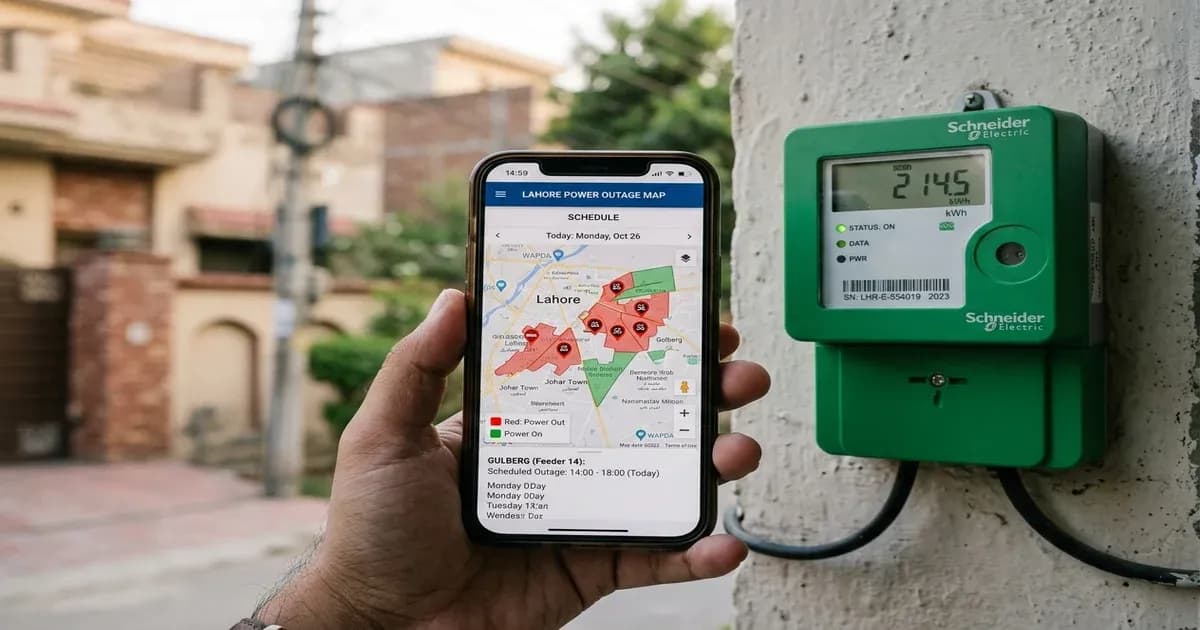
Load Shedding Tracker - City Schedules and Utility Outage Management
{/* visual_plan: stat_block */}
Key Takeaways
- Urban utility distribution companies in Pakistan enforce load management schedules ranging from 2 hours to 10 hours daily based on feeder loss categories.
- High-loss feeders (AT&C losses above 30 percent) experience up to 8 hours of daily scheduled load shedding in cities like Karachi, Lahore, and Peshawar.
- Installing a 6 kW hybrid solar system with a 10 kWh LiFePO4 battery pack provides 100 percent outage protection during summer load shedding.
- DISCO smart meter installations allow real-time automated outage reporting and feeder load management across urban residential networks.
Introduction
Power outages and load shedding remain a daily reality for millions of electricity consumers across Pakistan. Shaped by DISCO feeder loss management policies and high fuel costs, load shedding schedules vary significantly by city and neighborhood category. This tracker documents city schedules, feeder classifications, and solar-battery backup protection strategies.
How do DISCOs categorize feeders for load shedding in Pakistan?
Distribution companies in Pakistan (such as LESCO, K-Electric, IESCO, FESCO, and PESCO) manage grid demand by categorizing distribution feeders according to Aggregate Technical & Commercial (AT&C) loss percentages.
The feeder classification matrix below outlines standard load shedding hours:
Feeder Loss Category | AT&C Loss Percentage | Typical Daily Outage Hours | Target Neighborhood Types |
|---|---|---|---|
Category I (Low Loss) | Under 10 percent losses | 0 to 2 hours daily | Commercial centers & defense colonies |
Category II (Moderate Loss) | 10 to 20 percent losses | 2 to 4 hours daily | Established urban residential sectors |
Category III (High Loss) | 20 to 30 percent losses | 4 to 6 hours daily | Semi-urban residential areas |
Category IV (Very High Loss) | Above 30 percent losses | 6 to 10 hours daily | High-loss suburban & rural feeders |
Under NEPRA guidelines, DISCOs prioritize low-loss Category I feeders with uninterrupted power supply, while imposing heavier load shedding on high-loss feeders.
What are the current load shedding schedules across major Pakistani cities?
Load management schedules fluctuate seasonally, peaking during hot summer months (May through September) when air conditioning demand surges.
City-wise outage patterns across major urban centers include:
- Lahore (LESCO) - Category I feeders experience 0-2 hours; Category III/IV feeders experience 4-6 hours daily.
- Karachi (K-Electric) - Exempt industrial zones experience 0 hours; high-loss residential sectors experience 3-6 hours daily.
- Islamabad / Rawalpindi (IESCO) - Urban capital sectors experience 0-2 hours; rural feeder lines experience 4-6 hours daily.
- Peshawar (PESCO) - High-loss urban and suburban feeders experience 6-8 hours daily load management.
How to protect your home from load shedding using solar and batteries?
Rooftop hybrid solar systems paired with Lithium Iron Phosphate (LiFePO4) storage batteries offer complete protection against grid load shedding.
When grid power fails, a hybrid inverter automatically disconnects from the DISCO grid in less than 10 milliseconds, transferring home electrical circuits to solar and battery power. A 10 kWh LiFePO4 battery pack operates essential household loads (1.5-ton inverter AC, fans, refrigeration, LED lighting, and Wi-Fi) uninterrupted through a 4-hour load shedding outage.
What is the cost of solar-battery backup versus petrol generators?
Operating a 5 kW petrol generator during a 4-hour daily load shedding outage consumes approximately 6 liters of petrol costing Rs. 1,650 (July 2026) daily, or Rs. 49,500 (July 2026) monthly.
By comparison, a 10 kWh LiFePO4 solar storage battery priced at Rs. 480,000 (July 2026) recharges from daytime solar energy at zero fuel cost. The solar battery setup pays for itself within 10 months solely by eliminating generator petrol expenses.
Call to Action
Identify your local DISCO feeder category and consult certified AEDB solar installers to design an automated solar-battery backup system for your home.
Frequently Asked Questions
Why does load shedding occur even when power plants have extra capacity?
Load shedding in Pakistan is primarily financial and DISCO feeder loss-caused rather than a pure generation capacity deficit.
How fast does a hybrid inverter switch during a power outage?
Modern hybrid inverters switch to battery power in under 10 milliseconds, preventing computers or appliances from turning off.
Can I run an inverter air conditioner on solar battery backup during load shedding?
Yes, modern 1.5-ton DC inverter air conditioners consume 800W to 1,200W, easily operating on a 5 kW hybrid solar battery setup.
References
- nepra.org.pk Source - NEPRA Grid Distribution Code (Verified)
- pbs.gov.pk Source - Pakistan Bureau of Statistics Energy Report (Verified)
- aedb.org.pk Source - Alternative Energy Development Board Storage Directory (Verified)
Frequently asked questions
Why does load shedding occur even when power plants have extra capacity?
Load shedding in Pakistan is primarily financial and DISCO feeder loss-caused rather than a pure generation capacity deficit.
How fast does a hybrid inverter switch during a power outage?
Modern hybrid inverters switch to battery power in under 10 milliseconds, preventing computers or appliances from turning off.
Can I run an inverter air conditioner on solar battery backup during load shedding?
Yes, modern 1.5-ton DC inverter air conditioners consume 800W to 1,200W, easily operating on a 5 kW hybrid solar battery setup.
References
- NEPRA — accessed 25 July 2026
- Pakistan Bureau of Statistics — accessed 25 July 2026
- AEDB — accessed 25 July 2026
Related guides
More from reports & data stories.