Monsoon and Hail Protection Guide for Solar Panels
Updated 2 August 2026 · By SolarNevs Research Desk, Dealer surveys + verified sources · 4 sources · Method ↗
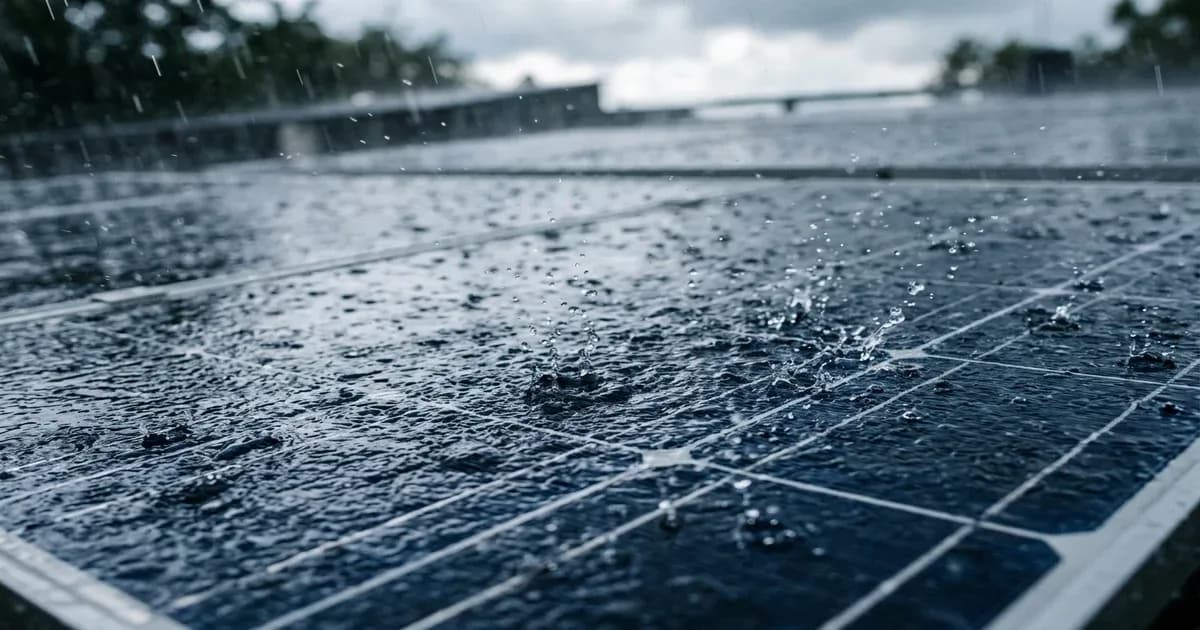
Monsoon and Hail Protection Guide for Solar Panels
{/* visual_plan. stat_block */}
Key Takeaways
- Tier-1 solar modules feature IEC 61215 certified tempered glass rated to withstand 25mm hail strikes at 80 km/h.
- Mounting frames require 25 to 30 degree tilt angles and rear wind deflector plates to prevent storm uplift damage.
- Electrical junction boxes must maintain IP67 or IP68 waterproof ratings to prevent water ingress during monsoon downpours.
- Surge protection devices (SPDs) and copper earthing rods protect sensitive inverters from nearby lightning strikes.
- Solar takaful insurance policies cover storm and hail damage for an annual fee of 0.8% to 1.2% of system value.
How do monsoon storms and hail impact solar panel arrays in Pakistan?
Monsoon weather brings heavy rainfall, localized hail strikes, high wind gusts, and frequent lightning strikes across Punjab, Sindh, and Khyber Pakhtunkhwa.
While solar modules are built for exterior weather exposure, severe monsoon windstorms can create structural wind uplift forces capable of loosening weak mounting frames.
Additionally, lightning strikes near property lines produce high-voltage power surges that damage unprotected solar inverters and battery management systems.
What physical protection measures safeguard solar panels against hail and storm damage?
Tier-1 solar panels are constructed using 3.2mm thermally toughened tempered glass. Modules undergo IEC 61215 international certification testing, proving resilience against 25mm ice hail strikes travelling at 80 km/h.
Installing panel arrays at a 25 to 30 degree tilt angle allows hailstones to strike at an oblique angle, reducing direct impact force compared to flat-mounted panels.
Rear wind deflector plates should also be fitted on elevated mounting structures to prevent wind gusts from creating upward lifting forces under the panel array.
How to prevent electrical water ingress and short circuits during heavy monsoon rains
Water ingress into DC cabling connections or inverter enclosures causes short circuits and insulation resistance fault trips.
Ensure that all panel string interconnections use IP68 waterproof MC4 connectors crimped with professional solar tools. Cables entering building interiors must pass through drip loops and sealed conduit glands.
Inverters should be mounted on interior garage walls or under covered roof shelters rated to IP65 ingress protection standards.
What lightning arrester and earthing configurations are required for storm safety?
Protecting solar installations against lightning strikes requires installing Class II AC and DC Surge Protection Devices (SPDs) inside distribution boxes.
SPDs cost between Rs 25,000 and Rs 35,000 (July 2026) for complete system protection kits. During lightning voltage spikes, SPDs divert excessive electrical current safely into earthing pits within milliseconds.
Dual independent copper earthing pits maintaining electrical resistance below 5 ohms ensure complete surge energy dissipation, safeguarding home electronics.
Insurance and takaful coverage for hail and storm damage to solar equipment
Property owners can purchase solar takaful insurance policies to protect solar capital assets against storm destruction, hail impact, lightning damage, and short circuits.
Annual takaful premiums range between 0.8% and 1.2% of total solar asset value. For a 10kW solar installation valued at Rs 1,600,000 (July 2026), annual takaful insurance costs approximately Rs 16,000 (July 2026).
Takaful policies provide complete asset replacement or repair coverage upon submitting contractor diagnostic reports and photographic damage proof.
Frequently Asked Questions
Can hail damage Tier-1 solar panels in Pakistan?
Tier-1 solar modules feature IEC 61215 certified tempered glass designed to withstand 25mm hail strikes at velocities exceeding 80 km/h without cracking.
How do you protect solar inverters from lightning during monsoon storms?
Protect solar inverters by installing Class II AC/DC Surge Protection Devices (SPDs) and copper earthing rods connected to dedicated grounding pits.
Does solar insurance cover storm and hail damage in Pakistan?
Yes, solar takaful policies cover hail strikes, storm damage, lightning strikes, and heavy rain short circuits for an annual fee of 0.8% to 1.2% of system value.
References
Frequently asked questions
Can hail damage Tier-1 solar panels in Pakistan?
Tier-1 solar modules feature IEC 61215 certified tempered glass designed to withstand 25mm hail strikes at velocities exceeding 80 km/h without cracking.
How do you protect solar inverters from lightning during monsoon storms?
Protect solar inverters by installing Class II AC/DC Surge Protection Devices (SPDs) and copper earthing rods connected to dedicated grounding pits.
Does solar insurance cover storm and hail damage in Pakistan?
Yes, solar takaful policies cover hail strikes, storm damage, lightning strikes, and heavy rain short circuits for an annual fee of 0.8% to 1.2% of system value.
References
- Solar Citizen — accessed 25 July 2026
- W11Stop — accessed 25 July 2026
- FBR — accessed 25 July 2026
- NEPRA — accessed 25 July 2026
Related guides
More from sizing, net billing & installation.