Net Metering vs Net Billing Pakistan: What Changed Feb 2026
Updated 2 August 2026 · By SolarNevs Research Desk, Dealer surveys + verified sources · 4 sources · Method ↗
Net Metering vs Net Billing Pakistan - What Changed Feb 2026
{/* visual_plan: stat_block */}
Key Takeaways
- NEPRA net billing framework (July 2026) establishes a buyback export tariff of Rs 11 (July 2026) per kWh.
- Unprotected residential grid imports cost between Rs 50 and Rs 65 (July 2026) per kWh.
- Pairing solar with lithium battery storage optimizes evening peak shaving and shortens payback to ~3.2 years.
- All net billing applications require AEDB-certified installer documentation and official DISCO clearance.
Introduction
Understanding the net billing regulations and DISCO processes in Pakistan is essential for optimizing solar investment returns under the 2026 NEPRA policy framework.
What caused NEPRA to transition from net metering to net billing in February 2026?
The National Electric Power Regulatory Authority (NEPRA) shifted Pakistan from net metering to net billing in February 2026 to resolve growing financial imbalances on the national power grid. Under the earlier 1:1 net metering framework, solar prosumers exported midday surplus generation and received full retail tariff credit, offset against nighttime imports. As residential solar installation expanded beyond 27 gigawatts nationwide, power distribution companies faced reduced revenue while maintaining grid capacity during evening peak demand hours.
To protect grid financial stability, NEPRA updated the Distributed Generation Regulations in February 2026. The revised framework separates power purchases from power sales. Grid imports are now billed at standard consumer tariff slab rates of Rs 50 to Rs 65 (July 2026) per kWh. In contrast, surplus electricity exported to the grid receives a fixed buyback rate of Rs 11 (July 2026) per kWh.
This policy change encourages prosumers to consume their solar power locally rather than relying on the national grid as a free storage mechanism. System owners now design installations around self-consumption and battery storage to maximize overall financial savings.
How do net metering and net billing compare in financial returns?
The financial mechanics of net billing differ fundamentally from 1:1 net metering. Under net metering, every kilowatt-hour exported during midday reduced your monthly electricity bill by the full value of a grid unit, which ranged between Rs 30 and Rs 45 (July 2026) per kWh depending on consumption slabs. This allowed homeowners to achieve complete zero-bill status with modest solar array sizes.
Under net billing, exporting power directly to the grid yields Rs 11 (July 2026) per kWh. Importing power from the grid during evening peak hours costs between Rs 50 and Rs 65 (July 2026) per kWh. This creates a wide gap between import costs and export revenues. Exporting 10 units of solar power produces Rs 110 (July 2026) in credit, but purchasing 10 units of evening grid electricity costs up to Rs 650 (July 2026).
Financial Metric | Old Net Metering (Pre-Feb 2026) | New Net Billing |
|---|---|---|
Export Unit Value | Rs 30 to Rs 45 / kWh | Rs 11 / kWh |
Import Unit Value | Rs 30 to Rs 45 / kWh | Rs 50 to Rs 65 / kWh |
10kW System Payback (Grid-Tied) | 2.5 Years | 3.8 Years |
10kW System Payback (With Lithium Storage) | 3.5 Years | 3.2 Years |
Figures as of July 2026.
Homeowners who adapt to net billing by adding energy storage maintain strong financial returns because self-consumed solar power replaces expensive grid imports.
Why is energy storage essential under the net billing framework?
Energy storage has become the core component of profitable residential solar systems under the net billing framework. Storing midday solar generation in a home battery bank prevents exporting electricity at the lower Rs 11 (July 2026) per kWh buyback rate. Instead, that stored energy is discharged during evening peak hours to avoid grid imports priced at Rs 50 to Rs 65 (July 2026) per kWh.
By shifting solar energy to match evening consumption patterns, homeowners preserve Rs 50 to Rs 65 (July 2026) in avoided utility costs for every stored unit consumed. This represents nearly five times the value gained from exporting that same unit to the grid.
Modern lithium iron phosphate (LiFePO4) battery systems provide high round-trip efficiency and deep discharge capabilities. A 10kWh to 15kWh lithium battery bank enables standard urban households in Lahore, Karachi, or Islamabad to run air conditioning and home appliances through peak evening hours without drawing power from the utility grid.
What happens to existing net metering contracts signed before February 2026?
Prosumers who signed valid 7-year net metering agreements before the February 2026 regulatory update retain their existing contractual terms. NEPRA regulations guarantee grandfathered status for the full duration of these signed agreements. Legacy net metering users continue to receive 1:1 energy unit adjustments or compensation tied to the national average power purchase price of approximately Rs 27 (July 2026) per kWh until their contract term expires.
However, grandfathered prosumers must remain aware of conditions that can terminate their legacy status.
- Modifying or expanding system inverter capacity triggers mandatory re-inspection under new net billing rules.
- Relocating the solar installation to a new property requires submitting a fresh application under 2026 regulations.
- Transferring utility connection ownership during property sales may require contract re-validation.
- Contract expiration after the 7-year term automatically shifts the connection to standard net billing terms.
Maintaining system documentation and avoiding unapproved modifications ensures legacy prosumers preserve their 1:1 net metering benefits for the remaining contract term.
What practical steps should new solar buyers take in 2026?
New solar buyers must adjust their planning to account for net billing rules. System sizing should focus on meeting daytime household consumption and charging battery storage rather than maximizing grid export capacity. Over-sizing solar arrays purely to export electricity produces lower returns under the Rs 11 (July 2026) per kWh buyback tariff.
Step-by-step implementation strategy for new prosumers.
- Select a hybrid inverter capable of intelligent battery charging and peak-shaving control.
- Pair solar arrays with high-efficiency N-type solar panels priced at Rs 38 to Rs 43 (July 2026) per watt.
- Install a dedicated lithium battery bank matched to your evening electricity consumption.
- Hire an AEDB-certified installer to manage DISCO net billing application filings.
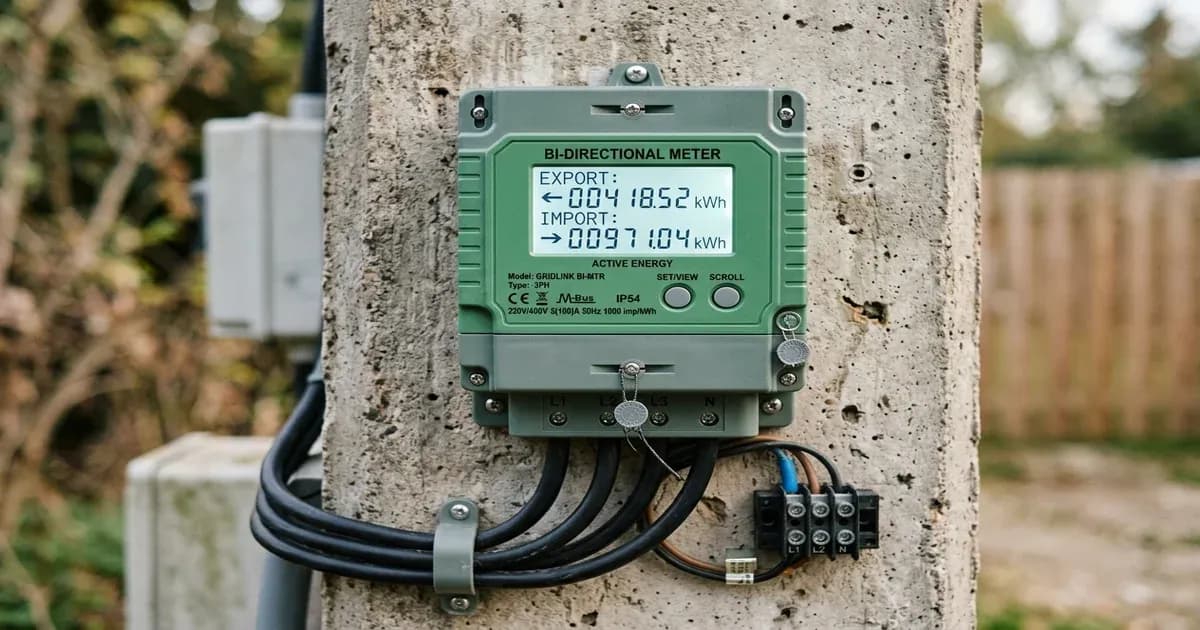
- Verify bidirectional green meter calibration before final grid commissioning.
Frequently Asked Questions
What is the main difference between net metering and net billing in Pakistan?
Net metering allowed 1:1 unit offsetting where exported units cancelled imported units at full retail value. Net billing bills grid imports at full retail slab rates of Rs 50 to Rs 65 (July 2026) per kWh while crediting grid exports at a fixed buyback tariff of Rs 11 (July 2026) per kWh.
When did NEPRA transition from net metering to net billing?
NEPRA introduced the revised prosumer regulations establishing net billing in February 2026 across all DISCO utility jurisdictions.
How does net billing affect the payback period for rooftop solar?
Without battery storage, simple payback extends from 2.5 years under net metering to around 3.8 years under net billing. Adding lithium battery storage to shift solar energy to evening hours brings payback back down to approximately 3.2 years.
References
Frequently asked questions
What is the main difference between net metering and net billing in Pakistan?
Net metering allowed 1:1 unit offsetting where exported units cancelled imported units at full retail value. Net billing bills grid imports at full retail slab rates of Rs 50 to Rs 65 (July 2026) per kWh while crediting grid exports at a fixed buyback tariff of Rs 11 (July 2026) per kWh.
When did NEPRA transition from net metering to net billing?
NEPRA introduced the revised prosumer regulations establishing net billing in February 2026 across all DISCO utility jurisdictions.
How does net billing affect the payback period for rooftop solar?
Without battery storage, simple payback extends from 2.5 years under net metering to around 3.8 years under net billing. Adding lithium battery storage to shift solar energy to evening hours brings payback back down to approximately 3.2 years.
References
- NEPRA — accessed 25 July 2026
- Solar Citizen — accessed 25 July 2026
- LESCO — accessed 25 July 2026
- W11Stop — accessed 25 July 2026
Related guides
More from sizing, net billing & installation.