Solar Air Cooler Price in Pakistan - 12V DC Desert Coolers Guide
Updated 2 August 2026 · By SolarNevs Research Desk, Dealer surveys + verified sources · 2 sources · Method ↗
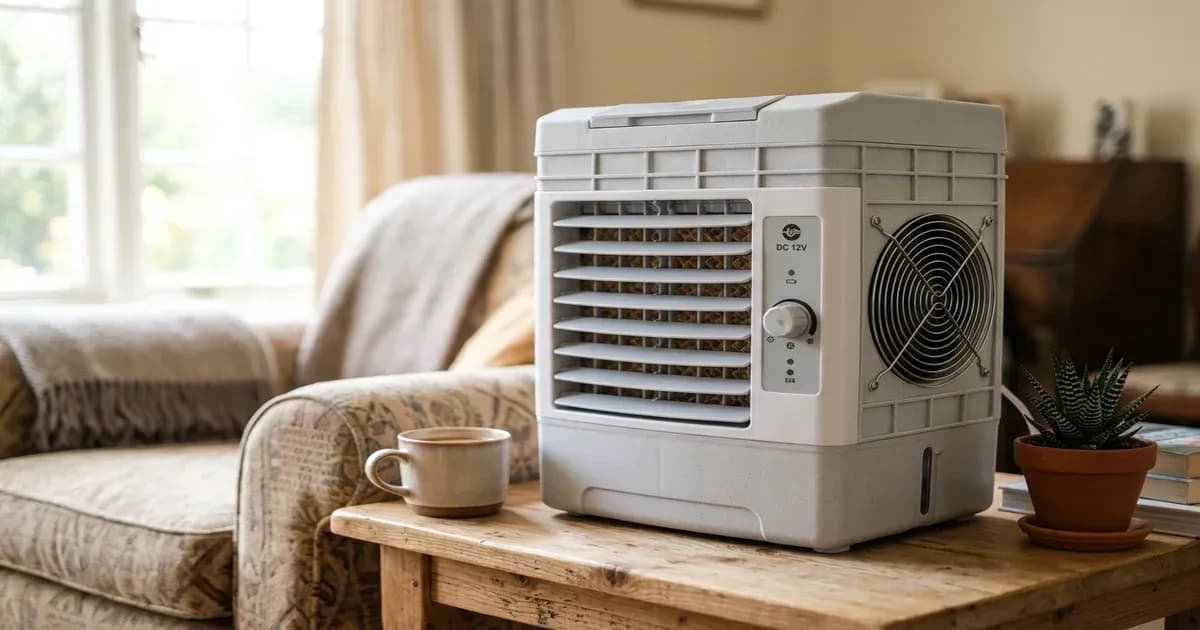
Solar Air Cooler Price in Pakistan - 12V DC Desert Coolers Guide
{/* visual_plan: stat_block */}
Key Takeaways
- 12V DC solar air coolers provide cost-effective dry summer cooling, consuming under 100 watts of power.
- Plastic body DC coolers cost around Rs 21,000 (July 2026), offering rust-free portable cooling for bedrooms.
- Heavy metal desert coolers priced at Rs 32,000 (July 2026) handle larger living rooms and outdoor verandas.
- Pairing a 12V DC cooler with a 150W solar panel and 50Ah battery ensures 24-hour continuous summer cooling.
Introduction
Solar air coolers offer an energy-efficient cooling alternative across Pakistan during dry summer months. By using 12V DC fan motors and low-wattage DC water submersible pumps, solar desert coolers draw a fraction of the electricity required by air conditioners while delivering substantial airflow.
What are current solar air cooler prices in Pakistan?
Solar air cooler prices depend on body material (imported plastic vs galvanized steel), water tank volume, pad type (honeycomb vs wood wool), and motor power. In July 2026, prices across popular Pakistani markets are summarized below.
Body Material | Tank Capacity | Cooling Pad Type | Average System Price |
|---|---|---|---|
Compact Plastic | 35 Liters | Honeycomb Pad | Rs 18,500 |
Medium Plastic | 55 Liters | High Density Honeycomb | Rs 22,500 |
Large Steel Desert | 80 Liters | Wood Wool / Aspen Pad | Rs 28,000 |
Heavy Galvanized Steel | 100 Liters | Double Honeycomb Pad | Rs 35,000 |
Figures as of July 2026.
These prices in July 2026 include internal 12V DC fan motors, 12V water pumps, and speed controllers. Solar panel kits add between Rs 6,500 and Rs 12,000 (July 2026).
How do honeycomb cooling pads compare with traditional wood wool pads?
Modern solar air coolers feature high-efficiency honeycomb cellulose cooling pads. Honeycomb pads retain water longer, resist mineral scale build-up, and provide up to 3 degrees Celsius lower output air temperatures compared to traditional Aspen wood wool grass pads.
How to set up a off-grid solar system for an air cooler?
Setting up a dedicated solar package for an air cooler is simple:
- Solar Panel - A single 150W or 200W mono PERC solar panel.
- Battery - A 12V 50Ah or 100Ah lead-acid or LiFePO4 battery.
- Controller - A 10A solar charge controller.
This compact kit costs roughly Rs 45,000 (July 2026) total and delivers complete cooling independence during summer power outages.
Summary and Recommendations
Stay cool for less this summer. Explore efficient solar air cooler options on SolarNevs today.
Frequently Asked Questions
How much electricity does a 12V DC solar air cooler consume?
A 12V DC solar air cooler consumes between 45 watts and 90 watts, allowing it to run continuously on a small solar panel setup or 12V battery.
What is the price of a solar air cooler in Pakistan?
Solar air cooler prices range from Rs 18,500 (July 2026) for medium plastic body units up to Rs 35,000 (July 2026) for heavy-duty metal body desert coolers.
Can a solar air cooler run directly from a 150W solar panel?
Yes, a 150W solar panel paired with a small voltage regulator provides sufficient power to run a 12V DC air cooler motor and water pump during daytime hours.
References
Frequently asked questions
How much electricity does a 12V DC solar air cooler consume?
A 12V DC solar air cooler consumes between 45 watts and 90 watts, allowing it to run continuously on a small solar panel setup or 12V battery.
What is the price of a solar air cooler in Pakistan?
Solar air cooler prices range from Rs 18,500 (July 2026) for medium plastic body units up to Rs 35,000 (July 2026) for heavy-duty metal body desert coolers.
Can a solar air cooler run directly from a 150W solar panel?
Yes, a 150W solar panel paired with a small voltage regulator provides sufficient power to run a 12V DC air cooler motor and water pump during daytime hours.
References
- Ministry of Energy (Power Division) — accessed 16 July 2026
- PCRET — accessed 10 July 2026
Related guides
More from sizing, net billing & installation.