Ireland Electricity Regulation Act Section 39: Public Service Obligation Levy Rules Guide
Updated 18 September 2026 · By SolarNevs Research Desk, Dealer surveys + verified sources · 1 source · Method ↗
Key Takeaways
- The Public Service Obligation (PSO) levy is established under the Electricity Regulation Act, 1999, Section 39.
- The Act mandates support for renewable, sustainable or alternative forms of energy.
- The Commission determines additional costs and apportions them among different customer categories.
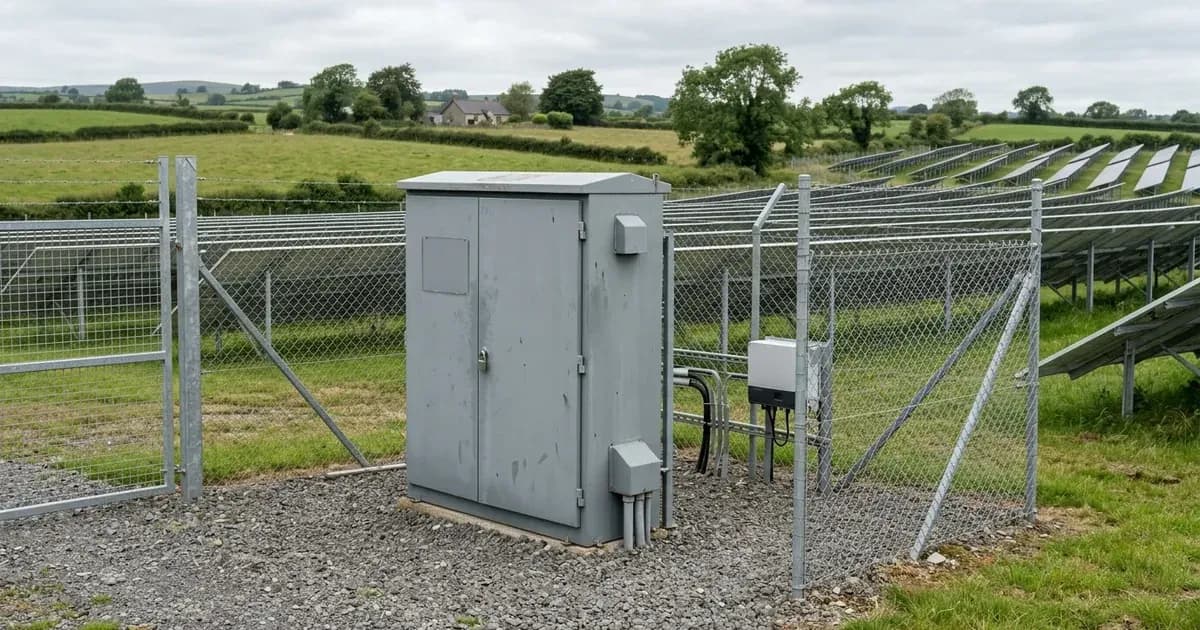
- On-site solar generation behind the meter avoids final customer PSO volumetric/capacity charges.
Understanding the Electricity Regulation Act 1999, Section 39
The Electricity Regulation Act, 1999, Section 39, establishes the statutory framework for Public Service Obligations (PSO) in Ireland. This section, part of "PART VI Public Service Obligations and Transitional Arrangements," empowers the Minister to direct the Commission to impose specific obligations on electricity suppliers. These obligations are designed to serve broader public interests within the electricity sector.
The Act specifies that the Minister, following consultation with the Minister for the Environment and Local Government, "shall by order direct the Commission to impose on the Board and holders of licences or authorisations, or holders of a permit under section 37 of the Principal Act, public service obligations." This provision ensures a legal basis for the PSO levy.
Purpose of the PSO Levy: Supporting Renewable Energy and Environmental Protection
A primary objective of Section 39 is to support specific forms of energy generation. The Act explicitly includes "environmental protection" as an objective. It also aims to promote the "use of indigenous energy sources."
Crucially, the PSO framework supports "renewable, sustainable or alternative forms of energy." The Act states that a public service obligation can be imposed "in respect of electricity which is produced using indigenous fuel or renewable, sustainable or alternative forms of energy as their primary source." This includes forms of energy "as may be specified in the order or which operate as combined heat and power plants." This mechanism finances schemes such as the Renewable Electricity Support Scheme (RESS), though we have not verified specific scheme details, so we don't publish them.
Cost Determination and Apportionment by the Commission
The Commission plays a central role in managing the financial aspects of the PSO levy. Section 39 mandates that "The Commission shall determine the additional costs incurred by the Board and holders of licences or authorisations in complying with an order under this section." These additional costs include "a reasonable rate of return on the capital represented by such costs."
Once determined, the Commission must "notify the Board and holders of licences or authorisations of the amount of additional costs determined by it to be recovered." The Act further requires the Commission to "apportion the additional costs as between different categories of electricity customers" and "specify the basis on which the amounts to be paid by each category of customer is to be assessed." We have not verified the specific annual levy rates or customer categories, so we don't publish them.
Self-Consumption and PSO Levy Exemption
For consumers generating their own electricity, particularly through solar installations, there is a notable provision regarding the PSO levy. On-site solar generation behind the meter avoids final customer PSO volumetric/capacity charges. This means that electricity consumed directly from your own solar panels, rather than drawn from the grid, is not subject to the PSO levy. This encourages self-sufficiency and the adoption of renewable energy technologies.
Frequently asked questions
What is the Public Service Obligation (PSO) levy in Ireland?
The PSO levy is mandated by the Electricity Regulation Act, 1999, Section 39. It funds public service obligations, including support for renewable, sustainable, or alternative forms of energy (August 2026).
What is the purpose of Section 39 of the Electricity Regulation Act 1999?
Section 39 of the Electricity Regulation Act, 1999, empowers the Minister to direct the Commission to impose public service obligations. These obligations include supporting environmental protection and the use of indigenous energy sources (August 2026).
How are PSO levy costs determined and apportioned?
The Commission determines the additional costs incurred by suppliers in complying with PSO orders. It then apportions these costs between different categories of electricity customers and specifies the assessment basis (August 2026).
Does on-site solar self-consumption affect PSO levy billing?
On-site solar generation behind the meter avoids final customer PSO volumetric/capacity charges (August 2026).
What types of energy generation does the PSO levy support?
The PSO levy supports electricity produced using indigenous fuel or renewable, sustainable, or alternative forms of energy as their primary source, as specified in ministerial orders (August 2026).
References
- irishstatutebook.ie — accessed 23 August 2026
Related guides
More from schemes, subsidies & financing.