Ireland Small Scale Renewable Electricity Support Scheme Sress Guide
Updated 19 September 2026 · By SolarNevs Research Desk, Dealer surveys + verified sources · 1 source · Method ↗
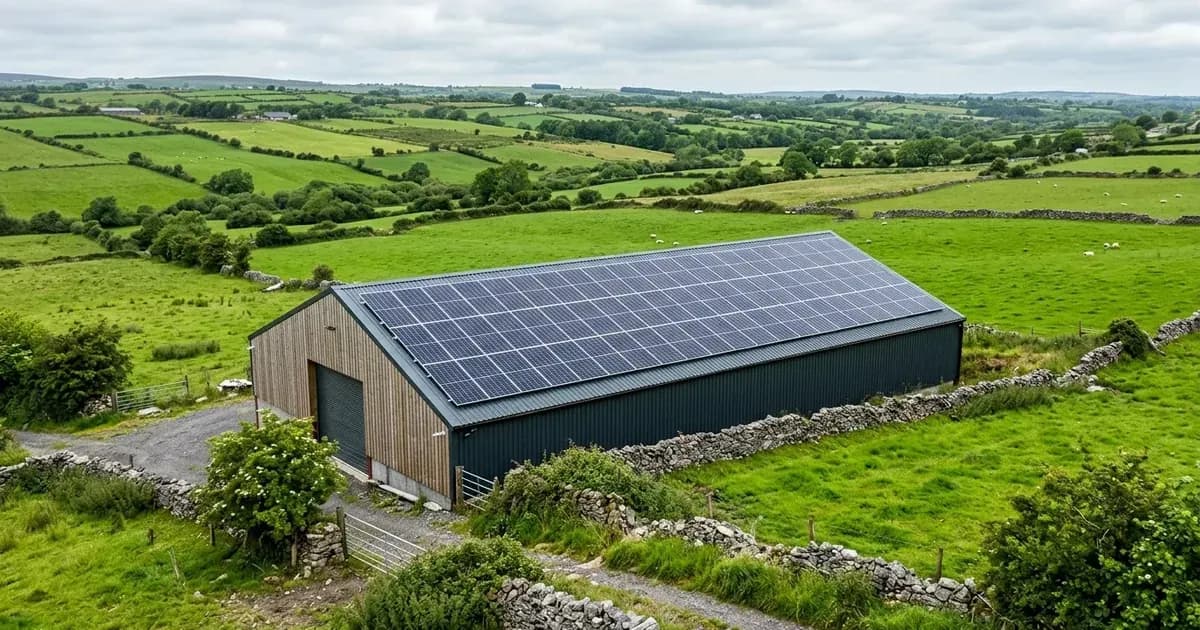
<!-- visual_plan -->
Key Takeaways
- Small-Scale Generation is defined as renewable electricity generation technologies with an electricity output greater than 50kW, but smaller than typical utility-scale generators.
- SRESS provides two distinct routes: Option 1 (Self-Consumer Grant under NDMG up to 1 MW) or Option 2 (15-year guaranteed Export Tariff up to 6 MW).
- Both the export tariff and the self-consumer grant are mutually exclusive and not available to the same project.
- The export tariff operates without an auction for 15 years, offering guaranteed premiums over wholesale revenues.
- Solar export tariffs for systems >50kW to 1MW offer €150/MWh for Renewable Energy Communities (RECs) and €130/MWh for SMEs and farmers.
- The tariff is structured as a two-way mechanism, requiring projects to contribute excess revenues back to the PSO during high electricity prices.
- Utility planning standards indicate approximately 3.75-5 acres (1.5-2ha) is required to support 1MW of solar capacity.
Purpose and Scope of SRESS
To bridge the policy gap between domestic micro-generation and large-scale competitive RESS auctions, the government established the Small-Scale Renewable Electricity Support Scheme. Under national criteria, Small-Scale Generation is defined as renewable electricity generation technologies with an electricity output greater than 50kW, but smaller than typical utility-scale generators.
The minimum project size for SRESS export projects is greater than 50 kW, providing medium-scale commercial rooftops, farm arrays, and community co-operatives with access to guaranteed grid revenues.
The Two Support Options: Grants vs Export Tariffs
Applicants must evaluate their energy balance carefully before applying:
- Option 1 (Self-Consumption Grant): Option 1 - The SRESS self-consumer grant, under the Non-Domestic Microgen Grant, serves businesses, schools, and farms that generate power primarily for their own consumption, offering up to €162,600.
- Option 2 (Guaranteed Export Tariff): Option 2 - The SRESS export tariff is for projects which export all electricity produced to the grid to earn income.
- Strict Mutual Exclusivity: It is important to note that both the export tariff and the self-consumer grant are not available to the same project. Projects choosing the export route cannot divert power to behind-the-meter loads.
SRESS Tariff Rates: Communities vs SMEs and Farmers
The scheme bypasses competitive auctions, offering guaranteed long-term revenue security:
- The SRESS export tariff provides a 15-year tariff to successful export applicants, without an auction.
- A different tariff is provided depending on whether the project is a Small and Medium Sized Enterprise (SME) or a Renewable Energy Community (REC). Farmers are eligible to apply on the same basis as SMEs.
The published tariff rate schedule establishes:
Participant Category | Solar PV (>50kW to 1MW) | Solar PV (>1MW to 6MW) | Wind (>50kW to 6MW) |
|---|---|---|---|
Renewable Energy Community (REC) | €150/MWh | €140/MWh | €90/MWh |
Small and Medium Enterprise (SME) & Farmers | €130/MWh | €120/MWh | €80/MWh |
Grid Requirements and Land Sizing
Advancing an SRESS development requires adherence to technical grid and land constraints:
- Consumer Protection Mechanism: The above-mentioned premium tariff for export led projects is a two-way tariff. If wholesale prices spike beyond the strike price, generators pay the excess back into the Public Service Obligation (PSO) fund.
- Grid Milestones: In SRESS, SME applicants are required to submit proof of Grid Connection Agreement at application stage. Conversely, Renewable Energy Communities need only provide proof of a Grid Connection Assessment when applying for SRESS.
- Spatial Planning: For ground-mounted commercial developments, approximately 3.75-5 acres (1.5-2ha) is required to support 1MW of solar capacity.
Frequently asked questions
What is Small-Scale Generation defined as under SRESS?
Small-Scale Generation is defined as renewable electricity generation technologies with an electricity output greater than 50kW, but smaller than typical utility-scale generators.
Can a solar project claim both the SRESS grant and the export tariff?
No, it is important to note that both the export tariff and the self-consumer grant are not available to the same project; applicants must choose only one option.
What are the export tariff rates for solar PV under SRESS?
For systems greater than 50kW up to 1MW, RECs receive €150/MWh and SMEs receive €130/MWh. For systems 1MW to 6MW, RECs receive €140/MWh and SMEs receive €120/MWh.
How long does the SRESS export tariff last?
The SRESS export tariff provides a 15-year tariff to successful export applicants, without an auction.
References
- Department of Climate, Energy and the Environment SRESS Publication — accessed 28 August 2026
Related guides
More from schemes, subsidies & financing.