NEV Policy 2025-30 Explained: 30% EV Adoption by 2030
Updated 15 September 2026 · By SolarNevs Research Desk, Dealer surveys + verified sources · 6 sources · Method ↗
Key Takeaways
- Pakistan's NEV Policy 2025-30 mandates achieving 30% electric vehicle sales across new two-wheelers and four-wheelers by 2030.
- Customs duties on Completely Knocked Down (CKD) electric bike kits drop to 1% to increase local assembly.
- Federal Excise Duty (FED) is reduced to 0% for electric vehicles priced under Rs 20,000,000 (July 2026).
- NEPRA establishes a discounted off-peak charging tariff of Rs 23.57 (July 2026) per kWh for home EV users.
- Commercial battery manufacturing plants receive 10-year income tax exemptions under industrial incentives.
What is the Pakistan National New Energy Vehicle (NEV) Policy 2025-30?
The National New Energy Vehicle (NEV) Policy 2025-30 sets out Pakistan's comprehensive strategy for transitioning from fossil-fuel transportation to electric mobility. Approved by the federal cabinet, the policy addresses oil import bills and urban smog challenges.
The target mandates that 30% of all new two-wheelers, three-wheelers, and passenger cars sold in Pakistan by 2030 must be zero-emission electric vehicles. The table below details core tax and duty incentives established under the policy.
Vehicle Category | CKD Import Duty | CBU Import Duty | Federal Excise Duty | Sales Tax Rate |
|---|---|---|---|---|
Electric Two-Wheelers | 1% Duty | 30% Duty | 0% FED | 1% Sales Tax |
Electric Three-Wheelers | 1% Duty | 30% Duty | 0% FED | 1% Sales Tax |
Electric Cars (<50 kWh) | 1% Duty | 25% Duty | 0% FED | 8% Sales Tax |
Electric Cars (>50 kWh) | 10% Duty | 30% Duty | 0% FED | 18% Sales Tax |
These tax structures incentivize local manufacturers to assemble EV components inside Pakistan rather than importing fully built units.
How does the policy incentivize local battery and component manufacturing?
To build long-term industrial capability, the NEV Policy 2025-30 offers substantial concessions for setting up local battery manufacturing and electric motor assembly:
- Tax Exemptions: 10-year income tax holiday for companies establishing local LiFePO4 battery cell fabrication plants.
- Capital Machinery Relief: 0% customs duty on imported machinery used for producing EV motors, controllers, and battery packs.
- Special Economic Zone Benefits: Priority land allotment and subsidized utility connections in industrial parks.
These measures aim to shift Pakistan from importing Chinese components to manufacturing local battery packs by 2028.
How does NEPRA support the NEV Policy with special charging tariffs?
The National Electric Power Regulatory Authority (NEPRA) created dedicated tariff brackets to support EV adoption:
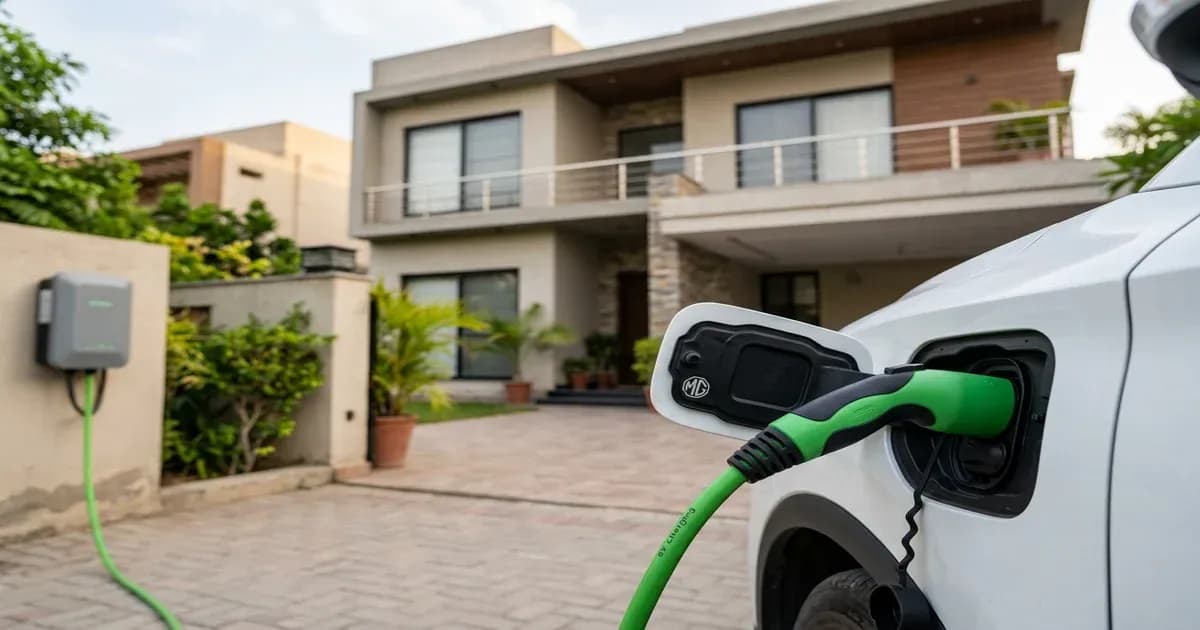
- Off-Peak Charging Tariff: A discounted tariff of Rs 23.57 (July 2026) per kWh for charging EVs during off-peak hours (11 PM to 9 AM).
- Commercial Station Tariffs: Standardized commercial tariffs for fast DC charging stations along motorways and national highways.
- Net Billing Integration: Guidelines allowing EV owners to charge vehicles using excess solar power generated from rooftop solar panels.
Discounted off-peak tariffs drastically lower operating costs for electric vehicle owners.
Check which solar financing you qualify for
Tell us your bank, monthly income band and system size. We tell you which of the schemes on this page you are likely to qualify for and introduce you to an installer registered with that bank.
How this pays for the site: installers pay SolarNevs a fixed introduction fee when we pass them a genuine enquiry. They cannot pay to appear higher, and our surveyed prices are published before any introduction. You can also take our dated price tables straight to any installer.
Frequently asked questions
What is the main target of Pakistan NEV Policy 2025-30?
The policy targets achieving 30% of all new vehicle sales as New Energy Vehicles (EVs and HEVs) by 2030.
What tax incentives does the NEV Policy provide for electric bikes?
The policy lowers customs duties on CKD electric bike kits to 1% and waives federal excise duty.
How does the NEV policy encourage local EV manufacturing?
It provides 10-year tax holidays for manufacturers setting up local EV assembly and battery manufacturing plants.
References
- Ministry of Industries & Production - New Energy Vehicles Policy 2025-30 (final, 13 Aug 2025, PDF) — accessed 6 September 2026
- PakWheels Blog - National Electric Vehicle Policy 2025-30 Launched in Pakistan — accessed 6 September 2026
- FBR - First Schedule to the Finance Act 2025: Rate of New Energy Vehicle Adoption Levy (PDF) — accessed 6 September 2026
- Board of Investment - Low rate of Customs Duty on import of EV CKD & Specific Parts (1% on EV-specific CKD components) — accessed 6 September 2026
- Board of Investment - No Sales Tax on imports of CKD kits of EVs (Sixth Schedule, Sales Tax Act 1990; 50 kWh threshold for 4-wheelers) — accessed 6 September 2026
- NEPRA - Decision on Rationalization of Tariff for Electric Vehicle Charging Stations, 15 Apr 2025 (Rs 23.57/kWh base rate, PDF) — accessed 6 September 2026
Related guides
More from schemes, subsidies & financing.