Astronergy ASTRO N7 (590–615W)
Rs 24,300 verified 25 Jul 2026 — prices in Pakistan move weekly
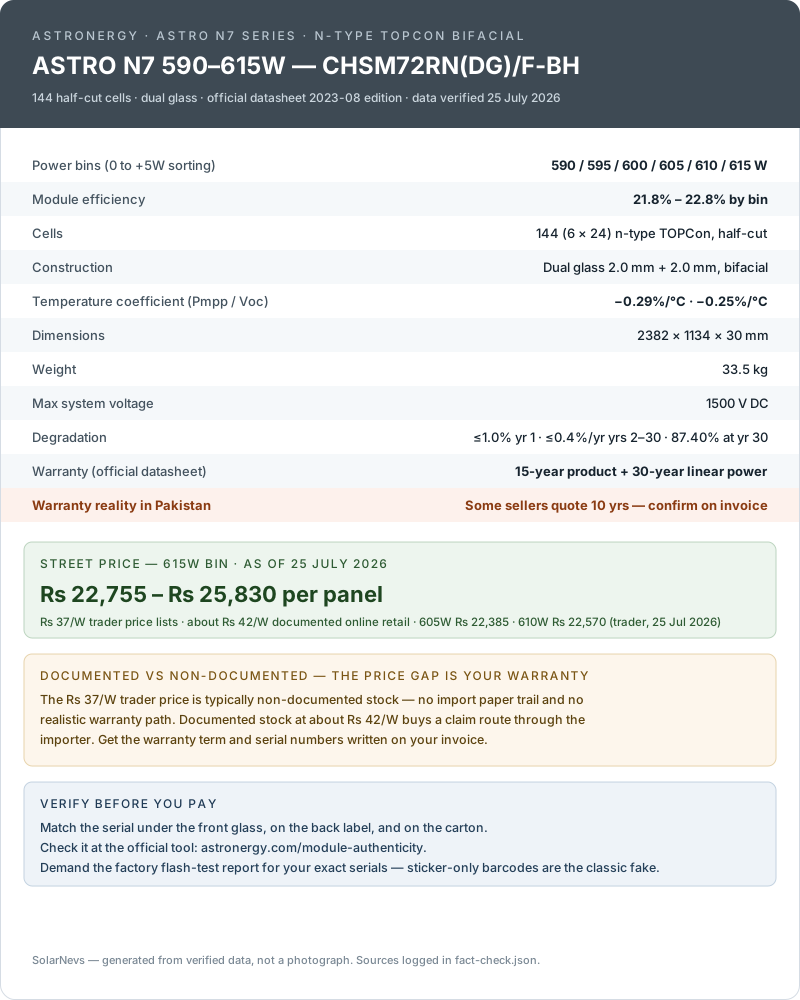
Specifications
| model | CHSM72RN(DG)/F-BH Bifacial Series |
|---|---|
| wattageVariants | 590,595,600,605,610,615 |
| cellTech | n-type TOPCon, 144 half-cut cells (6x24), non-destructive cutting |
| construction | dual-glass 2.0mm + 2.0mm, bifacial |
| efficiency | 21.8%–22.8% by bin |
| tempCoefficientPmpp | -0.29%/°C |
| tempCoefficientVoc | -0.25%/°C |
| dimensionsMM | 2382 x 1134 x 30 |
| weightKG | 33.5 |
| maxSystemVoltage | 1500VDC |
| degradation | ≤1.0% year 1, ≤0.4%/yr years 2–30 (87.40% at year 30) |
| Warranty | 15-year product + 30-year linear power per official datasheet; ≤1.0% year-1 degradation, ≤0.4%/yr after, 87.40% guaranteed at year 30. Some PK sellers quote 10 years product — confirm on invoice. |
The ASTRO N7 is Astronergy's volume n-type TOPCon series in Pakistan — a 144-half-cell, dual-glass bifacial panel sold here in 590–615W bins (model code CHSM72RN(DG)/F-BH). As of 25 July 2026, the 615W bin costs Rs 22,755 on Pakistani trader price lists (Rs 37/W) and about Rs 25,830 from documented online retailers (Rs 42/W); the 605W and 610W bins sit at Rs 22,385 and Rs 22,570 on the same lists. It competes head-on with Jinko's Tiger Neo and JA's DeepBlue 4.0 in the same wattage class, usually a few rupees per watt cheaper.
Specifications (official datasheet, 2023-08 edition)
Spec | Value |
|---|---|
Model | CHSM72RN(DG)/F-BH Bifacial Series |
Power bins | 590 / 595 / 600 / 605 / 610 / 615 W (0 to +5W sorting) |
Module efficiency | 21.8% – 22.8% |
Cells | 144 (6×24) n-type mono, TOPCon, half-cut, non-destructive cutting |
Construction | Dual glass, 2.0mm front + 2.0mm back, bifacial |
Temp coefficient (Pmpp) | −0.29%/°C |
Temp coefficient (Voc) | −0.25%/°C |
Dimensions | 2382 × 1134 × 30 mm |
Weight | 33.5 kg |
Max system voltage | 1500V DC |
Mechanical load | 5400 Pa front / 2400 Pa back (test load) |
Degradation | ≤1.0% year 1; ≤0.4%/yr years 2–30; 87.40% at year 30 |
Warranty | 15-year product, 30-year linear power |
Voltage numbers for stringing: the 615W bin runs Voc 52.00V and Vmpp 43.70V at STC, with Isc 14.86A — check your inverter's max input current, since some older 12.5A-rated MPPTs clip these wide-format panels.
Honest assessment
Pros. The spec sheet is genuinely competitive: 22.8% top-bin efficiency and −0.29%/°C match or beat Jinko Tiger Neo's equivalents, and the dual-glass build plus 15/30-year warranty is as good as this class gets on paper. On July 2026 prices it is the cheapest Tier-1 TOPCon 615W panel we can find in Pakistan — Rs 22,755 trader / Rs 25,830 retail, versus roughly Rs 25,000–26,700 for a Jinko Tiger Neo 615W at SolarCitizen's Rs 40.65–43.45/W July 2026 band, and Rs 30,750 for a Longi 615W at W11Stop's July 2026 listing.
Cons. Astronergy's Pakistani presence is newer, so there's little multi-year owner feedback from local installations to point to — you're trusting the datasheet and the Tier-1 rating, not a long local track record. The Rs 4,000+ per-panel spread between channels means quote-shopping is mandatory. Stock consistency is weaker than Jinko/Longi: sellers move between 585W, 605W, 610W and 615W bins depending on which container landed, so the exact bin you're quoted may change at delivery — confirm wattage on the flash report, not the invoice line.
Who should buy. On-grid buyers optimizing Rs/W who will verify serials and buy documented stock. Skip it if your installer can't produce flash reports or if after-sales access matters more to you than saving roughly Rs 2,000–4,000 per panel versus Jinko.
Pakistan reality check
Heat and dust. At −0.29%/°C, a 615W N7 at ~65°C cell temperature (a normal Lahore/Multan June afternoon) delivers about 543W — an 11.6% thermal loss, a real advantage over PERC-era panels losing 13–14%. The dual-glass laminate resists dust abrasion and humidity ingress better than backsheet panels, but at 2382×1134mm and 33.5 kg it's a big, heavy unit: check your rooftop structure spacing and use four-rail mounting where wind load is high. Bifacial rear gain over dirty concrete is minimal; don't let anyone size your system assuming the marketing's +25% rear-gain scenario.
Documents vs non-documents, and fakes. The Rs 37/W list price is trader-market stock, typically non-documented — cheaper, but with no realistic warranty path. Documented stock at Rs 42/W buys you a claim route through the importer. Before paying for any N7: match the in-glass serial against the back label and carton; run the serial through Astronergy's official checker at astronergy.com/module-authenticity; and get the factory flash-test report showing your serial's tested output. A "615W" panel with a paper-sticker barcode and no flash report may be a re-labeled lower bin — this re-sticker fraud is the single most common scam in Pakistan's panel market, across all brands.
Warranty claims. The 15-year product / 30-year power warranty is printed on the datasheet, but several Pakistani listings quote 10 years — likely older warranty terms or channel caution. Whatever the seller promises, it's only enforceable through the importing distributor, with your invoice, serial photos, and flash reports as evidence. No documents, no claim.
Price context (25 July 2026)
Panel (615W class) | Per-watt | Approx per-panel |
|---|---|---|
Astronergy ASTRO N7 615W | Rs 37–42/W | Rs 22,755–25,830 |
Jinko Tiger Neo 585–615W | Rs 40.65–43.45/W | ≈ Rs 25,000–26,700 (derived) |
JA DeepBlue 4.0 580–595W | Rs 39.75–42.5/W | ≈ Rs 23,000–25,300 (derived) |
Longi 615W (Hi-Mo7/X10 class) | ≈ Rs 45–50/W | Rs 30,750 (W11Stop listing) |
Rival per-watt bands are SolarCitizen's July 2026 figures; per-panel numbers marked "derived" are computed from those bands, not shelf prices. The N7's discount is real, but it's only a bargain if the panel on your roof is the panel on the datasheet — verify serials before you pay.
Frequently asked questions
What does an ASTRO N7 615W panel cost in Pakistan today?
As of 25 July 2026, Rs 22,755 on trader price lists (Rs 37/W) to about Rs 25,830 at documented retail (Rs 42/W). The 605W and 610W bins run Rs 22,385–22,570 on the same trader lists.
Is the ASTRO N7 bifacial, and how much extra power does that give?
Yes, dual-glass bifacial. The datasheet models 5–25% rear gain, but that assumes reflective ground. On a normal Pakistani rooftop expect low single digits; on white-painted or elevated structures, more.
How does the N7 perform in Pakistani summer heat?
Its -0.29%/°C temperature coefficient is among the better TOPCon figures. At about 65°C cell temperature, a 615W panel delivers roughly 543W — about 11.6% below rated — versus 13-14% losses for older PERC panels.
How do I verify a genuine ASTRO N7?
Match the serial under the front glass, on the back label, and on the carton; check it at astronergy.com/module-authenticity; and demand the factory flash-test report for your exact serials. Paper-sticker-only barcodes are the classic fake.
What is the real warranty on this panel in Pakistan?
Officially 15-year product and 30-year power warranty. In Pakistan the claim runs through the importer, so it only holds on documented stock. Get the warranty term and serial numbers written on your invoice.
References
- Astronergy ASTRO N7 official datasheet (CHSM72RN(DG)/F-BH 590–615W, 2023-08) — accessed 25 Jul 2026
- SolarPanelRates.net — Astronergy prices — accessed 25 Jul 2026
- BuySolar.pk — Astronergy panels — accessed 25 Jul 2026
- Itehaad Solar System — Astronergy category — accessed 25 Jul 2026
- SolarCitizen — Pakistan panel prices July 2026 — accessed 25 Jul 2026
- Astronergy module authenticity checker — accessed 25 Jul 2026