Jinko Tiger Neo 585W (N-type TOPCon)
Rs 25,000 verified 25 Jul 2026 — prices in Pakistan move weekly
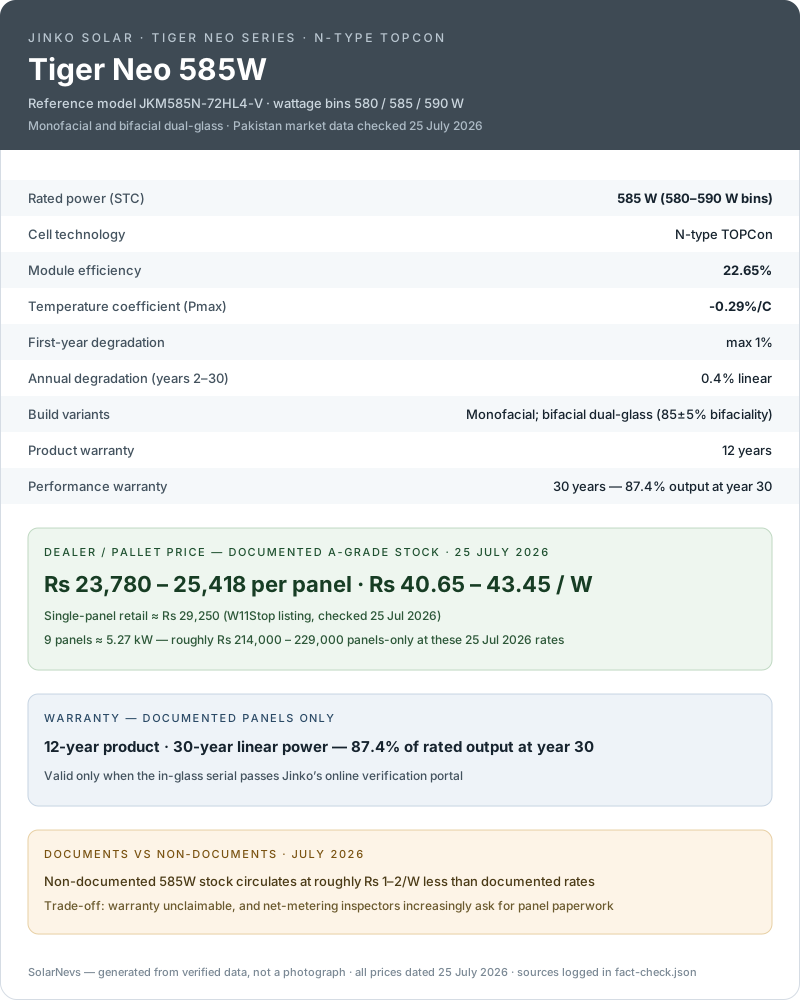
Specifications
| wattageVariants | 580W,585W,590W |
|---|---|
| referenceModel | JKM585N-72HL4-V |
| cellTech | N-type TOPCon |
| efficiency | 22.65% |
| tempCoefficient | -0.29%/C |
| degradation | max 1% year one, 0.4%/year linear |
| variants | monofacial and bifacial dual-glass |
| Warranty | 12-year product warranty, 30-year linear power warranty ending at 87.4% of rated output — valid only on documented panels with in-glass serials that pass Jinko's online verification. |
The Jinko Tiger Neo 585W is an N-type TOPCon panel — the reference model in Pakistan is the JKM585N-72HL4-V — and the workhorse of Pakistani residential solar in 2025-26. As of 25 July 2026 it costs Rs 23,780-25,418 per panel at dealer rates (Rs 40.65-43.45/W), with single-panel retail around Rs 29,250.
It sells in 580W, 585W, and 590W bins, in both monofacial and bifacial dual-glass builds. The 585W bin is what most dealers quote by default.
Specifications
Spec | Value |
|---|---|
Rated power (STC) | 585W (580-590W bins) |
Cell technology | N-type TOPCon |
Module efficiency | 22.65% |
Temperature coefficient (Pmax) | -0.29%/C |
First-year degradation | max 1% |
Annual degradation (yr 2-30) | 0.4% linear |
Product warranty | 12 years |
Performance warranty | 30 years, 87.4% output at year 30 |
Variants | Monofacial; bifacial dual-glass (85±5% bifaciality) |
Honest assessment
Pros. The efficiency and temperature coefficient are genuinely class-leading for the price bracket, and this specific panel has been installed at massive scale across Pakistan since 2024, so installers know it, structures fit it, and resale recognition is strong. Field comparisons across Pakistani installations put Jinko and LONGi within 1-2% of each other in delivered energy — you are not sacrificing real-world output by choosing either.
Cons. It is not the cheapest N-type 585W anymore: JA Solar's DeepBlue 580-595W does the same job for Rs 39.75-42.5/W, and Trina Vertex N for Rs 39.3-42.15/W (both July 2026). The 585W class is also being phased down as Jinko pushes the 620-645W Tiger Neo 3.0 class — fine for buyers today, but expect this wattage to become "old stock" within a year or two, which matters if you ever need a matching replacement panel. And because it is the most-recognized panel in the market, it is also the most counterfeited.
Who should buy. Anyone building a standard 5-15kW residential system who wants maximum installer familiarity and easy stock availability. If your roof space is tight, look at the 620W-class page instead — more watts per panel at nearly the same per-watt rate.
Pakistan reality check
Heat and dust. On a 45C roof, cell temperatures reach 65-70C; at -0.29%/C the panel gives up roughly 8-10% of rated output, versus 11-13% for the P-type panels of the 2022-23 era. That difference is the practical argument for N-type in Pakistan. Dust soiling in Punjab and Sindh costs 5-15% more if panels are not washed every few weeks in dry season.
Documents vs non-documents. Published rates above are for documented A-grade stock. Non-documented 585W panels circulate at Rs 1-2/W less. They may be genuine grey-channel imports, but the warranty is unclaimable and net-metering inspectors increasingly ask for panel paperwork. The Rs 5,000-10,000 you save per system is what one warranty claim would have been worth.
Counterfeit check — do this before paying. The 585W is the most-faked Jinko panel in Pakistan. Three tests: (1) the serial number must be laser-etched inside the front glass — a paper-sticker barcode on the frame is the signature of a fake; (2) the serial must return model, production date, and warranty status on Jinko's official online verification portal — an invalid or empty result means reject; (3) a documented importer can produce the per-serial factory flash-test report showing the panel's actual measured wattage. Insist on all three, in writing, on the invoice.
Warranty claim reality. Claims route through the importer/distributor chain, not Jinko directly. With verified serials and purchase documents, replacements do happen, but budget weeks of turnaround. Without documents, there is no claim at all.
Price context vs rivals (July 2026)
Panel (585W-class, N-type) | Rs/W (Jul 2026) |
|---|---|
Trina Vertex N | 39.3-42.15 |
JA Solar DeepBlue | 39.75-42.5 |
Jinko Tiger Neo 585W | 40.65-43.45 |
Canadian Solar TOPCon | 41-46 |
LONGi Hi-MO X7 | 42.5-46.2 |
Jinko sits mid-table: cheaper than LONGi and Canadian, a rupee or two above JA and Trina. The premium buys distribution depth and brand recognition, not extra performance.
Frequently asked questions
What does a Jinko 585W panel cost in Pakistan today?
As of 25 July 2026, Rs 23,780-25,418 per panel at dealer/pallet rates (Rs 40.65-43.45/W). Single-panel retail with cash-on-delivery runs about Rs 29,250 (W11Stop, June 2026 listing).
How many Jinko 585W panels do I need for a 5kW system?
Nine panels give 5.27kW DC — the standard Pakistani 5kW hybrid setup. At July 2026 dealer rates, that is roughly Rs 214,000-229,000 for panels alone; panels are typically 35-45% of total system cost.
Is the 585W bifacial worth the extra cost over monofacial?
The bifacial dual-glass version costs about Rs 0.50/W more (Rs 42.50 vs Rs 42, July 2026). On elevated structures with reflective roofs it adds real gain; flush-mounted on mud-colored roofs, the gain is small.
How do I verify a genuine Tiger Neo 585W?
The serial must be etched inside the front glass — not printed on a paper sticker. Check the serial on Jinko's online verification portal and ask the dealer for the panel's factory flash-test report. If either fails, reject it.
What is the real output in Pakistani summer heat?
At 45C+ cell temperatures expect roughly 8-10% below rated output due to the -0.29%/C temperature coefficient — better than P-type panels which lose 11-13%. Dust can cost another 5-15% if panels go unwashed.
References
- Solar Citizen — Jinko price Pakistan — accessed 25 Jul 2026
- SolarPanelRates.net — Jinko — accessed 25 Jul 2026
- SolarPanelPriceInPakistan.online — daily list — accessed 25 Jul 2026
- W11Stop — Jinko 585W N-type bifacial — accessed 25 Jul 2026
- JinkoSolar official — Tiger Neo — accessed 25 Jul 2026
- Solar Citizen — brand comparison Jul 2026 — accessed 25 Jul 2026