UK VAT Rules: Electrical Battery Storage Retrofits and 0% Relief Until 2027
Updated 6 September 2026 · By SolarNevs Research Desk, Dealer surveys + verified sources · 1 source · Method ↗
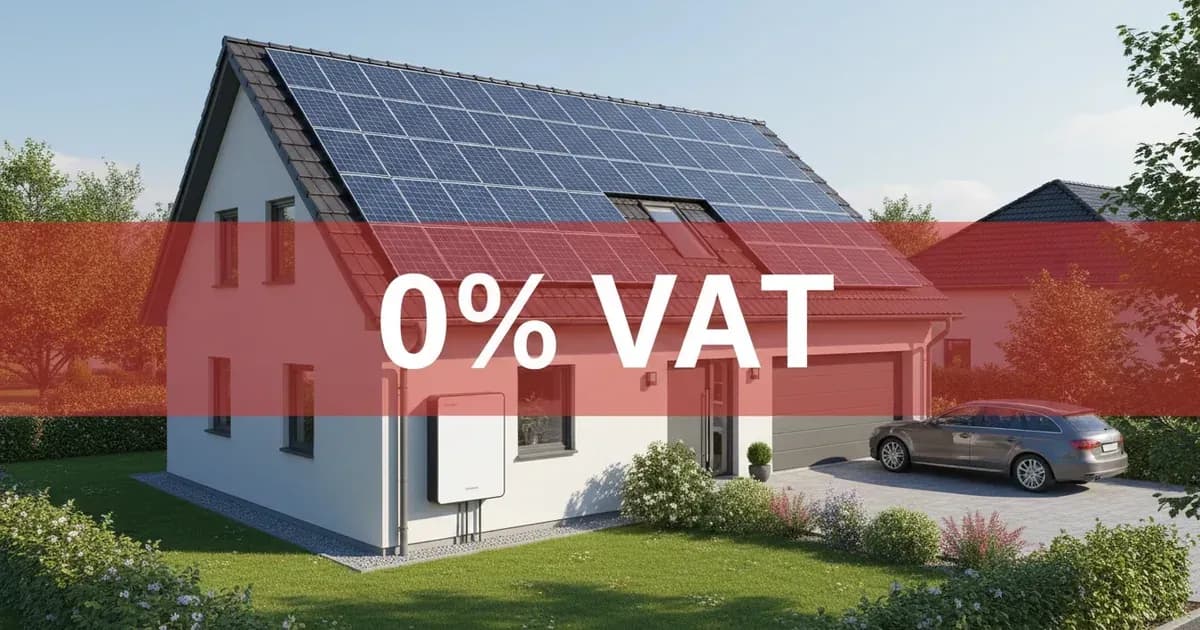
Key Takeaways
- Electrical storage batteries became eligible for UK VAT relief from 1 February 2024 (August 2026).
- The temporary zero rate for qualifying installations applies up to 31 March 2027 (August 2026).
- Thermal or heat batteries are explicitly excluded from this VAT relief.
- The relief covers batteries storing electricity from energy-saving materials, the grid, or both.
What are the UK VAT rules for electrical battery storage retrofits?
The UK government, through HM Revenue & Customs (HMRC), has introduced specific VAT rules for electrical battery storage systems. With effect from 1 February 2024 (August 2026), electrical storage batteries are included in the scope of VAT relief. This means that certain installations of electrical battery storage systems can benefit from a temporary zero rate of VAT. This zero rate is applicable up to 31 March 2027 (August 2026). After this date, the installations will be subject to a reduced rate of VAT.
The relief specifically applies to batteries that store energy in the form of chemical energy, which is then converted back to electrical energy when the battery is discharged. This definition is crucial for distinguishing eligible systems from excluded ones.
Which battery storage installations qualify for 0% VAT?
For an electrical battery storage installation to qualify for the temporary zero rate of VAT, it must meet specific criteria regarding its purpose and location. The relief applies to installations in residential accommodation or buildings intended for use solely for a relevant charitable purpose.
The circumstances under which the installation of electrical storage batteries qualifies are:
- Retrofitting a battery for storing electricity generated by one or more qualifying energy-saving materials. Examples of such materials include solar panels, wind turbines, and water turbines.
- Installation of a standalone battery for storing electricity from the grid (the mains electricity).
- Installation of a battery for storing electricity from one or more qualifying energy-saving materials and from the grid.
These provisions ensure that systems designed to enhance energy independence, reduce reliance on grid electricity, or store renewable energy are supported by the VAT relief.
Are all battery types eligible for VAT relief?
No, not all types of battery storage systems are eligible for the UK VAT relief. The rules specifically differentiate between electrical storage batteries and thermal batteries. Batteries that store energy in the form of heat (i.e., thermal or heat batteries) are not included in the VAT relief (August 2026). This distinction is important for consumers and installers to understand when planning energy storage solutions. Only those systems that convert chemical energy to electrical energy are covered by the current zero-rate provisions.
How long will the 0% VAT rate apply?
The temporary zero rate for electrical batteries installed as part of the installation of a qualifying energy-saving material applies up to 31 March 2027 (August 2026). This means that any qualifying installation completed and invoiced before this date will benefit from the 0% VAT rate. After 31 March 2027 (August 2026), these installations will be subject to a reduced rate of VAT. The exact percentage of this future reduced rate is not specified in the current guidance (August 2026). You should consult updated HMRC guidance closer to that date for the precise rate.
How we verified these rules
We verified the information presented in this article by consulting the official internal manuals published by HM Revenue & Customs (HMRC). Specifically, we referenced the "VAT Energy-Saving Materials and Grant-Funded Heating Supplies" manual (August 2026). This document was published on 11 April 2016 and was last updated on 16 May 2024 (August 2026), ensuring the information reflects the most recent government guidance. Our review date was 23 August 2026.
Understanding the scope and limitations of the VAT relief
While the 0% VAT relief offers a significant benefit for electrical battery storage installations, it is important to understand its precise scope and any current limitations in the published guidance. The HMRC manual clearly outlines the eligibility criteria, but some definitions remain broad. For instance, the document mentions "residential accommodation" and "buildings intended for use solely for a relevant charitable purpose" without providing exhaustive definitions (August 2026). Similarly, while solar panels, wind turbines, and water turbines are listed as "qualifying energy-saving materials," the document does not provide a comprehensive list of all such materials (August 2026).
You should ensure that your specific installation and property type align with the spirit of these definitions. For installations nearing the 31 March 2027 deadline, be aware that the VAT rate will change to a reduced rate thereafter, the specific percentage of which has not been published (August 2026). We recommend consulting the latest HMRC guidance or a qualified tax professional for specific advice on complex cases or as the 2027 deadline approaches.
Frequently asked questions
When did electrical battery storage become eligible for UK VAT relief?
Electrical storage batteries became eligible for UK VAT relief from 1 February 2024 (August 2026). This applies to batteries that store energy as chemical energy, which is then converted back to electrical energy.
What types of battery storage are excluded from UK VAT relief?
Thermal or heat batteries are explicitly excluded from the UK VAT relief (August 2026). These batteries store energy in the form of heat and are not covered by the current provisions.
How long will the 0% VAT rate apply to qualifying electrical battery storage installations in the UK?
The temporary zero rate for electrical batteries installed as part of a qualifying energy-saving material installation applies up to 31 March 2027 (August 2026). After this date, the rate will be reduced rated.
What types of electrical battery storage installations qualify for UK VAT relief?
Qualifying installations include retrofitting a battery for electricity generated by energy-saving materials (solar, wind, water turbines), installing a standalone battery for grid electricity, or a battery storing electricity from both sources (August 2026). These installations must be in residential accommodation or for relevant charitable purposes.
What is the source of the UK VAT rules for battery storage?
The rules are published by HM Revenue & Customs (HMRC) in their internal manuals (August 2026). The relevant manual was updated on 16 May 2024.
References
- HMRC Internal Manuals - VAT Energy-Saving Materials and Grant-Funded Heating Supplies — accessed 23 August 2026
Related guides
More from what to buy — and how not to get cheated.