UK Commercial Tenant Green Lease and Rooftop PPA Guide
Updated 15 September 2026 · By SolarNevs Research Desk, Dealer surveys + verified sources · 6 sources · Method ↗
Key Takeaways
- Commercial landlords can generate and supply solar electricity directly to tenants in Great Britain under specific licensing exemptions.
- Green leases, like those guided by the Model Commercial Lease or Better Buildings Partnership, integrate sustainability goals into property agreements.
- Metering for private wire electricity sales must meet specific regulatory requirements for accuracy and certification.
- The Authority may set maximum prices for electricity resold by authorised suppliers, impacting landlord-tenant PPA pricing.
How can a commercial tenant benefit from rooftop solar on their leased property?
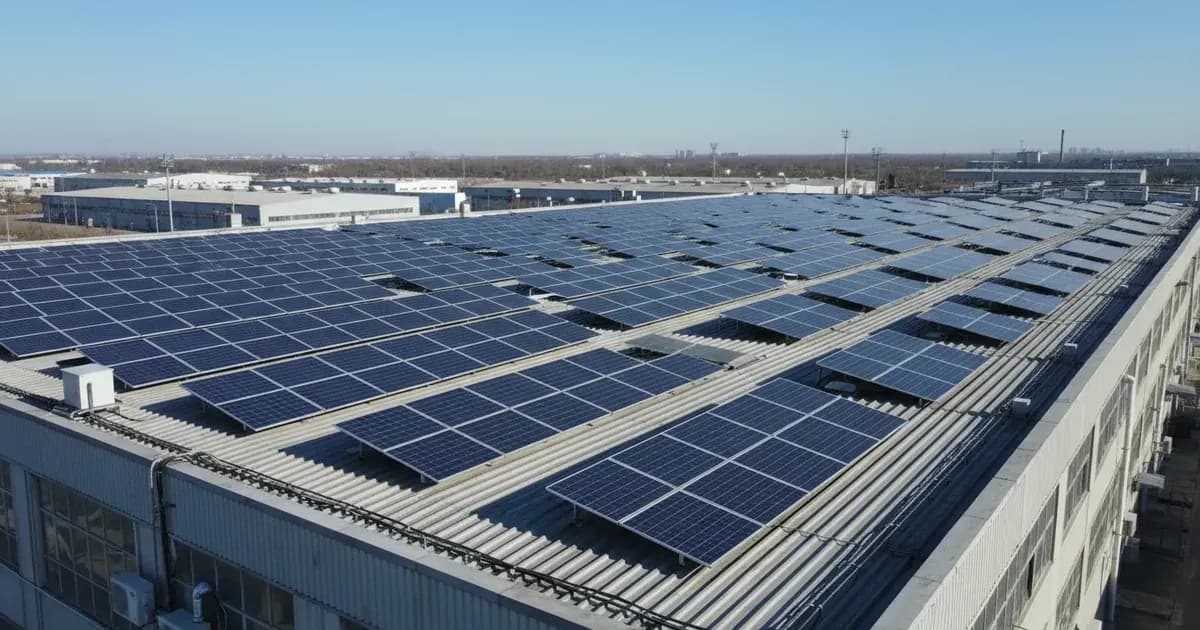
Commercial tenants in Great Britain can benefit from rooftop solar through Power Purchase Agreements (PPAs) with their landlords. These arrangements allow tenants to purchase electricity generated on-site, often at a predictable price, directly from the landlord. This direct supply is typically facilitated via "private wires" and operates under specific licensing exemptions from the Electricity Act 1989 and related statutory instruments.
Understanding Private Wire PPAs and Green Leases
A private wire Power Purchase Agreement (PPA) is a contractual agreement where a landlord, as the generator of solar electricity, sells that electricity directly to a tenant on the same site. This bypasses the traditional grid supply for a portion of the tenant's consumption. The legal framework for such arrangements in Great Britain is defined by the Electricity Act 1989 and the Electricity (Class Exemptions from the Requirement for a Licence) Order 2001.
Green leases complement PPAs by integrating environmental and sustainability objectives into the commercial lease agreement. Tools like the Model Commercial Lease (MCL) provide template commercial agreements for lease, leases, and associated documents. The Better Buildings Partnership (BBP) Green Lease Toolkit offers practical tools, model clauses, drafting guidance, and resources to support sustainability ambitions in commercial property. These resources help landlords and tenants formalise their commitment to reducing environmental impact, including the adoption of on-site renewable energy generation.
Regulatory Framework for Private Wire Solar PPAs
Operating a private wire PPA involves adherence to specific regulatory exemptions and metering requirements. The table below outlines key provisions from UK legislation that enable and govern these arrangements.
Regulation/Exemption | Description | Conditions |
|---|---|---|
Generation Exemption: Class A (Small generators) | Persons who do not at any time provide more electrical power from any one generating station than 10 megawatts, or 50 megawatts for a station with a declared net capacity of less than 100 megawatts, with certain disregards. | This exemption allows small-scale generators, such as rooftop solar installations, to operate without a generation licence. |
Supply Exemption: Class C (On-site supply) | Persons who supply electricity generated themselves or generated themselves together with electricity supplied by a licensed supplier, to consumers on the same site or via private wires, under specific conditions. | This enables landlords to supply electricity directly to tenants on the same site or through private wire networks without requiring a supply licence. |
Supply Exemption: Class C (On-site supply) - Maximum Power to Additional Group Consumers | The total maximum amount of electrical power supplied to additional group consumers at any time is 100 megawatts, of which not more than one megawatt is supplied to domestic consumers. | This sets limits on the scale of supply to other consumers within the exempt private wire network. |
Metering Requirement: Appropriate Meter | Where a customer is charged for electricity by reference to quantity, the supply must be given through, and the quantity ascertained by, an appropriate meter. | Essential for accurate billing and reconciliation between landlord and tenant. |
Metering Requirement: Approved Pattern/Construction | No meter shall be used for ascertaining the quantity of electricity supplied by an authorised supplier to a customer unless the meter is of an approved pattern or construction and is installed in an approved manner. | Ensures the reliability and accuracy of metering equipment used for commercial transactions. |
Metering Requirement: Certification | No meter shall be used for ascertaining the quantity of electricity supplied by an authorised supplier to a customer unless the meter is certified under paragraph 5 of Schedule 7 of the Electricity Act 1989, unless agreed otherwise for exempt supplies. | Provides legal assurance of the meter's accuracy and suitability for trade. |
Resale of Electricity: Maximum Prices | The Authority may direct maximum prices at which electricity supplied by authorised suppliers may be resold, or methods for calculating such prices. | This provision allows for regulatory oversight of electricity resale prices, protecting consumers from excessive charges. |
Guarantees of Origin: Request for Issue | The issue of guarantees of origin may be requested by the nominated person (or supply successor company) for electricity purchased under a qualifying arrangement, or by the producer for other electricity. | Allows for the certification of renewable electricity production, which can be valuable for sustainability reporting. |
Guarantees of Origin: Electricity Produced Outside Great Britain | No request for the issue of guarantees of origin may be made in respect of electricity produced outside Great Britain. | Guarantees of Origin are specific to electricity generated within Great Britain. |
Guarantees of Origin: Minimum Period for Request | No request for the issue of guarantees of origin may be made in respect of a period of less than one month. | Sets the minimum reporting period for renewable electricity generation. |
What you can check yourself, and what you cannot
As a commercial tenant or landlord considering a private wire PPA, you can undertake initial assessments and engage with general guidance.
What you can check yourself:
- Review general green lease guidance: Resources like the Model Commercial Lease and the Better Buildings Partnership Green Lease Toolkit provide model clauses and drafting guidance. These can help you understand the types of sustainability provisions that can be included in a lease.
- Understand licensing exemptions: Familiarise yourself with the basic conditions for Generation Exemption: Class A (Small generators) and Supply Exemption: Class C (On-site supply) to determine if your proposed project falls within these parameters.
- Assess site suitability: Consider the physical space available for solar panels on the rooftop and the tenant's electricity consumption patterns.
What you cannot (or should not) do yourself:
- Interpret complex legal requirements: The specifics of the Electricity Act 1989 and related Statutory Instruments, particularly concerning metering certification and licence exemptions, require expert legal interpretation.
- Draft PPA or lease clauses: While model clauses exist, adapting them to your specific commercial circumstances, including billing reconciliation and indexation, requires legal professionals experienced in energy and property law.
- Certify metering equipment: Metering for electricity supplied for trade must be of an approved pattern or construction, installed in an approved manner, and certified. This is a task for accredited professionals.
- Determine maximum resale prices: The Authority may direct maximum prices for electricity resale. This is a regulatory function, not something parties can unilaterally decide.
Engaging with legal counsel and accredited energy consultants is essential to ensure compliance and to draft robust, legally sound agreements.
What the published sources do not tell you
The provided legislative and guidance documents establish the framework for private wire PPAs and green leases but do not detail the commercial specifics of these agreements.
- PPA Contract Lengths and Pricing Structures: Specific details on typical PPA contract lengths, pricing structures (e.g., fixed, indexed, hybrid), and escalation clauses are not present.
- Billing Reconciliation: Information on how billing reconciliation is typically handled in commercial rooftop solar PPAs between landlords and tenants is not detailed.
- Indexation Mechanisms: The documents do not provide specific examples or guidance on indexation mechanisms (e.g., RPI, CPI, specific energy price indices) commonly used in UK commercial solar PPAs.
- Contractual Arrangements: While licensing and metering are covered, the explicit contractual arrangements or commercial terms of PPAs are not detailed within the legislative texts.
- Specific PPA Templates: The Model Commercial Lease website provides general lease templates but does not offer specific PPA templates or clauses related to solar PPAs.
- Financial Terms: The Green Lease Toolkit provides general guidance on green leases but does not contain specific PPA clauses or financial terms.
- Dispute Resolution: There is no information on common dispute resolution mechanisms specific to solar PPAs between landlords and tenants.
- Tax Implications and Incentives: The documents do not cover the tax implications or financial incentives relevant to commercial rooftop solar PPAs.
- Legal Definition of "Private Wire": The documents do not specify how the "private wire" aspect of a PPA is legally defined or regulated beyond the general exemptions for on-site supply.
Frequently asked questions
What is a green lease in the context of commercial property?
A green lease is a commercial property lease that incorporates sustainability clauses. Resources like the Model Commercial Lease and Better Buildings Partnership Green Lease Toolkit provide guidance and model clauses to support sustainability ambitions.
Can a landlord sell solar electricity directly to a tenant in Great Britain?
Yes, a landlord can supply electricity generated themselves or generated together with electricity supplied by a licensed supplier, to consumers on the same site or via private wires, under specific conditions, as per the Supply Exemption: Class C.
What are the generation limits for a landlord to be exempt from a generation licence?
Persons who do not at any time provide more electrical power from any one generating station than 10 megawatts, or 50 megawatts for a station with a declared net capacity of less than 100 megawatts, with certain disregards, are exempt from a generation licence.
What metering requirements apply to private wire electricity sales?
Where a customer is charged for electricity by reference to quantity, the supply must be given through, and the quantity ascertained by, an appropriate meter. This meter must be of an approved pattern or construction, installed in an approved manner, and certified.
Can a landlord charge any price for electricity resold to a tenant?
The Authority may direct maximum prices at which electricity supplied by authorised suppliers may be resold, or methods for calculating such prices, as per the Electricity Act 1989.
References
- Model Commercial Lease (MCL) — accessed 26 August 2026
- Better Buildings Partnership (BBP) Green Lease Toolkit — accessed 26 August 2026
- Electricity Act 1989 — accessed 26 August 2026
- Electricity (Class Exemptions from the Requirement for a Licence) Order 2001 — accessed 26 August 2026
- Electricity (Guarantees of Origin of Electricity Produced from Renewable Energy Sources) Regulations 2003 — accessed 26 August 2026
- Measuring Instruments Regulations 2016 — accessed 26 August 2026
Related guides
More from what to buy — and how not to get cheated.