UK Smart Export Guarantee and Solar Power Purchase Agreements
Updated 6 September 2026 · By SolarNevs Research Desk, Dealer surveys + verified sources · 4 sources · Method ↗
Key Takeaways
- The Smart Export Guarantee (SEG) is a government-backed initiative for small-scale low-carbon electricity generation in Great Britain.
- SEG Licensees (electricity suppliers) determine the export tariff rates, which must always be above zero.
- Installations must be located in Great Britain and have a total installed capacity (TIC) of no more than 5 MW for solar PV.
- Accurate, certified metering is essential for all electricity export payments.
Understanding Solar Power Purchase Agreements (PPAs) for Small-Scale Generators in Great Britain
For small-scale solar generators in Great Britain, the primary mechanism for selling exported electricity is the Smart Export Guarantee (SEG). The SEG acts as a type of Power Purchase Agreement (PPA) where electricity suppliers pay for the low-carbon electricity you send back to the National Grid. This initiative launched on 1 January 2020.
The SEG requires certain electricity suppliers, known as SEG Licensees, to offer tariffs to small-scale generators. These generators are then paid for the electricity they export.
What is the Smart Export Guarantee (SEG)?
The Smart Export Guarantee is a government-backed scheme designed to support small-scale renewable electricity generation. It ensures that qualifying generators receive payments for the electricity they export.
SEG Parameter / Technology | Statutory Limit & Requirement | Governing Framework |
|---|---|---|
Solar Photovoltaic (PV) | Total Installed Capacity (TIC) ≤ 5 MW | The Smart Export Guarantee Order 2019 |
Wind / Hydro / AD | Total Installed Capacity (TIC) ≤ 5 MW | The Smart Export Guarantee Order 2019 |
Micro Combined Heat & Power (Micro-CHP) | Total Installed Capacity (TIC) ≤ 50 kW | The Smart Export Guarantee Order 2019 |
Tariff Rate & Floor | Determined by licensee; must be > 0 p/kWh | Ofgem SEG Licensee Guidance |
Meter Compliance | Approved pattern, certified installation | Electricity Act 1989, Schedule 7 |
To be eligible, installations must be located in Great Britain. For solar photovoltaic (PV) systems, the total installed capacity (TIC) must be no more than 5 MW. Other eligible technologies include wind, hydro, and anaerobic digestion, also with a 5 MW limit, and micro combined heat and power (micro-CHP) with a 50 kW limit.
Low-Carbon Technology | Maximum Capacity (TIC) | Payment & Settlement Framework |
|---|---|---|
Solar PV | 5 MW | Paid per kWh exported; rate set by licensee (>0 p/kWh) |
Onshore Wind | 5 MW | Settled against certified export meter readings |
Hydroelectric | 5 MW | Settled against certified export meter readings |
Anaerobic Digestion (AD) | 5 MW | Settled against certified export meter readings |
Micro-CHP | 50 kW | Dedicated micro-generation cap under SEG Order 2019 |
Payments under the SEG are based on actual meter readings. SEG tariff rates must always be above zero. However, the specific rate, contract length, and other terms are determined by the individual SEG licensee.
How Metering Works for Exported Electricity
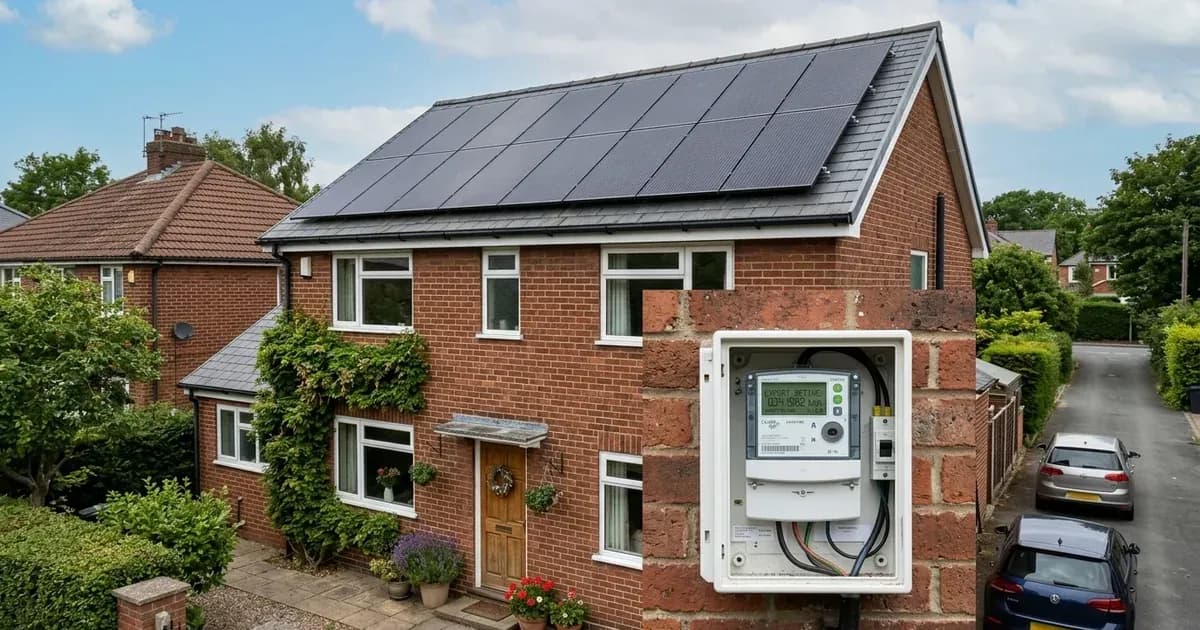
Accurate metering is fundamental to receiving payments for exported electricity. The Electricity Act 1989, Schedule 7, stipulates that where a customer is charged for electricity by quantity, the supply must be given through an appropriate meter. This principle extends to electricity exported to the grid.
For a meter to be used for ascertaining the quantity of electricity supplied or exported, it must meet specific criteria:
- It must be of an approved pattern or construction.
- It must be installed in an approved manner.
- It must be certified.
Ofgem, through its appointed meter examiners, ensures that meters meet these standards. Supplying electricity through a meter that does not meet these approval or certification requirements can lead to a fine.
Applying for a SEG Tariff
The application process for the Smart Export Guarantee is direct. Generators apply to a SEG licensee. You are not restricted to your current energy supplier; you can choose any SEG licensee that offers a tariff.
Ofgem publishes guidance for SEG generators and licensees on the operation of the SEG. Annually, Ofgem also publishes a list of all SEG licensees, distinguishing between mandatory and voluntary participants. This list helps generators identify potential suppliers for their exported electricity.
What the Published Sources Do Not Tell You
Statutory documentation provides a clear framework for the Smart Export Guarantee. However, it does not detail specific information regarding:
- Wholesale Market Pricing: Official documents do not provide specific details on how half-hourly wholesale market pricing is determined for solar PPAs beyond the general SEG framework.
- Balancing Mechanism Details: Information regarding the Balancing Mechanism and spill avoidance is not present in the provided sources.
- Route-to-Market Contracts: The available statutory text does not cover specific "route-to-market" contracts for solar beyond the general SEG framework.
- Half-Hourly Data Aggregation: Specific requirements for half-hourly data aggregation beyond general metering are not detailed.
- "Wholesale Market" Definition: The exact definition of "wholesale market" in the context of small-scale solar export is not provided.
- PPA Regulations: Any specific regulations or guidelines for solar PPAs in the UK beyond the SEG are not included.
These details often vary between licensees and market conditions, meaning direct inquiry with potential SEG licensees or market participants is necessary for specific pricing and contract terms.
Frequently asked questions
What is the Smart Export Guarantee (SEG) in Great Britain?
The SEG is a government-backed initiative launched on 1 January 2020. It requires electricity suppliers, known as SEG Licensees, to pay small-scale generators for low-carbon electricity exported to the National Grid.
What is the maximum capacity for solar PV under the SEG?
Solar photovoltaic (solar PV) installations can have a total installed capacity (TIC) of no more than 5 MW to be eligible for the Smart Export Guarantee.
Who determines the SEG export rate?
SEG Licensees determine the rate, contract length, and other terms for SEG payments. Ofgem mandates that SEG tariff rates must always be above zero.
Do I have to use my current energy supplier for a SEG tariff?
No, you can apply for a SEG tariff with any SEG licensee. Your SEG licensee does not need to be the same company as your current energy supplier.
What are the metering requirements for exporting electricity under the SEG?
Electricity supplied and charged by quantity must be through an appropriate meter. This meter must be of an approved pattern or construction, installed in an approved manner, and certified.
References
- Ofgem Smart Export Guarantee (SEG) — accessed 26 August 2026
- Ofgem Smart Export Guarantee (SEG) Generators — accessed 26 August 2026
- Electricity Act 1989, Schedule 7 — accessed 26 August 2026
- The Smart Export Guarantee Order 2019 — accessed 26 August 2026
Related guides
More from what to buy — and how not to get cheated.