UK Smart Export Guarantee (SEG) Dynamic Switching Guide
Updated 6 September 2026 · By SolarNevs Research Desk, Dealer surveys + verified sources · 3 sources · Method ↗
Key Takeaways
- The Smart Export Guarantee (SEG) launched on 1 January 2020, requiring certain electricity suppliers to pay for exported low-carbon electricity.
- SEG tariff rates must always be above zero, but individual SEG Licensees determine the specific rates and contract terms.
- Installations must be located in Great Britain and meet specific capacity limits, such as 5MW for solar photovoltaic (solar PV) systems.
- Payments are calculated using actual meter readings from an appropriate export meter, which must be certified under the Electricity Act 1989.
What is the Smart Export Guarantee (SEG)?
The Smart Export Guarantee (SEG) is a UK government-backed initiative that launched on 1 January 2020. This scheme requires certain electricity suppliers, known as SEG Licensees, to pay small-scale generators for low-carbon electricity they export to the National Grid. Ofgem is responsible for overseeing the SEG, including publishing guidance and lists of licensees.
The SEG was introduced to support the growth of renewable energy generation at a domestic and small commercial scale. It ensures that those who generate their own electricity and export surplus power receive a payment for it.
Who is eligible for the SEG?
To be eligible for the Smart Export Guarantee, your installation must meet specific criteria regarding its location, technology type, and capacity.
Geographic Eligibility
Installations must be located in Great Britain. This includes England, Scotland, and Wales. The scheme does not extend to Northern Ireland, which has its own arrangements.
Eligible Technologies
The SEG supports a range of low-carbon electricity generation technologies. These include:
- Solar photovoltaic (solar PV)
- Wind
- Micro combined heat and power (micro-CHP)
- Hydro
- Anaerobic digestion (AD)
Capacity Limits
There are specific maximum total installed capacity (TIC) limits for eligible installations:
Generation Technology | Maximum Total Installed Capacity (TIC) | Scheme Jurisdiction |
|---|---|---|
Solar Photovoltaic (solar PV) | 5MW | Great Britain |
Wind | 5MW | Great Britain |
Hydro | 5MW | Great Britain |
Anaerobic Digestion (AD) | 5MW | Great Britain |
Micro Combined Heat and Power (micro-CHP) | 50kW | Great Britain |
- For most technology types, including solar PV, the maximum total installed capacity is 5MW.
- For micro combined heat and power (micro-CHP) installations, the maximum total installed capacity is 50kW.
Metering Requirements
For SEG payments, your electricity supply must be given through an appropriate meter. This meter is used to ascertain the quantity of electricity exported. The meter must be certified under paragraph 5 of Schedule 7 of the Electricity Act 1989.
The customer may provide this meter if the authorised supplier agrees. Otherwise, the supplier will provide the meter. The meter is typically installed on the customer’s premises in a position determined by the authorised supplier.
How SEG Payments and Tariffs Work
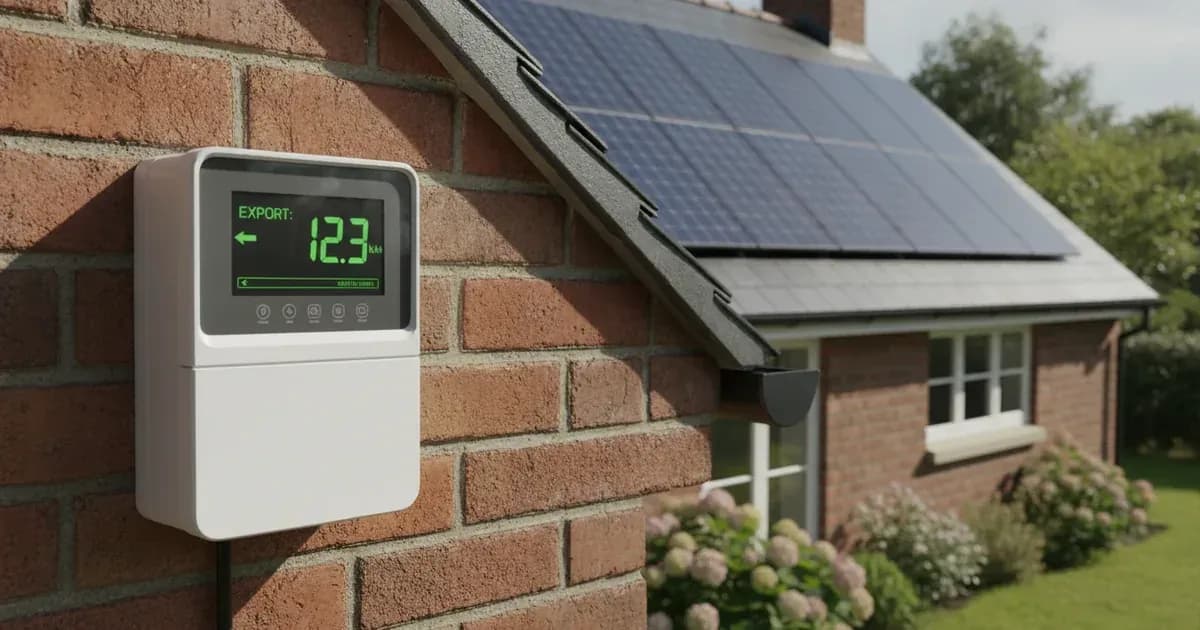
SEG payments are calculated by using actual export meter readings. This ensures that you are paid for the exact amount of electricity you send back to the grid.
Tariff Rates
A key aspect of the SEG is that SEG tariff rates must always be above zero. However, Ofgem does not set these rates. Instead, individual SEG Licensees determine the specific rate, contract length, and other terms of their SEG tariffs. This means that rates can vary significantly between different suppliers.
Dynamic Tariffs and Optimisation
Some SEG Licensees may offer dynamic export tariffs. These tariffs can vary the rate paid for exported electricity based on factors such as the time of day or wholesale electricity prices. This can allow for optimisation, where you might choose to export more electricity during periods when the tariff rate is higher.
To find the best tariff for your circumstances, you should compare offers from different SEG Licensees. Ofgem provides a list of current SEG Licensees on its website, which is a good starting point for your research. You will need to check each licensee's website for their specific tariff details and terms.
Anaerobic Digestion (AD) Specific Requirements
Anaerobic digestion (AD) installations have additional sustainability and reporting requirements under the SEG scheme.
Sustainability Verification
Ofgem must verify that AD installations comply with specific sustainability and feedstock criteria. This verification occurs quarterly for sustainability criteria and annually for feedstock criteria.
Greenhouse Gas Emissions Targets
AD installations must meet specific greenhouse gas emissions targets for the biogas used to generate electricity:
- Before 1 April 2020: 66.7 grams per megajoule of electricity.
- From 1 April 2020 but before 1 April 2025: 55.6 grams per megajoule of electricity.
- On or after 1 April 2025: 50 grams per megajoule of electricity.
Annual Audit Report
For AD installations with a total installed capacity of 1 megawatt or above, an annual audit report is required to ensure ongoing compliance with the scheme's criteria.
What the published sources do not tell you
While the Smart Export Guarantee framework is clear, several specifics are not centrally published and vary by supplier:
- Specific SEG tariff rates: Ofgem explicitly states that SEG Licensees determine these rates, and no central list of current rates is maintained. You must consult individual supplier websites.
- Contract lengths and terms: The duration and specific conditions of SEG contracts are also set by individual licensees, not by Ofgem.
- Dynamic switching process: The exact mechanics of how to switch between SEG tariffs or licensees are not detailed in the provided documents. While generators are encouraged to "shop around," the practical steps for changing suppliers are not outlined.
- Full list of current SEG Licensees: While Ofgem maintains a list, the provided documents only refer to its existence rather than including the full, up-to-date list.
- Detailed application process: Beyond applying to a SEG licensee and checking their website, specific step-by-step guidance on how to apply for a SEG tariff is not provided.
Frequently asked questions
What is the Smart Export Guarantee (SEG)?
The Smart Export Guarantee (SEG) is a UK government-backed initiative that launched on 1 January 2020. It requires certain electricity suppliers, known as SEG Licensees, to pay small-scale generators for low-carbon electricity exported to the National Grid.
Who is eligible for the SEG scheme?
Installations must be located in Great Britain. Eligible technologies include solar photovoltaic (solar PV), wind, micro combined heat and power (micro-CHP), hydro, and anaerobic digestion (AD). Most technologies have a maximum total installed capacity of 5MW, while micro-CHP is limited to 50kW.
How are SEG tariff rates determined?
SEG tariff rates must always be above zero. However, SEG Licensees determine the specific rate, contract length, and other terms. Ofgem does not set these rates; you must check with individual suppliers.
What metering is required for SEG payments?
SEG payments are calculated by using export meter readings. The supply must be given through an appropriate meter that is certified under paragraph 5 of Schedule 7 of the Electricity Act 1989. The customer may provide the meter if the supplier agrees, otherwise the supplier provides it.
Can I switch SEG suppliers or tariffs?
The provided information indicates that SEG Licensees determine contract terms. While the documents do not detail the mechanics of switching, generators are advised to compare offers from different licensees to find the best terms.
References
- Ofgem: Smart Export Guarantee (SEG) — accessed 26 August 2026
- The Electricity Act 1989, Schedule 7 — accessed 26 August 2026
- The Smart Export Guarantee Order 2019 — accessed 26 August 2026
Related guides
More from what to buy — and how not to get cheated.