UK Half-Hourly Dynamic Export Switching and Smart Meter Guide
Updated 6 September 2026 · By SolarNevs Research Desk, Dealer surveys + verified sources · 4 sources · Method ↗
Key Takeaways
- The Smart Export Guarantee (SEG) allows small-scale generators in Great Britain to be paid for exported low-carbon electricity.
- Accurate metering, often via smart meters, is essential for capturing half-hourly export data required by SEG Licensees.
- SEG tariff rates are set by individual electricity suppliers and must always be above zero, not by Ofgem.
- While half-hourly data supports dynamic export, specific mechanisms for "dynamic export switching" are determined by individual suppliers.
Understanding the Smart Export Guarantee (SEG) in Great Britain
The Smart Export Guarantee (SEG) is a government-backed initiative in Great Britain that launched on 1 January 2020. This scheme requires certain electricity suppliers, known as SEG Licensees, to pay small-scale generators for low-carbon electricity which they export back to the National Grid, providing certain criteria are met. Ofgem is responsible for publishing guidance and lists of these SEG Licensees.
Scheme Parameter | Rule / Technical Limit | Regulatory Framework |
|---|---|---|
Launch Date | 1 January 2020 | Governed by The Smart Export Guarantee Order 2019 |
Solar PV / Wind / Hydro / AD Limit | Up to 5MW Total Installed Capacity (TIC) | Ofgem SEG Generator Guidance |
Micro-CHP Capacity Limit | Up to 50kW Total Installed Capacity | Ofgem SEG Generator Guidance |
Export Tariff Pricing Rule | Must always be greater than zero (>0p/kWh) | Set by individual SEG Licensees (not Ofgem) |
Metering Standard | Half-hourly (30-min) export recording | Electricity Act 1989, Schedule 7 approved & certified |
To be eligible for the SEG, installations must be located in Great Britain and have a total installed capacity (TIC) of no more than 5MW. For micro combined heat and power (micro-CHP) installations, the capacity limit is no more than 50kW. Eligible low-carbon technologies include Solar photovoltaic (solar PV), Wind, Micro combined heat and power (micro-CHP), Hydro, and Anaerobic digestion (AD).
Eligible Technology | Maximum Capacity (TIC) | Tariff & Metering Requirement |
|---|---|---|
Solar Photovoltaic (PV) | 5 MW | Approved meter capable of half-hourly export measurement |
Onshore Wind | 5 MW | Approved meter capable of half-hourly export measurement |
Hydroelectric | 5 MW | Approved meter capable of half-hourly export measurement |
Anaerobic Digestion (AD) | 5 MW | Approved meter capable of half-hourly export measurement |
Micro-CHP | 50 kW | Special micro-scale threshold under SEG regulations |
You can find a list of SEG Licensees and their current offerings on Ofgem's website. Each SEG Licensee determines its own tariff rates, contract lengths, and other terms. The only stipulation from Ofgem is that any SEG tariff offered must always remain above zero.
The Role of Smart Meters and Half-Hourly Export Data
For you to be paid for the electricity you export, the quantity must be accurately measured. The Electricity Act 1989, Schedule 7, outlines requirements for electricity meters in Great Britain. It states that where a customer is charged for their supply by reference to the quantity of electricity supplied, the supply must be given through an appropriate meter. Furthermore, no meter shall be used for ascertaining the quantity of electricity supplied unless it is of an approved pattern or construction, installed in an approved manner, and certified.
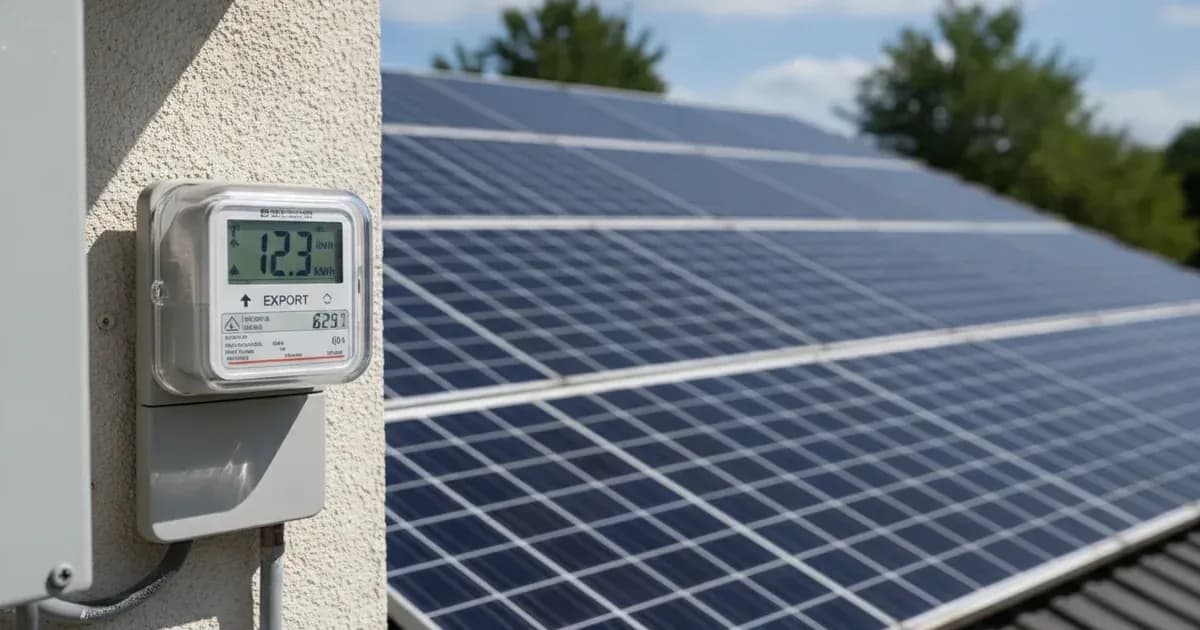
Modern smart meters, often referred to as SMETS2 meters, are designed to capture electricity consumption and export data in half-hourly intervals. This half-hourly export data is crucial for the Smart Export Guarantee (SEG) as it allows SEG Licensees to accurately calculate payments based on the actual amount of electricity you send back to the grid at different times of the day. This granular data enables more flexible and potentially dynamic tariffs.
What "Dynamic Export Switching" Means for You
"Dynamic export switching" refers to the ability of electricity suppliers to offer tariffs that vary the payment rate for exported electricity based on factors such as time of day, grid demand, or wholesale electricity prices. With half-hourly export data from your smart meter, suppliers can implement these dynamic tariffs. For example, you might receive a higher rate for electricity exported during peak demand times when the grid needs it most, and a lower rate during off-peak periods.
While the concept of dynamic export is enabled by half-hourly data, the specific mechanisms and availability of "dynamic export switching" tariffs are determined by individual SEG Licensees. The Smart Export Guarantee framework itself does not detail specific requirements for these dynamic mechanisms, but it facilitates their introduction by mandating accurate, granular metering. This means you will need to check with individual SEG Licensees for their specific dynamic tariff offerings.
What You Can Check Yourself, and What You Cannot
As a homeowner, you can check your smart meter's display for export readings, if available, and monitor your electricity generation and consumption data through your in-home display or supplier's online portal. You can also compare the SEG tariffs offered by different SEG Licensees to find the best deal for your exported electricity. Ofgem publishes a list of SEG Licensees, which is a good starting point.
You cannot, however, install or certify your own electricity meter for export purposes. Meter installation and certification must be carried out by qualified professionals to ensure compliance with the Electricity Act 1989, Schedule 7. You also cannot directly influence the "dynamic export switching" mechanisms; these are set by your electricity supplier based on their tariff structures. Changing any meter settings yourself is not advised and could breach your connection agreement.
What the Published Sources Do Not Tell You
The provided sources establish the framework for the Smart Export Guarantee (SEG) and general meter requirements in Great Britain. However, they do not offer specific technical details on how "dynamic export switching" mechanisms are implemented by suppliers, nor do they define "SMETS2 smart metering" or its specific technical requirements beyond its role in capturing half-hourly data.
There are no specific examples of how half-hourly export data is technically captured or transmitted (e.g., communication protocols or data formats) in the public domain from these sources. While the Electricity Act 1989, Schedule 7, outlines general meter requirements, it does not specify the technical capabilities of meters needed for dynamic export switching. Furthermore, the exact process for a generator to apply for a SEG tariff is not detailed, as this varies by SEG Licensee and is typically found on their respective websites. The specific data points or format of "export data" beyond "actual meter readings" are also not elaborated upon.
Frequently asked questions
What is the Smart Export Guarantee (SEG) in Great Britain?
The Smart Export Guarantee (SEG) is a government-backed initiative launched on 1 January 2020. It requires certain electricity suppliers, known as SEG Licensees, to pay small-scale generators for low-carbon electricity exported to the National Grid.
What are the meter requirements for exporting electricity in Great Britain?
In Great Britain, any electricity supply charged by quantity must be through an appropriate meter. This meter must be of an approved pattern or construction, installed in an approved manner, and certified under the Electricity Act 1989, Schedule 7.
Can I get paid for exporting solar electricity in Great Britain?
Yes, if you have an eligible low-carbon technology like solar photovoltaic (solar PV) installed in Great Britain, you may be able to benefit from the Smart Export Guarantee (SEG). You must apply to a SEG Licensee, who will pay you for exported electricity.
What is 'half-hourly export data'?
Half-hourly export data refers to the measurement of electricity exported to the National Grid in 30-minute intervals. This detailed data allows for more precise billing and can support tariffs that vary based on the time of export.
Does the Smart Export Guarantee (SEG) set an export rate?
No, Ofgem does not set the export rate for the SEG. SEG Licensees determine the rate, contract length, and other terms. The only requirement is that any SEG tariff offered must always remain above zero.
References
- Ofgem: Smart Export Guarantee (SEG) — accessed 26 August 2026
- Ofgem: Smart Export Guarantee (SEG) Generators — accessed 26 August 2026
- Legislation.gov.uk: Electricity Act 1989, Schedule 7 — accessed 26 August 2026
- Legislation.gov.uk: The Smart Export Guarantee Order 2019 — accessed 26 August 2026
Related guides
More from what to buy — and how not to get cheated.