Smart Export Guarantee Metering Requirements in Great Britain
Updated 18 September 2026 · By SolarNevs Research Desk, Dealer surveys + verified sources · 3 sources · Method ↗
Key Takeaways
- Smart Export Guarantee (SEG) payments are based on actual meter readings.
- Your solar panel system must be registered with your local Distribution Network Operator (DNO).
- SEG Licensees (electricity suppliers) set their own specific metering requirements as part of their tariff terms.
- The SEG scheme applies only to installations located in Great Britain.
What are the metering requirements for SEG?
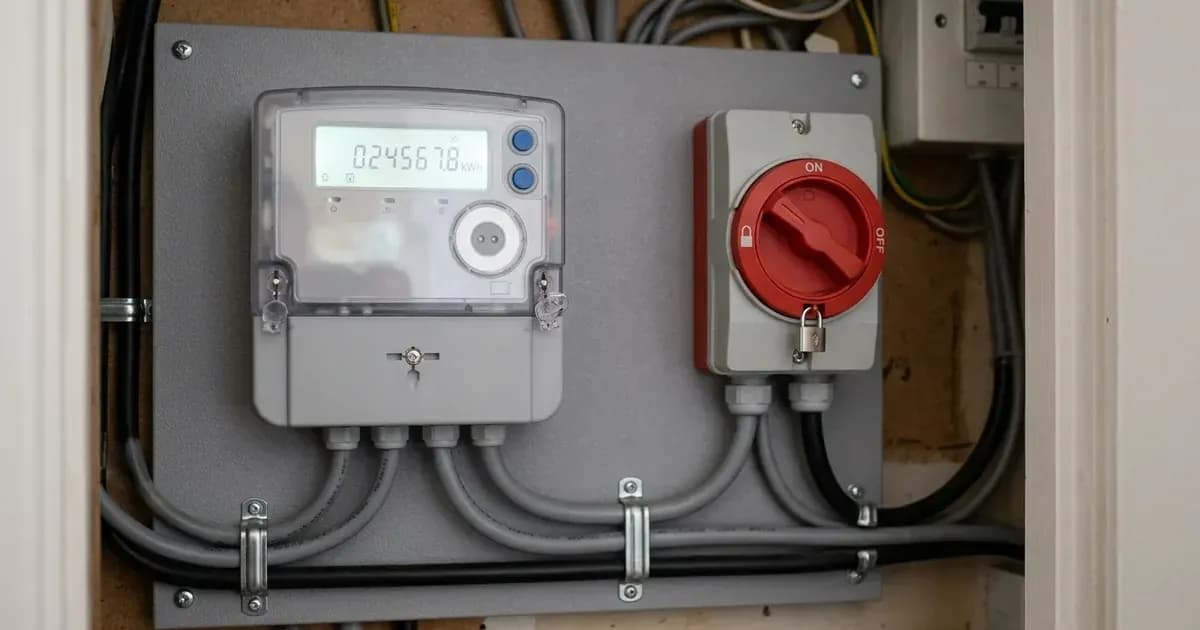
To receive payments under the Smart Export Guarantee (SEG) in Great Britain, your electricity exports must be accurately measured. Generators are entitled to payments based upon actual meter readings. This ensures that you are paid for the precise amount of electricity your system sends back to the National Grid.
Beyond accurate measurement, your solar panel system needs to be registered with your local Distribution Network Operator (DNO). This registration confirms that your system is connected to the grid and meets safety and operational standards.
How SEG payments are calculated
The Smart Export Guarantee (SEG) is a government-backed initiative that enables small-scale generators to receive payments from electricity suppliers for electricity which they export back to the National Grid. These payments are directly linked to the amount of electricity your system exports, as recorded by your meter.
SEG Licensees, which are electricity suppliers, determine the rate, contract length and other terms which SEG Generators will receive. While the specific rates vary between suppliers, SEG tariff rates must always be above zero. This means you will always receive some payment for your exported electricity. You can apply for a SEG tariff with any SEG licensee – your SEG licensee does not need to be the same company as your current energy supplier. Generators thinking of applying for a SEG tariff should shop around to see which tariff is best for their individual circumstances. For more information on choosing a tariff, see our guide on how to choose a SEG tariff.
Registering your system with the DNO
A crucial step for SEG eligibility is ensuring your system is properly registered with your local Distribution Network Operator (DNO). Your solar panel system needs to be registered with your local Distribution Network Operator (DNO). This process ensures that the DNO is aware of your generation capacity and can manage the local grid effectively.
The SEG scheme is specifically for installations located in Great Britain. Eligible technologies include solar photovoltaic (solar PV), wind, micro combined heat and power (micro-CHP), hydro, and anaerobic digestion (AD). There are also capacity limits: installations must have a total installed capacity (TIC) of no more than 5MW, with a lower limit of no more than 50kW for micro-CHP systems. AD installations will need to meet the sustainability criteria and reporting requirements.
Technology | Maximum Total Installed Capacity (TIC) | Qualification Criteria |
|---|---|---|
Solar Photovoltaic (PV) | 5MW | Located in Great Britain; DNO registered |
Wind | 5MW | Located in Great Britain; DNO registered |
Hydro | 5MW | Located in Great Britain; DNO registered |
Anaerobic Digestion (AD) | 5MW | Must meet sustainability criteria and reporting requirements |
Micro-CHP | 50kW | Dedicated micro combined heat and power limit |
What you can check yourself, and what you cannot
As a homeowner, you can perform several checks related to your SEG metering:
- Confirm DNO Registration: You can confirm with your installer or DNO that your system has been successfully registered. This is a fundamental requirement for SEG eligibility.
- Monitor Meter Readings: Regularly check your electricity meter to understand your export readings. Generators are entitled to payments based upon actual meter readings.
- Review Supplier Terms: Ensure you understand the specific metering requirements outlined in your chosen SEG tariff contract with your electricity supplier.
However, certain aspects of metering and system installation require accredited professional work:
- System Installation and Commissioning: The initial installation and commissioning of your solar panel system, including its connection to the grid, must be carried out by qualified installers.
- Meter Installation and Verification: While you can read your meter, the installation, maintenance, and verification of the meter itself are the responsibility of your electricity supplier or their appointed agents. Do not attempt to alter or tamper with your meter.
- Grid Connection Agreements: Any modifications to your grid connection or the DNO registration process should be handled by your installer or in consultation with your DNO.
What the published sources do not tell you
The provided information on the Smart Export Guarantee (SEG) scheme outlines the general requirements for metering and DNO registration. However, it does not detail specific technical specifications for meters, such as the requirement for a half-hourly export-capable smart meter (e.g., SMETS2 or DCC-enrolled SMETS1).
Furthermore, the sources do not provide information on how an energy supplier requests an Export MPAN (Meter Point Administration Number) from the local DNO, nor do they specify required documentation like an MCS (Microgeneration Certification Scheme) certificate or G98/G99 commissioning forms. While DNO registration is mentioned, detailed G98/G99 DNO connection requirements or processes are not included in this corpus. These specific technical and procedural details are typically managed by your installer and electricity supplier, and may vary.
Frequently asked questions
What is the primary metering requirement for SEG payments?
Payments under the Smart Export Guarantee (SEG) are based on actual meter readings of the electricity you export to the National Grid.
Does my solar system need to be registered for SEG?
Yes, your solar panel system needs to be registered with your local Distribution Network Operator (DNO) to be eligible for SEG payments.
Who determines the specific metering terms for SEG?
Smart Export Guarantee (SEG) Licensees, which are electricity suppliers, determine the specific metering terms, rates, and contract lengths for their SEG tariffs.
Where must my installation be located to qualify for SEG?
Installations must be located in Great Britain to be eligible for the Smart Export Guarantee scheme.
Is there a maximum capacity for SEG eligible installations?
Yes, installations must have a total installed capacity (TIC) of no more than 5MW, or 50kW for micro combined heat and power (micro-CHP) systems.
References
- Ofgem - Smart Export Guarantee (SEG) — accessed 26 August 2026
- Ofgem - Smart Export Guarantee (SEG) Generators — accessed 26 August 2026
- GOV.UK - Solar Panels — accessed 26 August 2026
Related guides
More from schemes, subsidies & financing.