Utilita Energy SEG Export Tariff: Rates, Rules & MPAN Guide
Updated 18 September 2026 · By SolarNevs Research Desk, Dealer surveys + verified sources · 1 source · Method ↗
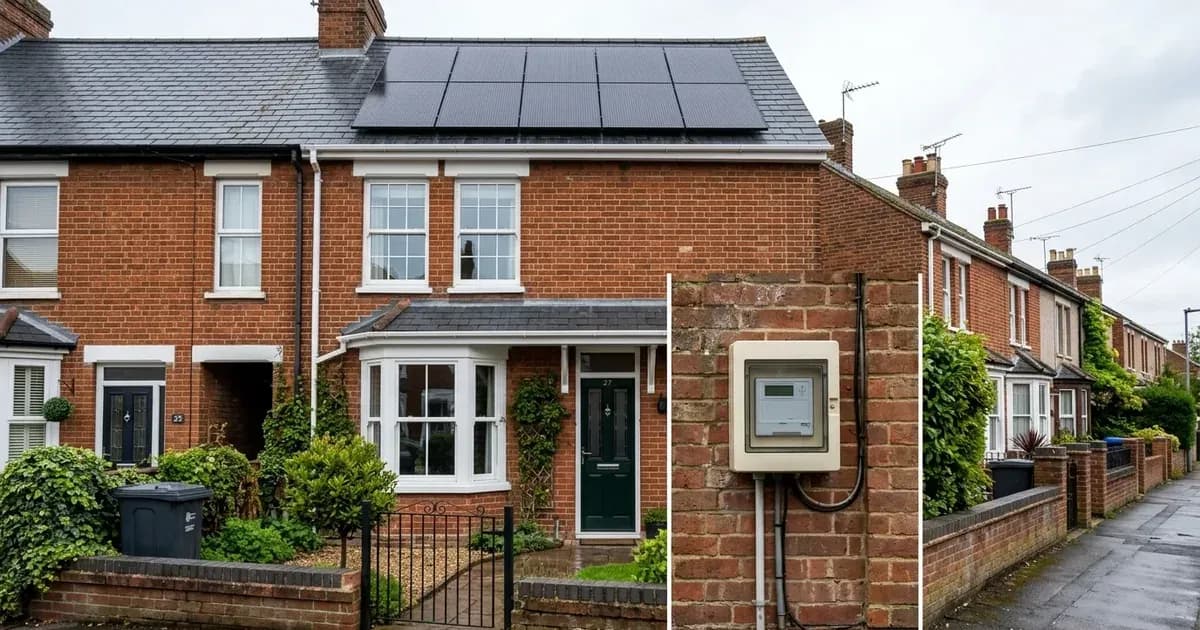
Under Great Britain's energy regulations, licensed electricity suppliers meeting customer account thresholds are classified as mandatory Smart Export Guarantee (SEG) licensees. Utilita Energy, widely known across the UK for its smart prepayment energy services, operates as a mandatory SEG licensee under Ofgem oversight. By statutory mandate, Utilita Energy is a mandatory SEG licensee, which means the company is required by law to offer a Smart Export Guarantee tariff to eligible microgenerators.
For households with domestic solar photovoltaic (PV) installations, understanding Utilita's export terms, flat remuneration structure, and administrative onboarding workflow ensures generator compliance and accurate revenue forecasting.
Utilita SEG Tariff Overview: Rates and Terms
Unlike suppliers that feature complex multi-tier structures or high loyalty incentives for proprietary hardware installations, Utilita Energy maintains a simple, singular tariff structure:
Parameter | Specification | Details |
|---|---|---|
Supplier Status | Mandatory SEG Licensee | Regulated under statutory Ofgem licence conditions |
Export Unit Rate | 3p per kWh | Fixed payment per metered kilowatt-hour exported |
Tariff Structure | Standard Variable | Rate subject to periodic supplier review |
Customer Exclusivity | Open to all generators | No import supply contract required |
Geographic Scope | Great Britain | England, Scotland, and Wales |
Settlement Basis | Half-hourly metered export | Requires smart or advanced export metering |
Open Access for Non-Customers
A foundational element of Utilita's SEG provision is universal accessibility: You don’t need to be a Utilita customer to apply. If your home imports electricity from British Gas, E.ON Next, OVO, or Octopus Energy, you are legally entitled to register your export MPAN with Utilita Energy and receive payment for your exported units.
The 3p per kWh Remuneration Rate
Once accepted onto the scheme, Utilita will pay you 3p per kWh for any electricity you export, excluding the power you consume on-site. At 3p per kWh, Utilita's export tariff serves primarily as a baseline compliance offering. For domestic microgenerators, 3p per kWh provides a steady baseline return for exported electricity while highlighting the greater financial value of maximising daytime self-consumption. Consequently, homeowners maximizing solar ROI should compare this baseline against specialized export tariffs while prioritizing daytime self-consumption.
Generation Capacity and Technology Eligibility Rules
Utilita Energy accepts applications across all primary small-scale low-carbon generation technologies, subject to capacity ceilings established by the SEG order:
- Total Capacity Limit: Renewable generating systems can have an aggregate capacity of up to 5MW or up to 50kW for Micro-CHP.
- Eligible Technologies:
- Solar photovoltaic (PV): Domestic rooftop and ground-mounted arrays
- Onshore wind turbines
- Hydroelectric generators
- Anaerobic digestion (AD) installations
- Micro combined heat and power (micro-CHP) units
- Jurisdictional Boundary: Your installation must be based in Great Britain (installations in Northern Ireland operate under the Northern Ireland Renewables Obligation framework and are ineligible for SEG).
- Quality Certification: Systems must meet recognised certification standards (such as MCS or equivalent). Both the equipment models and the installation contractor must carry Microgeneration Certification Scheme (MCS) accreditation or accredited equivalent proof of competency.
Metering Prerequisites
To receive payments from Utilita, the generation premises must have a meter capable of providing half-hourly export readings. In domestic households, this requirement is satisfied by:
- A smart meter operating under the second-generation standard (SMETS2).
- A first-generation smart meter (SMETS1) that has been remotely enrolled onto the national Data Communications Company (DCC) wireless network.
- An advanced export meter (AMR) capable of automated half-hourly data capture.
Export readings cannot be estimated; payments rely entirely on validated half-hourly data registers recording net outward power flows across the connection boundary.
The 3-Step Application and MPAN Onboarding Workflow
Registering an export installation with Utilita follows a structured three-step progression designed to establish technical validation and network operator coordination:
Step 1: Application Review (Within 2 Working Days)
Generators submit the official application form accompanied by documentation: MCS installation certificate, proof of generator ownership, photographic identification, and electrical single-line schematic drawings. Utilita commits to review the submission promptly: We review your application (within 2 working days). Staff check document validity, confirm installer accreditation, and establish whether an export MPAN already exists for the connection.
Step 2: DNO Export MPAN Creation (1 to 4 Weeks)
If the property has never exported renewable electricity before, it will not possess an Export Meter Point Administration Number (MPAN). An Export MPAN is a unique 13-digit identifier distinct from the domestic import MPAN. Utilita acts as the administrative intermediary to apply to your Distribution Network Operator (DNO) to create your export MPAN. Because network operators (such as Scottish and Southern Electricity Networks, SP Energy Networks, National Grid, or UK Power Networks) manage distribution licensing records, your export MPAN is created (1 - 4 weeks) depending on regional DNO processing queues.
Step 3: MPAN Enrollment and Photo Submission (Within 5 Working Days)
Once the network operator releases the newly created Export MPAN, Utilita enters the final administrative phase: MPAN enrolled (within 5 working days). Utilita attaches the export identifier to your customer account profile.
To formally open the export billing register and prevent billing disputes, Utilita requires a photographic audit: the generator must submit their first export meter reading - including a clear photo of your meter showing the cumulative export kWh register and meter serial number. Once verified, payment calculations commence from the verified opening meter reading date.
Frequently asked questions
What is the export rate for Utilita Energy's Smart Export Guarantee tariff?
Utilita Energy pays a single flat variable rate of 3p per kWh for all eligible renewable electricity exported to the National Grid.
Do I need to be an existing Utilita customer to get their SEG tariff?
No. Utilita Energy is a mandatory SEG licensee and accepts export applications from any qualifying renewable generator in Great Britain, even if your import electricity is supplied by another provider.
How long does it take Utilita to create an export MPAN?
Utilita reviews applications within 2 working days. If a new export MPAN is required from your local Distribution Network Operator (DNO), creation takes between 1 and 4 weeks, followed by account enrollment within 5 working days.
References
- Utilita Energy Smart Export Guarantee Help Portal — accessed 16 September 2026
Related guides
More from schemes, subsidies & financing.