USDA REAP 7 CFR § 4280.118: Large Solar Grant Application Guide
Updated 18 September 2026 · By SolarNevs Research Desk, Dealer surveys + verified sources · 1 source · Method ↗
Key Takeaways
- Codified under 7 CFR § 4280.118, this regulation governs REAP grant applications for renewable energy systems with total project costs of $200,000 and greater.
- Requires a full technical report prepared in accordance with § 4280.117 and paragraph (c).
- Mandates submission of historical financial statements for the past 3 years and projected pro forma statements for at least 2 years.
- Authorizes the Agency to require an independent third-party feasibility study for major operational expansions.
- Encourages applicants to self-score submissions against the competitive evaluation criteria in § 4280.121.
Scope of 7 CFR § 4280.118
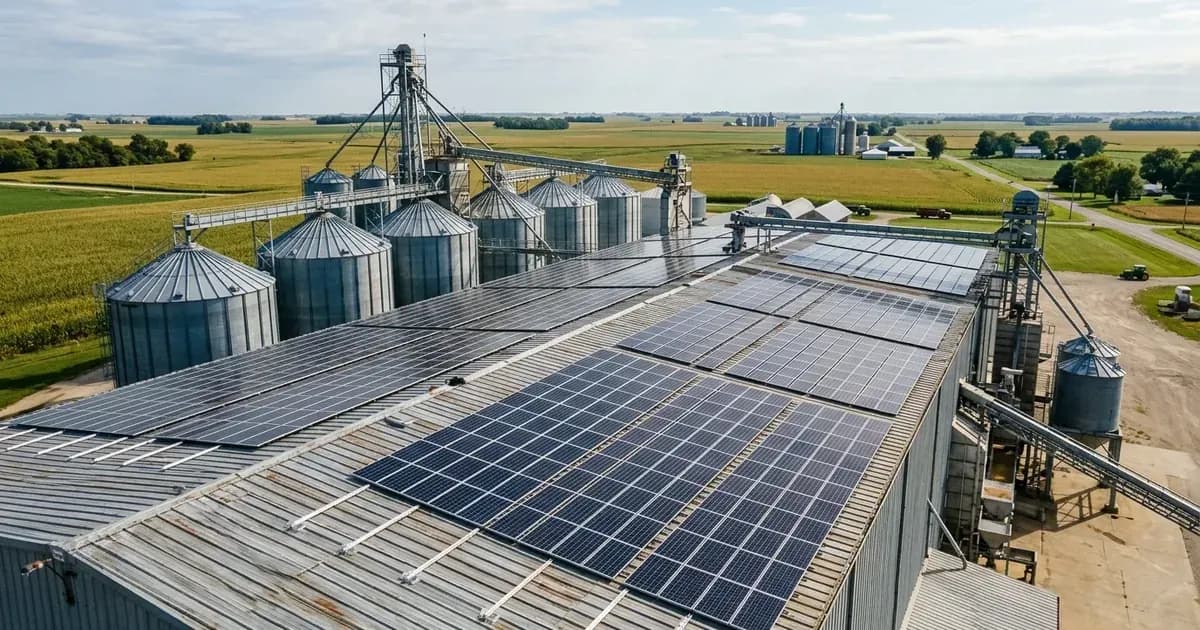
Under the Rural Energy for America Program (7 CFR Part 4280, Subpart B), large agricultural producers and rural small businesses developing solar arrays with capital expenditures of $200,000 and greater must satisfy rigorous documentation rules.
The application framework verifies that proposed commercial solar systems possess sound engineering, secured matching funds, and verified economic returns before federal funds are obligated.
Financial & Technical Filing Mandates
Under 7 CFR § 4280.118, large solar applications must incorporate comprehensive operational records:
Regulatory Filing Requirement | Mandatory Submission Standard | Statutory Basis |
|---|---|---|
Technical Report | Full 7-area evaluation per § 4280.117(b)(5) | 7 CFR § 4280.118(c) |
Historical Financial Statements | Balance sheets and income statements for the past 3 years | 7 CFR § 4280.118(b)(4)(i)(A) |
Pro Forma Projections | Projected balance sheets, income, and cash flow for at least 2 years | 7 CFR § 4280.118(b)(4)(i)(B) |
Matching Funds Verification | Committed non-federal matching documentation | 7 CFR § 4280.118(b)(3) |
Self-Scoring Rubric | Optional self-assessment under § 4280.121 | 7 CFR § 4280.118 |
Independent Feasibility Studies & Project Scoring
To protect public capital, § 4280.118 enforces targeted validation standards:
- Third-Party Feasibility Studies: For projects that introduce new commercial facilities or have significant impacts on existing farm operations, the Agency may require an independent feasibility study analyzing engineering, market off-take, and financial viability.
- Forms & Certifications: Applicants must execute standard federal grant certifications (paragraphs (a)(1) through (10)).
- Competitive Scoring: Submissions compete nationally based on energy generation per grant dollar, environmental benefits, and readiness under § 4280.121.
Frequently asked questions
What project cost threshold triggers the application requirements of 7 CFR § 4280.118?
7 CFR § 4280.118 applies to Renewable Energy System (RES) and Energy Efficiency Improvement (EEI) grant applications for projects with total project costs of **$200,000 and greater** (August 2026).
What financial statements are required for large REAP solar projects?
Applicants must provide historical financial statements (balance sheets and income statements) for the past **3 years**, along with pro forma financial statements (projected balance sheets, income statements, and cash flows) for at least **2 years** (August 2026).
When does the Agency require an independent third-party feasibility study?
The Agency may require a third-party feasibility study when the project significantly impacts existing operations, or when application materials do not provide sufficient analysis of engineering, financial, or economic viability (August 2026).
Are applicants required to self-score under § 4280.121?
Each applicant is encouraged, but is not required, to self-score the proposed project using the evaluation criteria in § 4280.121 (August 2026).
References
- Cornell Law: 7 CFR § 4280.118 — accessed 31 August 2026
Related guides
More from schemes, subsidies & financing.