6.6kW Solar System Australia: Cost, Panels, Output, and Inverter Sizing
Updated 19 September 2026 · By SolarNevs Research Desk, Dealer surveys + verified sources · 3 sources · Method ↗
Key Takeaways
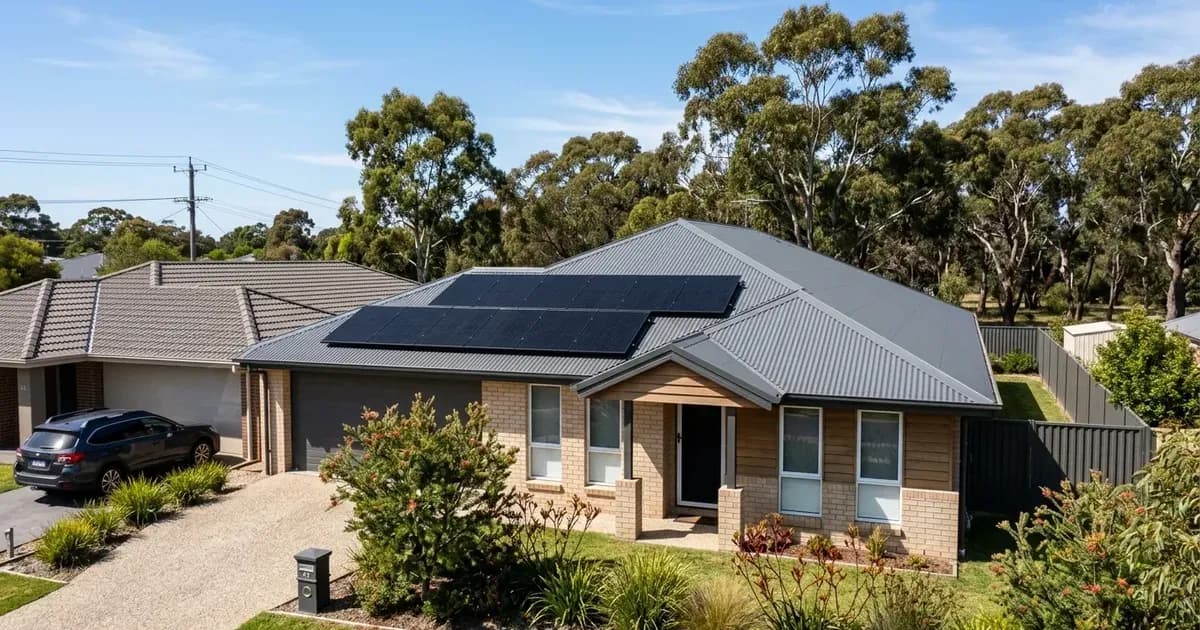
- A 6.6kW solar array paired with a 5kW inverter is Australia's most common residential setup because 5kW inverters receive standard pre-approval on single-phase electricity connections.
- Clean Energy Council guidelines permit up to 33% array oversizing, enabling a 5kW inverter to handle up to 6.6kW of panels to boost early morning and late afternoon output.
- Modern installations using 430W to 460W panels need 15 to 16 panels and approximately 34 to 38m2 of roof area.
- Average net installed pricing sits near $5,800 after the federal Small-scale Technology Certificate point-of-sale deduction, delivering simple payback periods between 3.8 and 4.9 years.
Why Is 6.6kW the Standard Residential Solar System Size in Australia?
The dominance of the 6.6kW system across Australian rooftops is directly shaped by network connection rules and federal incentive thresholds. On single-phase residential properties, Distribution Network Service Providers (DNSPs) across New South Wales, Queensland, Victoria, South Australia, and Western Australia enforce standard grid export rules that pre-approve 5kW inverter capacity without requiring complex network engineering studies.
To maximize clean energy generation within this network boundary, the Clean Energy Council installer guidelines allow a solar array to be oversized by up to 33% relative to the inverter's rated output. Pairing 6.6kW of panels with a 5kW inverter represents exactly this 133% ratio. Under the federal Small-scale Renewable Energy Scheme administered by the Clean Energy Regulator, systems with a total capacity under 100 kW and annual generation below 250 MWh earn Small-scale Technology Certificates based on total panel capacity rather than inverter rating. Homeowners capture the maximum rebate subsidy for their roof while adhering to network connection standards.
For households considering adding battery storage later, home battery price Australia trends and the federal cheaper home batteries rebate explained Australia show that a 6.6kW array generates sufficient daytime surplus to charge a standard home storage unit.
How Many Panels and Roof Space Does a 6.6kW Array Require?
Module efficiency has increased significantly over recent years, shrinking the physical footprint required on Australian rooftops.
Metric | Older Standard Modules | Modern High-Efficiency Modules |
|---|---|---|
Panel Wattage Rating | 330W to 400W | 430W to 460W |
Total Panel Count | 17 to 20 panels | 15 to 16 panels |
Panel Surface Area | Approximately 1.7m2 per module | Approximately 1.7m2 per module |
Total Roof Footprint | 34 to 38m2 | 34 to 38m2 |
Each standard module occupies approximately 1.7m2 of surface area. A flush-mounted array of 15 to 16 panels needs about 34 to 38m2 of clear roof space. If panels require tilt frames on flat roofs, spacing must be increased to avoid inter-row shading during low winter sun angles.
Inverter Sizing: 5kW Inverters and Inverter Clipping Explained
Homeowners often ask why a 6.6kW system uses a 5kW inverter rather than a 6kW or 7kW unit. Inverter oversizing—frequently termed overclocking—is standard practice designed to optimize overall system economics:
- Morning and Afternoon Shoulder Generation: A 5kW inverter reaches its optimal operating voltage earlier in the morning and sustains it later in the afternoon when receiving input from a 6.6kW array.
- Midday Clipping: During peak midday hours under clear skies, generation above 5kW is clipped by the inverter. The minor generation lost during midday peak production is heavily outweighed by the additional kilowatt-hours gathered during morning, late afternoon, and overcast periods.
- Network Connection Compliance: Connecting an inverter larger than 5kW on a single-phase supply frequently triggers export limitation rules (such as zero-export constraints) or requires an upgrade to three-phase supply.
Before signing a contract, confirm whether your retailer lists hardware on the Clean Energy Council approved register and adheres to which batteries qualify cheaper home batteries Australia rules if adding energy storage.
Daily Electricity Output Across Australian Capital Cities
Solar generation varies based on local latitude, solar irradiance, and seasonal weather patterns. The table below outlines average daily production across capital cities for a north-facing 6.6kW system:
Capital City | Average Daily Generation (kWh) |
|---|---|
Adelaide | 24 to 26 kWh |
Brisbane | 25 to 27 kWh |
Canberra | 24 to 27 kWh |
Darwin | 28 to 30 kWh |
Hobart | 19 to 22 kWh |
Melbourne | 21 to 24 kWh |
Perth | 26 to 28 kWh |
Sydney | 22 to 25 kWh |
In northern regions such as Darwin, average daily production reaches 28 to 30 kWh. Southern locations such as Hobart experience wider seasonal divergence, averaging 19 to 22 kWh daily across the year.
System Cost, STC Rebates, and Payback Periods
Federal incentives under the Small-scale Renewable Energy Scheme reduce upfront capital costs through Small-scale Technology Certificates. Under the deeming schedule, STCs can be created over one or 5 years or a single maximum deeming period, and STC spot values typically trade between $33 and $38 per certificate. To understand how certificates are calculated, review our guide on solar rebate Australia how stcs work.
Nationally, the average out-of-pocket cost for a fully installed 6.6kW system sits near $0.89 per watt, or approximately $5,800 net of incentives. Financial performance based on a 30% self-consumption rate demonstrates rapid capital recovery:
City | Typical Installed Net Cost | Annual Bill Savings | Simple Payback Period |
|---|---|---|---|
Perth | $4,750 | $1,293 | 3.8 years |
Sydney | $4,990 | $1,238 | 4.4 years |
Brisbane | $5,070 | $1,156 | 4.8 years |
Melbourne | $5,480 | $1,101 | 4.9 years |
Households that shift daytime electricity usage—such as running electric hot water heat pumps, pool filtration pumps, and laundry appliances while the sun is shining—achieve higher self-consumption rates, shortening payback times under 4 years.
Frequently asked questions
Why is a 6.6kW solar system paired with a 5kW inverter in Australia?
In Australian networks, 5kW inverters are pre-approved for grid connection on single-phase supplies. Under Clean Energy Council guidelines, an inverter can be oversized by up to 33%, allowing 6.6kW of panels on a 5kW unit.
How many solar panels are needed for a 6.6kW solar system?
Modern installations using 430W to 460W modules require only 15 to 16 panels. Older arrays using 330W to 400W panels required 17 to 20 panels, occupying approximately 34 to 38m2 of roof area.
How much does a 6.6kW solar system cost after rebates in Australia?
Across Australia, an average 6.6kW system costs approximately $5,800 out of pocket after deducting federal STC incentives. In competitive metro areas, typical installed prices range from $4,750 to $5,480.
How much electricity does a 6.6kW solar system produce daily?
Depending on city and season, daily generation averages 19 to 30 kWh per day. Sydney averages 22 to 25 kWh, Brisbane 25 to 27 kWh, Perth 26 to 28 kWh, and Melbourne 21 to 24 kWh.
What capacity rules apply to residential STC solar rebate claims?
To qualify for Small-scale Technology Certificates under the Small-scale Renewable Energy Scheme, the solar PV system must have a capacity under 100 kW and generate under 250 MWh annually.
References
- Solar Choice - 6kW & 6.6kW Solar Systems Sizing, Pricing and Output — accessed 28 August 2026
- Clean Energy Regulator - Rooftop Solar Small-scale Renewable Energy Scheme — accessed 28 August 2026
- Clean Energy Regulator - Calculate Small-scale Technology Certificate Entitlements — accessed 28 August 2026
Related guides
More from what to buy — and how not to get cheated.