3kW Solar System Australia: Cost, Panels, Output, and Payback
Updated 19 September 2026 · By SolarNevs Research Desk, Dealer surveys + verified sources · 2 sources · Method ↗
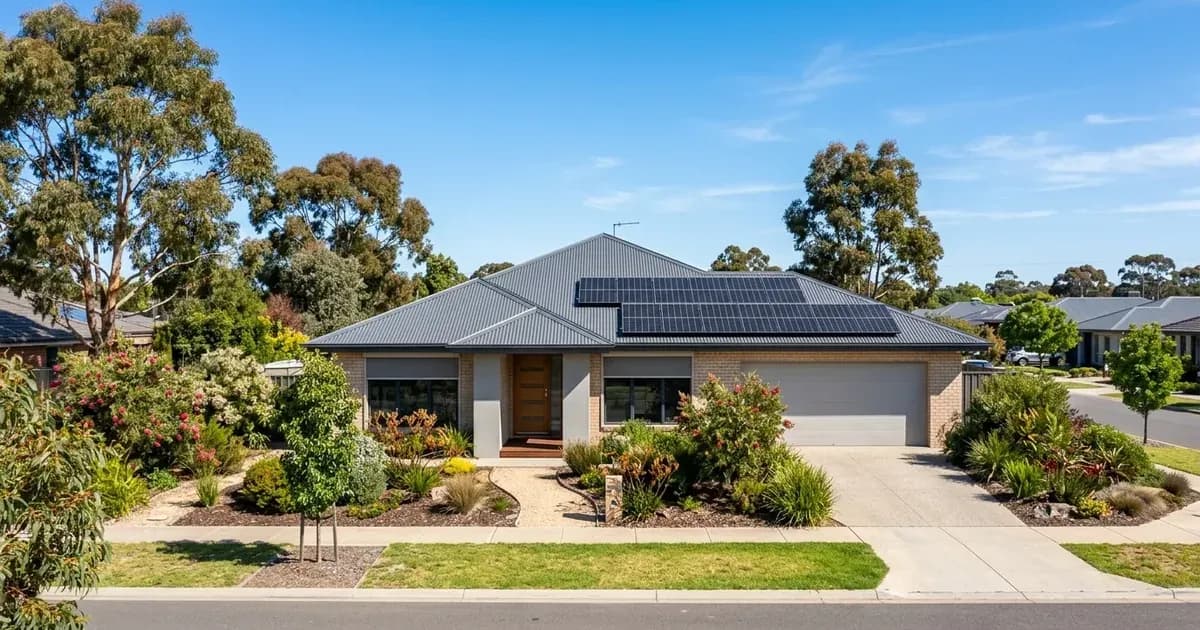
A 3kW solar system provides an effective entry-level renewable energy solution for small Australian homes, compact suburban villas, duplexes, and retirement living. While larger packages represent the standard residential volume in Australia, a 3 kilowatt array fits tight roof spaces while generating sufficient clean power to offset daytime base electrical loads.
Understanding module counts, capital city pricing variations, annual electricity generation, and payback dynamics allows buyers to make an informed investment decision.
3kW System Hardware, Module Count, and Roof Space
A 3 kilowatt (3000 watt) solar system will require about 7-10 solar panels depending on module efficiency:
- Panel Specifications: Residential solar panels are generally rated between 330 watts and 400 watts these days. Using 400-watt panels requires only 8 modules to achieve a 3kW nominal capacity, whereas 330-watt modules require 9 to 10 panels.
- Physical Roof Space: A 3kW system will require about 12-17 m 2 of roof space. This modest footprint allows flexible mounting across unshaded roof planes facing north, west, or east.
- Inverter and Compliance: The system pairs with a single-phase 3kW string inverter. Electrical safety is paramount: installations must be carried out by a Clean Energy Council (CEC) accredited solar installer in compliance with Australian wiring regulations. Homeowners must never attempt to access live DC wiring or service isolation switches.
Installed Costs Across Australian Capital Cities
According to benchmark market data, the latest average price for a fully installed 3kW solar system is $4,270 which included the STC rebate and GST. Actual turnkey pricing varies significantly across state jurisdictions due to local competition, distributor connection fees, and freight logistics:
Capital City / State | Average Installed Cost (Inc. STC & GST) |
|---|---|
Perth (WA) | $3,090 |
Adelaide (SA) | $3,610 |
Sydney (NSW) | $3,680 |
Melbourne (VIC) | $3,980 |
Canberra (ACT) | $4,050 |
Brisbane (QLD) | $4,140 |
Hobart (TAS) | $4,440 |
Darwin (NT) | $6,250 |
Perth offers the lowest average price at $3,090, followed by Adelaide at $3,610 and Sydney at $3,680. Melbourne averages $3,980, while Canberra sits at $4,050 and Brisbane records $4,140. Remote logistics contribute to higher installation costs in Hobart ($4,440) and Darwin ($6,250).
Daily and Annual Electricity Generation
Solar system generation depends on solar irradiance, roof orientation, and system losses. Technical benchmarks calculate output based on an overall system efficiency of 80% to allow for dirt soiling, cabling losses, and thermal derating during hot weather:
Capital City | Daily Generation Benchmark | Annual Generation Output |
|---|---|---|
Perth (WA) | 12.8 kWh per day | 4672 kWh per year |
Brisbane (QLD) | 11.6 kWh per day | 4234 kWh per year |
Adelaide (SA) | 10.9 kWh per day | 3979 kWh per year |
Sydney (NSW) | 10.9 kWh per day | 3979 kWh per year |
Melbourne (VIC) | 10 kWh per day | 3650 kWh per year |
Perth achieves top generation yield, delivering 12.8 kWh per day (4672 kWh per year). Brisbane generates 11.6 kWh per day (4234 kWh per year). Sydney and Adelaide both produce an average of 10.9 kWh per day (3979 kWh per year). In Melbourne, annual generation averages 10 kWh per day (3650 kWh per year).
Financial Returns, Payback Period, and Self-Consumption
Because Australian electricity retailers offer low feed-in tariffs, maximizing self-consumption is the key to accelerating financial payback. Homeowners should self-consume a minimum of 30% to make sure the system can pay for itself within the first 3-5 years.
Assuming a typical daily household consumption profile of 15 kWh per day, modelled financial returns show impressive economics:
Capital City | System Cost | Grid Tariff | Feed-in Tariff | Payback Period | Annual ROI |
|---|---|---|---|---|---|
Adelaide (SA) | $3,350 | 35c / kWh | 8c / kWh | 2.9 years | 35% |
Perth (WA) | $3,400 | 31c / kWh | 6c / kWh | 3.3 years | 31% |
Sydney (NSW) | $3,780 | 29c / kWh | 7c / kWh | 4.0 years | 25% |
In Adelaide, an installed cost of $3,350 combined with high retail tariffs (35c grid rate and 8c feed-in tariff) delivers a rapid 2.9 years payback and a 35% internal rate of return. In Perth, a $3,400 installation under a 31c tariff and 6c feed-in tariff yields a 3.3 years payback and 31% return. In Sydney, a $3,780 system under a 29c tariff and 7c feed-in tariff achieves a 4.0 years payback with a 25% return.
SRES Rebate Rules and Scheme Criteria
Small-scale residential installations in Australia receive federal subsidies administered by the Clean Energy Regulator (CER). To qualify for Small-scale Technology Certificates (STCs):
- System Capacity Limit: Systems must have a capacity less than 100 kW. A 3kW array comfortably satisfies this requirement.
- Annual Generation Limit: The system must have a total annual electricity output less than 250 MWh. A 3kW system produces under 5 MWh annually, well within limits.
- Approved Components: All modules and inverters must be listed on the Clean Energy Council validated product list and installed by a certified professional.
Roof Orientation and Optimising Self-Consumption
When installing a 3kW array, array orientation plays a crucial role in maximising domestic self-consumption. While a north-facing orientation achieves the highest total annual electricity production, splitting panels between east and west roof planes often proves more advantageous for small households:
- East-Facing Modules: Capture early morning sunlight, providing clean power as residents wake up, boil kettles, and prepare for the workday.
- West-Facing Modules: Extend generation into late afternoon and early evening hours, directly offsetting peak power demand when air conditioners, entertainment systems, and kitchen appliances operate.
- North-Facing Modules: Deliver maximum midday generation, ideal for running dishwashers or washing machines on automatic timers during the solar peak.
By tailoring module orientation to household lifestyle patterns, owners can comfortably exceed the minimum recommended self-consumption threshold, shortening their financial payback timeline.
Monitoring, Telemetry, and Maintenance
To verify that a 3kW array continues operating at peak efficiency, modern string inverters include integrated Wi-Fi data logging and smartphone applications. Property owners can monitor real-time power production, track daily generation trends, and receive immediate alerts if an inverter faults or a circuit trips.
Routine maintenance requirements remain minimal for residential solar arrays. Rain naturally clears airborne dust across tilted arrays, but an annual visual inspection ensures modules remain free from bird droppings, heavy leaf debris, or tree shading. Under Australian safety guidelines, maintenance inspections should be conducted safely from ground level or by certified solar maintenance professionals.
Gaps and Sizing Boundaries
- The documentation does not specify battery-coupling compatibility for existing 3kW string inverters. Most legacy 3kW single-phase units require an AC-coupled battery retrofit or a replacement hybrid inverter if home energy storage is added.
- Homeowners with growing power consumption or plans for electric vehicle charging should consider whether expanding to a 5kW system initially provides superior per-watt value.
Frequently asked questions
How many panels and roof space are required for a 3kW solar system?
A 3 kilowatt (3000 watt) solar system requires about 7 to 10 solar panels rated between 330 watts and 400 watts, occupying approximately 12 to 17 m2 of roof space.
What is the average installed cost of a 3kW solar system in Australian capital cities?
The national average price for a fully installed 3kW solar system is $4,270 including STC rebates and GST, ranging from $3,090 in Perth to $6,250 in Darwin.
What is the payback period and recommended self-consumption for a 3kW system?
Households should self-consume a minimum of 30% of solar generation to achieve payback within the first 3 to 5 years, with payback reaching 2.9 years in Adelaide.
References
- Solar Choice - 3kW Solar System Sizing, Output, and Pricing — accessed 28 August 2026
- Clean Energy Regulator - Rooftop Solar Small-scale Renewable Energy Scheme — accessed 28 August 2026
Related guides
More from what to buy — and how not to get cheated.