7kW Solar System Australia: Cost, Panels, Output, and Payback
Updated 19 September 2026 · By SolarNevs Research Desk, Dealer surveys + verified sources · 2 sources · Method ↗
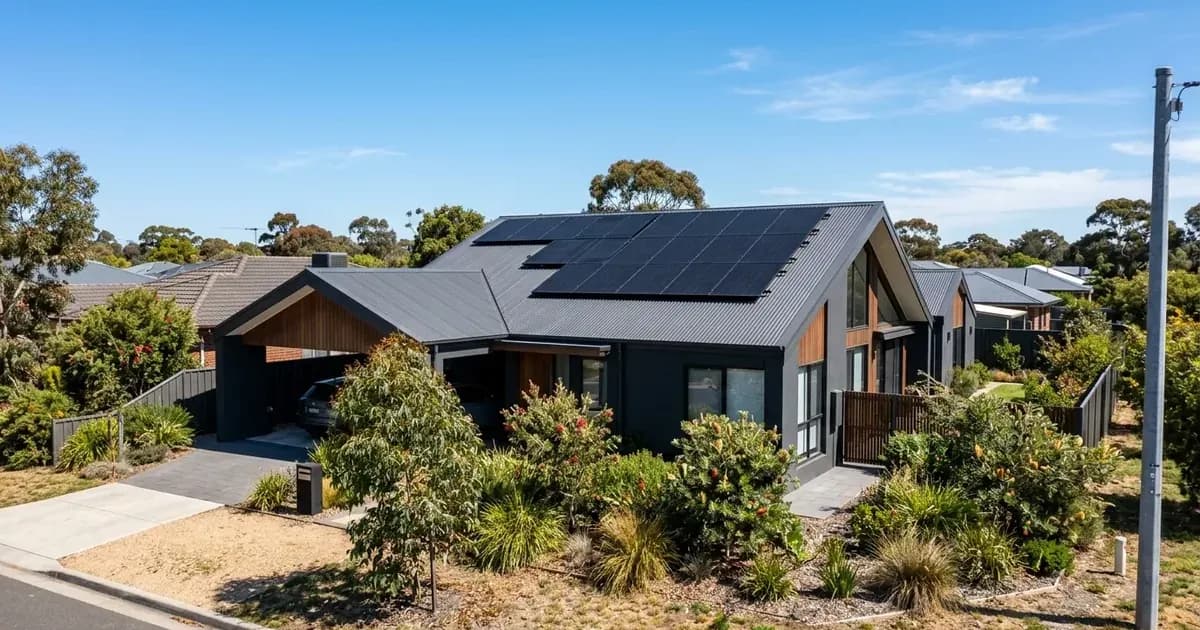
A 7kW solar system represents an ideal sizing tier for medium-to-large Australian families, homes equipped with ducted reverse-cycle air conditioning, or properties with swimming pools. By generating substantial daily kilowatt-hours, a 7kW array covers heavy daytime electrical loads and creates excess energy for battery storage or export.
Here is a technical overview of array hardware dimensions, capital city pricing benchmarks, daily output yields, and investment return metrics.
Array Dimensions, Panel Count, and Roof Requirements
Sizing a 7kW system requires evaluating physical roof area and module wattage:
- Panel Count Range: A 7kw solar system using 275 watt (w) to 320w modules will consist of about 25-28 panels. Using higher-wattage modules reduces the total panel count accordingly.
- Individual Module Surface Area: Each panel generally measures out to about 1.7m 2.
- Total Roof Space Required: The total roof area required for a 7kw system will be about 40-48m 2.
- Electrical Configuration: A 7kW array can pair with a 5kW or 6kW single-phase inverter (subject to distribution network service provider export caps) or connect to a three-phase connection. All installations must be performed by Clean Energy Council (CEC) accredited installers. Uncertified personnel should never open isolators or work near live inverter components.
Turnkey Installed Costs Across Capital Cities
The economics of scale make 7kW systems highly cost-effective on a per-watt basis. The average 7kw solar system price in Australia as of September 2025 is about $0.94 per watt or about $6,590 after deducting federal STC incentives:
Capital City / Territory | Installed Cost Benchmark |
|---|---|
Perth (WA) | $5,520 |
Adelaide (SA) | $6,180 |
Canberra (ACT) | $6,390 |
Sydney (NSW) | $6,390 |
Melbourne (VIC) | $6,470 |
Brisbane (QLD) | $7,150 |
Hobart (TAS) | $8,280 |
Darwin (NT) | $10,490 |
Perth achieves the lowest price at $5,520 ($0.79/W equivalent), followed by Adelaide at $6,180. Sydney and Canberra record identical benchmarks of $6,390, while Melbourne averages $6,470. Brisbane sits at $7,150, Hobart records $8,280, and Darwin reaches $10,490.
Daily and Annual Generation Across Major Cities
Solar electricity production fluctuates based on seasonal insolation and regional sunshine hours:
Capital City | Daily Generation Output | Annual Generation Output |
|---|---|---|
Perth (WA) | 29 kWh per day | 10731 kWh per year |
Brisbane (QLD) | 28 kWh per day | 10220 kWh per year |
Adelaide (SA) | 27 kWh per day | 9837 kWh per year |
Sydney (NSW) | 25 kWh per day | 9198 kWh per year |
Melbourne (VIC) | 23 kWh per day | 8559 kWh per year |
Perth leads mainland capitals with an average yield of 29 kWh per day (10731 kWh per year). Brisbane delivers 28 kWh per day (10220 kWh per year), Adelaide yields 27 kWh per day (9837 kWh per year), Sydney generates 25 kWh per day (9198 kWh per year), and Melbourne provides 23 kWh per day (8559 kWh per year).
Financial Returns, Bill Savings, and Payback Timeline
Financial returns reflect a standard household consumption profile of 30 kWh per day:
Capital City | System Cost | Grid Tariff | Feed-in Tariff | Annual Bill Savings | Payback Period | Annual ROI |
|---|---|---|---|---|---|---|
Adelaide (SA) | $5,790 | 35c / kWh | 8c / kWh | $2,047 | 2.8 years | 37% |
Perth (WA) | $5,490 | 31c / kWh | 6c / kWh | $1,849 | 3.0 years | 35% |
Sydney (NSW) | $5,740 | 29c / kWh | 7c / kWh | $1,704 | 3.4 years | 31% |
Canberra (ACT) | $6,050 | 29c / kWh | 7c / kWh | $1,713 | 3.5 years | 30% |
Brisbane (QLD) | $6,120 | 26c / kWh | 6c / kWh | $1,562 | 3.9 years | 27% |
- Adelaide: High retail power rates (35c grid rate and 8c feed-in tariff) generate $2,047 in annual savings on a $5,790 system cost, achieving a rapid 2.8 years payback and a 37% return.
- Perth: Under a 31c grid tariff and 6c feed-in tariff, a $5,490 system saves $1,849 annually, achieving a 3.0 years payback and 35% return.
- Sydney: Produces $1,704 in annual bill savings on a $5,740 installation (29c tariff, 7c feed-in tariff), recovering capital in 3.4 years with a 31% return.
- Canberra: Saves $1,713 annually on a $6,050 investment (29c tariff, 7c feed-in tariff), reaching payback in 3.5 years (30% ROI).
- Brisbane: Generates $1,562 in yearly savings on a $6,120 system cost (26c tariff, 6c feed-in tariff), paying back in 3.9 years with a 27% return.
SRES Scheme Rules and Small-Scale Rebates
Federal incentives provide an upfront reduction in out-of-pocket costs:
- System Capacity Limit: Systems must have a capacity less than 100 kW. A 7kW system easily qualifies.
- Annual Generation Ceiling: The array must have a total annual electricity output less than 250 MWh. A 7kW residential array produces approximately 8.5 to 10.7 MWh annually, well within limits.
- Accredited Equipment: Inverters and modules must be approved by the Clean Energy Council.
Phase Balancing and Three-Phase vs Single-Phase Considerations
As array sizes expand into the 7kW tier, distribution network connection requirements become a central planning factor. Across Australian suburbs, residences are supplied with either single-phase or three-phase grid power:
- Single-Phase Connections: Many distribution network service providers (DNSPs) impose strict inverter capacity thresholds (often 5kW continuous export limits) on single-phase lines. On these networks, installing a 7kW array involves pairing the panels with a 5kW or 6kW inverter using an approved dynamic export limiter. This configuration ensures that solar power generated on the roof is consumed on-site first, with only surplus energy up to the network limit exported to the grid.
- Three-Phase Connections: Homes connected to three-phase power can distribute solar generation evenly across all three active conductors. This setup facilitates seamless network approvals, eliminates voltage rise issues, and allows full export capability without requiring complex export curtailment devices.
Consulting with a Clean Energy Council accredited installer during the preliminary site assessment ensures that the proposed inverter configuration complies with local distribution rules and maximizes system reliability.
Array Maintenance, Monitoring, and Inverter Longevity
A high-performance 7kW installation requires minimal operational maintenance, but routine care protects system longevity and safety:
- Inverter Placement: Inverters should ideally be mounted in a sheltered, shaded location—such as inside a garage or under a south-facing carport—to protect sensitive power electronics from extreme summer heat and direct solar radiation, preventing thermal derating.
- Real-Time App Monitoring: Cloud-connected energy management portals allow homeowners to track solar yield, compare seasonal performance, and detect any unexpected generation drop caused by soiling or component issues.
- Periodic Visual Inspections: Checking panels periodically for severe leaf buildup, moss, or bird nesting maintains unimpeded solar harvest and preserves panel fire-safety standards.
Gaps and Sizing Considerations
- The documentation does not specify DNSP phase-unbalance constraints when connecting 7kW to a split-phase network. Some regional network distributors impose 5kW single-phase export limits, which may require soft export curtailment settings or connecting across multiple phases.
- For households planning home battery retrofits, ensuring inverter hybrid-readiness during initial 7kW installation avoids duplicate inverter replacement costs.
Frequently asked questions
How many panels and roof area are required for a 7kW solar system?
A 7kW solar system using 275 watt to 320W modules consists of about 25 to 28 panels measuring 1.7 m2 each, requiring a total roof space of approximately 40 to 48 m2.
What is the average price of a 7kW solar system in Australian cities?
As of September 2025, the average 7kW solar system price is about $0.94 per watt or about $6,590, ranging from $5,520 in Perth and $6,180 in Adelaide to $10,490 in Darwin.
What is the expected daily electricity output and payback for a 7kW array?
Daily output averages 23 kWh in Melbourne, 25 kWh in Sydney, 27 kWh in Adelaide, 28 kWh in Brisbane, and 29 kWh in Perth, delivering payback in 2.8 to 3.9 years.
References
- Solar Choice - 7kW Solar System Sizing, Output, and Pricing — accessed 28 August 2026
- Clean Energy Regulator - Rooftop Solar Small-scale Renewable Energy Scheme — accessed 28 August 2026
Related guides
More from what to buy — and how not to get cheated.