Sonnen Battery Review Australia: Pricing, Specs, and Warranty
Updated 19 September 2026 · By SolarNevs Research Desk, Dealer surveys + verified sources · 2 sources · Method ↗
Key Takeaways
- Turnkey installed prices for Sonnen storage systems range between $12,000 for 7.5kWh and $14,000 for 10kWh capacities before clean energy rebates.
- Systems are powered by Lithium Iron Phosphate (LFP) chemistry, delivering superior thermal stability and long operating life.
- Sonnen offers an industry-leading warranty of 10 years or 10,000 cycles, with a minimum retained capacity guarantee of 70%.
- Australian customers are supported by a local subsidiary with an established office and assembly presence in Adelaide, South Australia.
- Continuous discharge power is restricted to 2.5 kwh, making high simultaneous load management an important design factor.
Is Sonnen Storage Right for Australian Homes?
Sonnen (sonnen GmbH) is an established European manufacturer founded by Christoph Ostermann and Torsten Stiefenhofer during 2010 in the German village Wildpoldsried. Today, Sonnen represents German made batteries supported by a tier 1 global company (Shell). For Australian consumers seeking premium engineering, local manufacturing heritage, and strong corporate backing, Sonnen stands out as one of the most mature energy storage brands in the country.
Unlike many overseas manufacturers that service Australia through third-party distributors, Sonnen has established deep domestic infrastructure. They have a local office in Adelaide to support Australian customers. In fact, Sonnen established an assembly plant at the former Holden site in Elizabeth, South Australia, reinforcing its commitment to local employment and warranty administration. Australian owners are backed by a local subsidiary who have an office in South Australia. Their team can be reached on a local phone number (137 666) and email address (service@sonnen.com.au), ensuring direct consumer protection and responsive technical support.
To understand how Sonnen compares with other residential capacity options, consult our comprehensive residential solar battery sizing comparison guide.
System Architecture: Evo vs Hybrid Models
Sonnen provides both integrated hybrid solutions and AC-coupled retrofit storage units suited to new and existing solar installations:
Model / Configuration | Coupling Method | Capacity Tiers | Enclosure Protection | Primary Use Case |
|---|---|---|---|---|
sonnenBatterie Evo | AC-coupled | 10kWh | IP56 | Outdoor retrofit on existing solar systems |
sonnenBatterie hybrid 9.53 | DC/AC hybrid | 7.5kWh to 10kWh | Indoor / Sheltered | New solar-plus-storage installations |
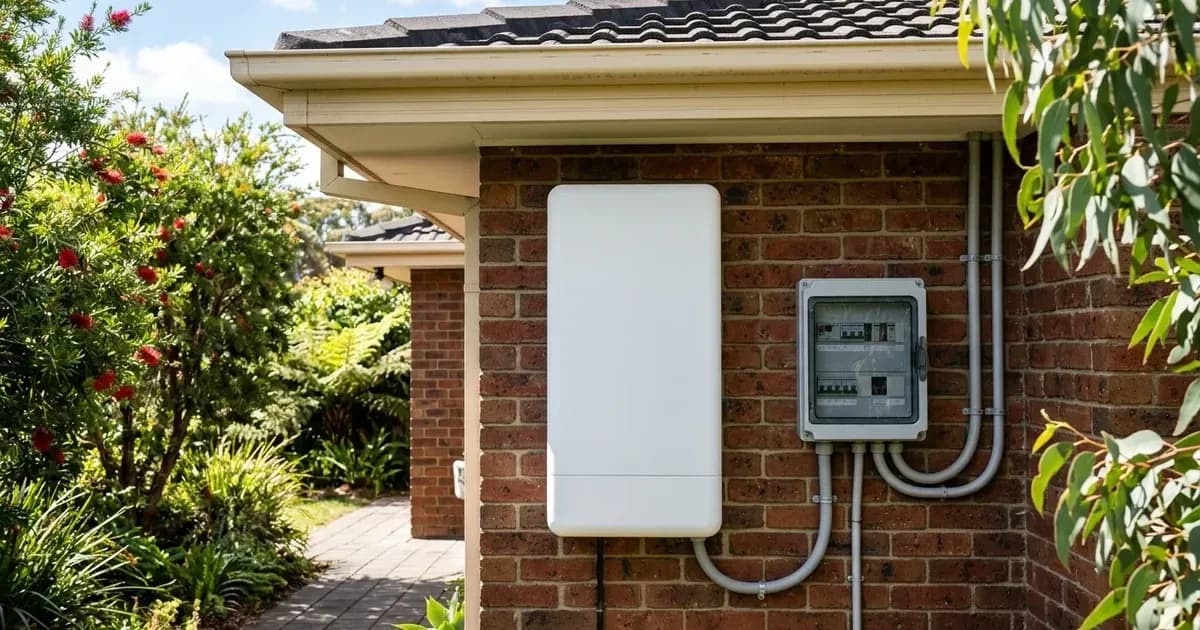
The flagship outdoor solution is the sonnenBatterie Evo. The sonnenBatterie Evo offers a solution for AC-coupled solar battery storage systems, manufactured in Germany specifically for outdoor installations. It has an improved environmental protection rating of IP56. This high ingress rating makes it suitable for installation on external home walls where indoor or garage wall space is restricted, provided installation guidelines comply with Australian and New Zealand standards (AS/NZS 5139:2019).
Inside the enclosure, the battery uses a Lithium Iron Phosphate (LFP) chemistry which is known to be the more stable and safer chemistry compared to nickel-based formulations. LFP cells offer high thermal runaway resistance, zero cobalt content, and outstanding cycle endurance, enabling Sonnen to provide market-leading cycle warranties.
Installed Pricing and System Sizing
Sonnen is positioned within the premium tier of Australian residential energy storage. Pricing reflects its German engineering, high cycle allowance, and integrated power electronics.
According to national market benchmarks compiled across Australian installers:
- 7.5kWh System: Turnkey installed price is approximately $12,000 before rebates.
- 10kWh System: Turnkey installed price is approximately $14,000 before rebates.
The baseline price includes the battery unit, integrated inverter electronics, standard single-phase installation, and system commissioning. Households comparing installation quotes can review our guide on how to compare solar quotes in Australia to verify balance-of-system inclusions and isolator requirements.
Homeowners evaluating alternative modular storage architectures can also assess the BYD Battery-Box Premium review and GoodWe Lynx Home battery review.
Federal Cheaper Home Batteries Rebate Eligibility
Under the Australian federal Cheaper Home Batteries initiative within the Small-scale Renewable Energy Scheme (SRES), residential battery installations receive upfront financial incentives structured through Small-scale Technology Certificates (STCs).
To qualify for federal certificate creation, the installation must satisfy specific Clean Energy Regulator eligibility criteria:
- Nominal Capacity: Energy storage systems must have between 5–100 kWh nominal capacity to participate. Both 7.5kWh and 10kWh Sonnen systems readily meet this requirement.
- Usable Capacity Cap: STCs can only be claimed for the first 50 kWh of a solar battery’s usable capacity.
- Safety Compliance: All equipment must be fully compliant with Australian and New Zealand standards (AS/NZS 5139:2019).
- Grid & VPP Capability: Systems must be technically capable of participating in a virtual power plant (VPP). Sonnen is an industry pioneer in VPP software, operating its proprietary SonnenCommunity network across Australia.
The federal rebate calculation applies a tiered deeming factor across the battery's usable capacity:
- Tier 1: From 0 kWh up to 14 kWh (inclusive): STC factor applied at 100%.
- Tier 2: Every kWh greater than 14 and up to 28 kWh (inclusive): STC factor applied at 60%.
Because standard residential Sonnen units sit at 7.5kWh and 10kWh, 100% of their usable capacity falls within the maximum rebate bracket, providing substantial upfront savings at the point of sale.
Warranty Terms and Throughput Analysis
Sonnen's warranty document is one of the strongest in the global energy storage sector:
- Cycle Life and Duration: Sonnen provides a 10 year or 10,000 cycle warranty (whichever occurs first). This translates to nearly 3 full charge-discharge cycles per day over a decade.
- Energy Throughput: Sonnen offers a throughput warranty of 10 MWh per usable kWh (based on 10,000 cycles), paired with a 10-year product warranty. For a 10kWh battery, this equates to 100 MWh of warranted energy transfer.
- Capacity Retention: The warranty guarantees a minimum capacity rating of 70% at the end of the warranty period.
Warranty Caveats and Technical Limitations
Prospective buyers must evaluate two specific limitations documented in Sonnen's warranty and specifications:
- Degradation Curve Absence: Sonnen’s warranty policy does not provide any guarantee towards the rate of degradation of their batteries over time. While it guarantees 70% retention after 10 years or 10,000 cycles, there is no interim annual degradation benchmark (such as 2% per year).
- Travel and Labour Reimbursement Cap: While parts and replacement modules are covered, transport, travel, and labour on an eligible claim are capped at a maximum of $200. In regional or remote areas of Australia, technician travel costs exceeding $200 may require an owner co-payment.
- Continuous Output Limit: The principal operational limitation with Sonnen is the power transfer limit of 2.5 kwh. With maximum continuous discharge capped at 2.5 kW, running heavy loads such as ducted air conditioning, electric hot water systems, or induction cooktops simultaneously will draw supplementary energy from the grid or active solar generation.
For systems paired with string inverters, verify compatible architectures in our guide to the best solar inverter brands in Australia.
References
- Solar Choice - Sonnen Battery: An Independent Review — accessed 16 September 2026
- Clean Energy Regulator - Solar Batteries Scheme Eligibility — accessed 16 September 2026
Related guides
More from what to buy — and how not to get cheated.