Sungrow SBR Battery Review for Australian Homes
Updated 16 September 2026 · By SolarNevs Research Desk, Dealer surveys + verified sources · 2 sources · Method ↗
Key Takeaways
- The Sungrow SBR series offers a modular high-voltage lithium iron phosphate (LFP) battery solution for residential use in Australia, with capacities from 6.4 kWh to 25.6 kWh.
- All SBR models support a maximum depth of discharge (DOD) of 100%, allowing full utilisation of their stated capacity.
- The batteries feature multi-stage protection, including over/under voltage, current, and temperature protection, alongside an integrated DC breaker.
- With an IP55 rating and natural convection cooling, Sungrow SBR batteries are suitable for outdoor installation, operating in ambient temperatures from -20 ℃ to 50 ℃ (discharge) and 0 ℃ to 50 ℃ (charge).
Understanding the Sungrow SBR High-Voltage Battery Range
The Sungrow SBR battery series provides a modular energy storage solution for Australian homes, designed to integrate with compatible Sungrow hybrid inverters. These batteries utilise lithium iron phosphate (LFP) chemistry, known for its safety and longevity. The range offers various capacities, allowing homeowners to select a system that matches their energy consumption and solar generation.
Sungrow Power Supply Co., Ltd. manufactures the SBR series, a global company with a presence in Australia. The SBR batteries are designed for residential applications, providing reliable energy storage for self-consumption, backup power, and grid interaction.
What is actually going on: Modular Design and LFP Technology
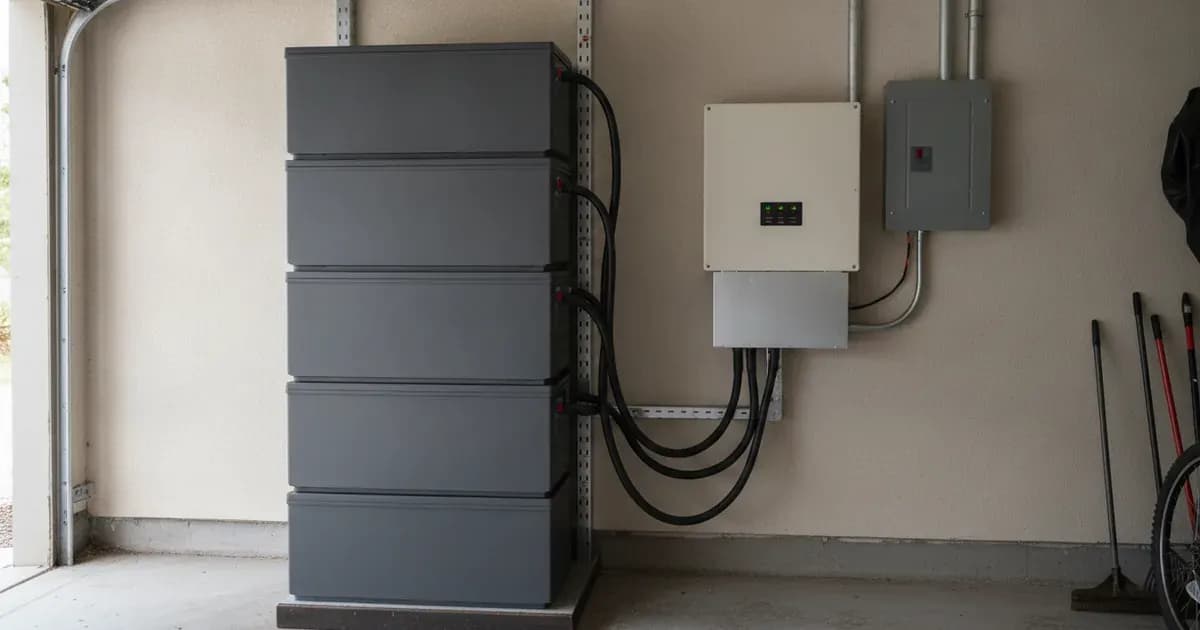
The Sungrow SBR battery system is built on a modular principle. This means that individual battery modules are stacked together to achieve the desired total energy capacity. This approach offers flexibility, allowing systems to be scaled up or down if energy needs change.
At the core of the SBR series is lithium iron phosphate (LFP) battery technology. LFP batteries are favoured in residential solar storage for several reasons:
- Safety: LFP chemistry is inherently more stable and less prone to thermal runaway compared to other lithium-ion chemistries.
- Longevity: They typically offer a longer cycle life, meaning they can be charged and discharged more times over their lifespan.
- Performance: LFP batteries maintain stable performance across a wide range of operating conditions.
The modular, high-voltage design of the SBR series allows for efficient energy transfer between the battery and a compatible hybrid inverter. High-voltage battery systems can reduce current losses and improve overall system efficiency, especially in larger installations.
Sungrow SBR Battery Models and Specifications
The Sungrow SBR range includes several models, each offering a different usable energy capacity. All models share common features such as a maximum depth of discharge (DOD) of 100% and a continuous maximum charging/discharging current of 30 A (or 20A with SHRT series inverters for the SBR064 model).
Model | Usable Energy | Nominal Voltage | Operating Voltage Range | Max. Continuous Charge/Discharge Current | Dimensions (WHD) | Weight |
|---|---|---|---|---|---|---|
SBR064 | 6.4 kWh | 128 V | 108 V – 146 V | 30 A (20A with SHRT series inverter) | 625545330 mm | 89 kg |
SBR096 | 9.6 kWh | 192 V | 162 V – 219 V | 30 A | 625545330 mm | 114 kg |
SBR128 | 12.8 kWh | 256 V | 216 V – 292 V | 30 A | 625675330 mm | 147 kg |
SBR160 | 16 kWh | 320 V | 270 V – 365 V | 30 A | 625805330 mm | 180 kg |
SBR192 | 19.2 kWh | 384 V | 324 V – 438 V | 30 A | 625935330 mm | 213 kg |
SBR224 | 22.4 kWh | 448 V | 378 V – 511 V | 30 A | 6251065330 mm | 246 kg |
SBR256 | 25.6 kWh | 512 V | 432 V – 584 V | 30 A | 6251195330 mm | 279 kg |
These specifications highlight the scalability of the SBR series, allowing for systems ranging from smaller residential setups to larger installations requiring significant energy storage. The maximum continuous charge/discharge current of 30 A (or 20A for SBR064 with SHRT series inverters) is a key performance metric, indicating how quickly the battery can deliver or accept power.
Safety and Environmental Considerations
Sungrow SBR batteries incorporate a multi-stage protection design and have undergone extensive safety certification. Key safety features include:
- Over/under voltage protection: Prevents the battery from operating outside its safe voltage limits.
- Over current protection: Safeguards against excessive current flow during charging or discharging.
- Over/under temperature protection: Ensures the battery operates within its optimal temperature range, protecting against damage from extreme heat or cold.
- Integrated DC breaker: Provides a physical disconnect for safety during maintenance or in emergency situations.
The batteries are designed for a wide range of environmental conditions:
- Operating ambient temperature: They can charge from 0 ℃ to 50 ℃ and discharge from -20 ℃ to 50 ℃.
- Relative humidity: The allowable range is 0% to 95% non-condensing.
- Degree of protection: An IP55 rating means the units are protected against dust ingress and low-pressure water jets, making them suitable for outdoor installation in Australia.
- Cooling method: Natural convection is used, meaning no internal fans are required, which contributes to quiet operation and reduced maintenance.
These features ensure the SBR batteries are robust and reliable for Australian conditions, from cooler southern regions to hotter, dustier northern areas.
What you can change yourself, and what you cannot
As a homeowner, you typically interact with your Sungrow SBR battery system through a monitoring app or inverter interface. You can usually adjust settings related to:
- Operating modes: Such as self-consumption, time-of-use, or backup mode, depending on your inverter's capabilities.
- Charge/discharge schedules: Setting specific times for the battery to charge from solar or the grid, or to discharge to power your home.
- State of Charge (SOC) limits: Defining minimum and maximum SOC levels for daily operation or backup reserves.
However, certain critical settings and physical work on the battery system must only be performed by a registered and qualified electrical professional. These include:
- Installation and wiring: Connecting the battery to the inverter and the electrical system.
- Firmware updates: While some updates may be pushed remotely, critical updates often require professional oversight.
- Grid protection settings: Parameters that ensure the system operates safely and in compliance with Australian grid connection regulations.
- Internal battery maintenance or repairs: Opening the battery enclosure or working on internal components is strictly for authorised service personnel.
Any work involving the electrical connections or internal components of the battery or inverter requires a Certificate of Compliance (CoC) in Australia, issued by a licensed electrician. Attempting such work yourself can void warranties, create safety hazards, and is illegal.
What the published sources do not tell you
While the Sungrow SBR datasheets and product pages provide essential technical specifications and safety features, there are some details that are not explicitly covered in the provided documentation:
- Detailed Inverter Pairing: The product page mentions compatibility with SH-RS/SH-RT hybrid inverters, but specific pairing procedures, communication protocols, or detailed compatibility lists are not provided. This information is typically found in inverter manuals or specific installation guides.
- Warranty Terms: While a "10-year warranty" is often advertised for such products, the specific terms, conditions, and coverage details are not included in the provided datasheets. These would typically be found in a separate warranty document.
- Performance Curves/Efficiency: Beyond the usable energy and maximum continuous current, detailed performance curves (e.g., how efficiency varies with load or temperature) or round-trip efficiency figures are not specified.
- Installation Details: While "Easy Installation" is highlighted, detailed step-by-step installation instructions, specific cabling requirements, or mounting guidelines are not present. These are usually found in a Quick Installation Guide or full installation manual.
- Monitoring App Features: The product page mentions iSolarCloud, but its specific features, how it integrates with the SBR battery, or setup instructions for the app are not detailed.
- Price Information: No pricing details for the Sungrow SBR battery models are available in the provided source documents. Pricing can vary significantly based on supplier, region, and installation costs.
- Error/Fault Codes: The provided documents do not list specific error or fault codes, their meanings, or troubleshooting steps. This information is crucial for diagnosing system issues and is typically found in a dedicated fault code manual or the inverter's operating manual.
This means that while the core specifications are clear, installers and end-users will need to consult additional documentation, such as installation manuals, warranty documents, and inverter-specific guides, for a complete understanding of the system's operation and maintenance.
Frequently asked questions
What energy capacities are available in the Sungrow SBR battery range?
The Sungrow SBR battery range offers usable energy capacities from 6.4 kWh (SBR064) up to 25.6 kWh (SBR256). This modular design allows for customisation based on household energy needs.
What type of battery chemistry does the Sungrow SBR use?
The Sungrow SBR battery uses lithium iron phosphate (LFP) chemistry. This battery type is known for its safety, long cycle life, and stable performance in residential energy storage applications.
What is the maximum depth of discharge for Sungrow SBR batteries?
Sungrow SBR batteries are designed for a maximum depth of discharge (DOD) of 100%. This setting is configurable, allowing users to utilise the full stated capacity of their battery system.
What are the operating temperature ranges for Sungrow SBR batteries?
Sungrow SBR batteries can charge in ambient temperatures from 0 ℃ to 50 ℃ and discharge in temperatures from -20 ℃ to 50 ℃. This wide range ensures reliable operation in various Australian climates.
Are Sungrow SBR batteries suitable for outdoor installation in Australia?
Yes, Sungrow SBR batteries have an IP55 degree of protection, making them suitable for outdoor installation. They are designed to withstand dust ingress and low-pressure water jets from any direction.
References
- Sungrow SBR Datasheet V5 EN — accessed 27 August 2026
- Sungrow Australia SBR Product Page — accessed 27 August 2026
Related guides
More from what to buy — and how not to get cheated.