Inverter Shutting Down on Sunny Days Due to High Grid Voltage in Western Australia
Updated 16 September 2026 · By SolarNevs Research Desk, Dealer surveys + verified sources · 3 sources · Method ↗
Key Takeaways
- Your solar inverter is likely shutting down or reducing output due to high grid voltage, especially on sunny afternoons.
- This is a normal and required safety response by your inverter to protect the electricity grid.
- The issue is common in areas with high rooftop solar penetration, such as Perth, Western Australia.
- Contact your accredited installer to assess grid conditions and adjust inverter settings if necessary; do not attempt to change settings yourself.
Why your solar inverter shuts down on sunny afternoons in Western Australia
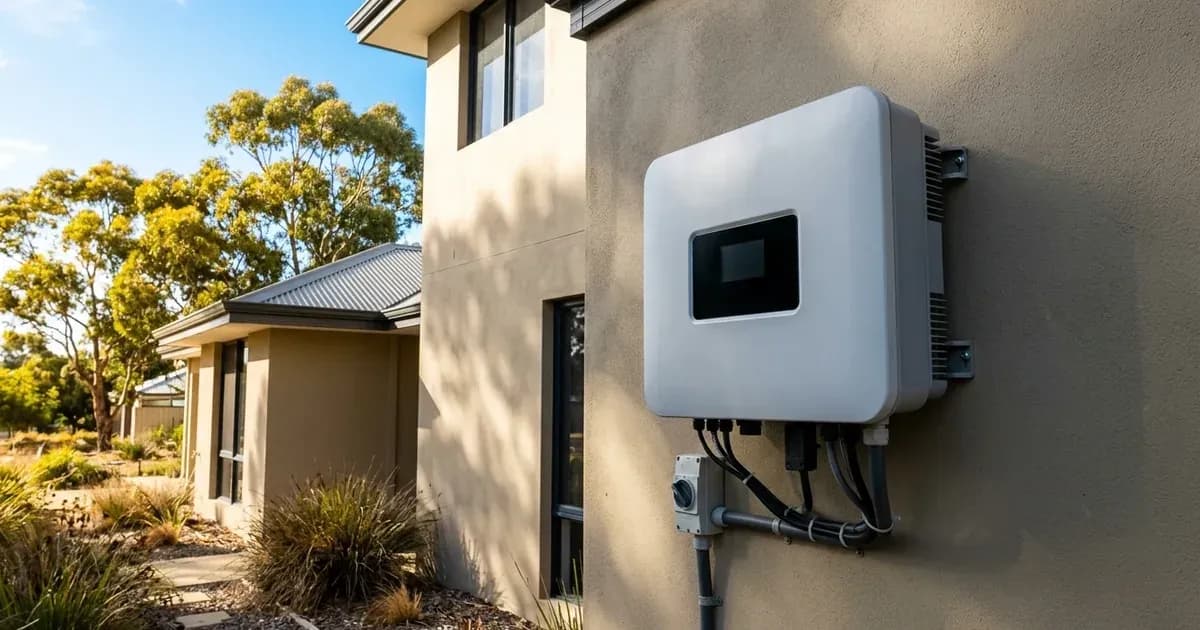
In Western Australia, if your solar inverter frequently shuts down or reduces its output on sunny afternoons, it is most likely responding to high grid voltage. This is a safety mechanism required by Australian standards to maintain grid stability. Your inverter is behaving as it should, even though it means a temporary loss of solar generation.
This phenomenon is particularly common in suburbs with a high number of rooftop solar installations, where the collective export of solar power can significantly impact local grid voltage.
What is actually going on: The grid voltage rise mechanism
The electricity grid operates within a specific voltage range. When many solar systems in a local area are generating and exporting power simultaneously, especially on sunny days when household electricity demand might be lower, this can cause the voltage on the local network to rise.
our check of the published listings found that "Grid voltage on the SWIS network can rise above nominal during high-solar-export periods, particularly in suburbs with high rooftop PV penetration."
Australian Standard AS/NZS 4777.2 sets the requirements for grid-connected inverters, including voltage limits. To protect the grid and your inverter, "Under AS 4777.2:2020, your inverter must disconnect when the voltage exceeds the threshold." This is a mandatory safety and grid stability feature.
When the grid voltage exceeds the inverter's pre-set upper limit, your inverter will either reduce its power output (a process called 'derating') or, if the voltage continues to rise, disconnect entirely. This is why you might see your inverter stop producing power, often displaying a grid voltage error message. "The inverter restarts automatically when voltage drops."
In some cases, high temperatures can also contribute to derating or shutdown. For example, our check of the published listings found that for GoodWe inverters, "The inverter will derate (reduce output) to protect itself and may shut down entirely in extreme heat." This is usually indicated by a 'Temperature Too High' error.
Common fault codes for high grid voltage
While your inverter is functioning correctly by shutting down, it will typically display an error code indicating the reason. These codes are often related to AC over-voltage or grid voltage being out of range.
Here are some common codes reported by Australian installers for this issue:
Code / Alarm Name | What it means | What to do |
|---|---|---|
GoodWe Inverters (as documented by PSW Energy, an Australian installer) |
|
|
Vac Failure (Error 15) | "Grid voltage outside the permitted range" | "Most common error code in Perth. Usually caused by high network voltage during peak solar hours (midday to early afternoon). The inverter restarts automatically when voltage drops. If this appears daily, your installer can request a Western Power network voltage assessment or review the inverter’s volt-watt response settings" |
Temperature Too High (Error 18) | "Internal temperature has exceeded the safe operating limit" | "Check ventilation around the inverter. Clear any debris, spider webs, or vegetation within 300mm of the heatsink fins. In Perth, this is common on 40°C+ days, particularly for inverters mounted on north or west-facing walls in direct afternoon sun. The inverter will derate (reduce output) to protect itself and may shut down entirely in extreme heat. Consider installing a shade hood if this occurs regularly" |
Growatt Inverters (as documented by PSW Energy, an Australian installer) |
|
|
Error 104 | "AC over voltage" | "This is a common grid voltage issue. The inverter will automatically restart when grid voltage normalises. If persistent, contact your installer to assess grid conditions or adjust volt-watt settings." |
Growatt Inverters (as documented by Growatt) |
|
|
Error 300 AC V range | "Check the line voltage. If the error message still occurs even though the line voltage is within the acceptable range, contact service@growatt.tech" | "Check the line voltage. If the error message still occurs even though the line voltage is within the acceptable range, contact service@growatt.tech" |
What you can check yourself, and what you cannot
When your inverter displays a grid voltage error, there are limited checks you can perform safely:
- Observe the pattern: Note down when the shutdowns occur. Is it always on sunny afternoons? Does it happen more frequently on weekends when commercial demand is lower? This information will be helpful for your installer.
- Check for other error codes: Ensure no other fault codes are present that might indicate a different issue, such as an internal inverter fault or a DC-side problem.
- Monitor inverter temperature: If your inverter is showing a 'Temperature Too High' error, check that its ventilation fins are clear of dust, debris, or spiderwebs. Ensure there's nothing blocking airflow around the unit. If the inverter is in direct sunlight, especially on a north or west-facing wall, consider if a shade hood could help.
What you cannot do: You should never attempt to change your inverter's grid-protection settings yourself. These settings are configured by an accredited installer according to Australian standards (AS/NZS 4777.2) and your local network distributor's requirements. Tampering with these settings can:
- Compromise grid stability.
- Create safety hazards.
- Void your inverter warranty.
- Breach your connection agreement with your electricity distributor.
What your installer can do
If you are experiencing frequent grid voltage shutdowns, contact your accredited solar installer. They have the expertise and tools to diagnose the issue correctly and implement appropriate solutions.
Your installer can:
- Analyse inverter data: They can access your inverter's historical data to confirm the frequency and duration of grid voltage events.
- Review volt-watt settings: Modern inverters have advanced grid support functions, such as volt-watt response. This setting allows the inverter to automatically reduce its power output as grid voltage rises, helping to stabilise the grid and prevent full shutdowns. Your installer can review and potentially adjust these settings within the limits permitted by your network distributor. our check of the published listings found that for GoodWe inverters, "If this appears daily, your installer can request a Western Power network voltage assessment or review the inverter’s volt-watt response settings." Similarly, for Growatt Error 104, it states, "If persistent, contact your installer to assess grid conditions or adjust volt-watt settings."
- Contact your electricity distributor: If the problem is persistent and cannot be resolved through inverter settings, your installer can contact your local electricity distributor (e.g., Western Power in Western Australia) to request a network voltage assessment. This may lead to upgrades or adjustments on the grid side to better accommodate local solar generation.
What the published sources do not tell you
The specific voltage limits at which your inverter will derate or disconnect are defined in the Australian Standard AS/NZS 4777.2. This is a paid standard, and its exact trip thresholds are not publicly available in free sources. Therefore, we cannot print these numbers.
The precise settings configured on your inverter will also depend on your local electricity distributor's requirements. These can vary between different distribution networks across Australia. Your installer or electricity distributor can confirm the specific voltage settings applied to your inverter and your local grid. The name of your electricity distributor is typically found on your electricity bill.
Frequently asked questions
Why does my solar inverter shut down on sunny days?
Your inverter is likely shutting down due to high grid voltage, especially on sunny afternoons. This is a required safety response to protect the grid, common in areas with many solar installations.
What is 'high grid voltage'?
High grid voltage occurs when local electricity demand is low and many solar systems are exporting power to the grid. This can cause the voltage on the local network to rise above its nominal level.
What is a volt-watt response?
A volt-watt response is an inverter setting that allows it to automatically reduce its power output as grid voltage rises. This helps to stabilise the grid and prevent full shutdowns.
Can I fix high grid voltage shutdowns myself?
No, you should not attempt to change inverter settings yourself. Grid-protection settings are configured by an accredited installer and changing them can breach your connection agreement. Contact your installer for assistance.
What can my installer do about high grid voltage shutdowns?
Your installer can assess your grid conditions, review your inverter's volt-watt response settings, and if necessary, request a network voltage assessment from your electricity distributor, such as Western Power.
References
- PSW Energy: GoodWe Error Codes — accessed 26 August 2026
- PSW Energy: Growatt Error Codes Resolution Guide — accessed 26 August 2026
- Growatt: MOD XH BP Inverter Error Description — accessed 26 August 2026
Related guides
More from inverter errors & fixes.