Solar Panel Cleaning Guide Australia: Costs, Losses, and Safety
Updated 19 September 2026 · By SolarNevs Research Desk, Dealer surveys + verified sources · 2 sources · Method ↗
Key Takeaways
- In metro areas across Australia, the typical price to clean residential solar panels is around $15-$20 per panel, with full service averaging $250-$350.
- Soiling causes measured power losses ranging from 3%-5% for light dust up to 25%-35% for severe industrial or agricultural accumulation.
- Concentrated bird droppings create localized shading on individual cells, leading to hot spots and severe localized yield drops.
- Natural rainfall assists tilted arrays, but dirt pools along lower frame edges, and self-cleaning fails on panels installed flat or less than 5 degrees.
- Specialist technicians recommend cleaning modules at least once every 2-3 years to maintain optimal energy production.
Does Rooftop Solar Need Cleaning in Australia?
A common question among Australian system owners is whether rooftop solar arrays require active cleaning or if natural rainfall is sufficient. While Australian rain washes away loose surface pollen and dust, it rarely removes stubborn deposits such as baked-on bird droppings, lichen, tree sap, and road grime.
Field studies have shown that dirty solar panels can experience power losses ranging from 5% to 35% compared to clean reference modules. In suburban environments with minimal pollution, uncleaned arrays may only lose a minor fraction of output. However, in dusty rural settings or urban corridors, accumulated dirt noticeably reduces quarterly electricity bill savings.
Before attributing low solar generation to dirty panels, confirm your inverter is operating normally without grid over-voltage curtailment by reviewing our guide on inverter shutting down on sunny days in Australia.
Quantifying Solar Soiling Losses
The impact of soiling on photovoltaic performance varies directly with local environmental conditions:
Soiling Severity Level | Typical Environmental Causes | Estimated Power Loss | Recommended Action |
|---|---|---|---|
Light Soiling | Ambient atmospheric dust, pollen, and light urban pollution | ≈ 3%-5% energy loss | Monitor annual output; allow regular rain to rinse loose dust |
Moderate Soiling | Bird droppings, decaying leaves, lichen, and stubborn dirt buildup | ≈ 10%-15% energy loss | Schedule professional maintenance wash every 2-3 years |
Heavy Soiling | Industrial exhaust, persistent dust from construction or agriculture | ≈ 25%-35% energy loss | Annual cleaning required to avoid permanent cell damage |
As documented in Australian field measurements:
- Light Soiling: Light soiling (dust, pollen, and pollution): ≈ 3%-5% energy loss. On a standard residential solar system, this represents a minor loss of daily generation.
- Moderate Soiling: Moderate soiling (bird droppings, leaves, dirt buildup): ≈ 10%-15% energy loss.
- Heavy Soiling: Heavy soiling (industrial pollution, neglect over years): ≈ 25%-35% energy loss. On a larger 10kW solar system, this severe degradation can eliminate thousands of kilowatt-hours over an extended period.
Specific Australian Soiling Hazards
Three specific environmental factors cause disproportionate output drops on Australian rooftops:
- Bird Dropping Hotspots: Bird droppings are one of the most problematic forms of solar panel soiling because they create concentrated shading on individual cells. An opaque dropping forces the shaded cell to act as an electrical resistance, converting power into intense localized heat that can permanently damage panel backing sheets.
- Frame Edge Sludge Accumulation: Rainfall will often remove loose dust from tilted solar panels, but dirt commonly accumulates around the aluminium frame edges where water flow is weaker. Over several seasons, this sediment forms a permanent band of grime that creeps over the lowest row of solar cells.
- Environmental Proximity: Homes near industrial areas, busy roads, construction zones or agricultural land may experience faster dust and pollution buildup on solar panels. Nearby trees, strong winds and storms can cause leaves and debris to collect around solar panels.
Roof Pitch and Self-Cleaning Limits
The angle at which panels are installed plays a vital role in natural rain washing. On standard pitched roofs with a tilt of 15° to 30°, rainwater flows rapidly across the glass, carrying away loose surface particulate matter.
However, on low-pitch residential extensions or commercial roofs, self-cleaning ceases to function. For panels installed flat or less than 5 degrees, water pools in low spots instead of draining, leaving heavy mineral and dirt deposits when the puddle evaporates. Flat installations require frequent manual intervention to maintain generation efficiency.
Professional Cleaning Costs in Australian Metro Areas
When hiring an accredited maintenance contractor, pricing across capital cities follows consistent industry benchmarks:
- Per-Panel Pricing: In metro areas across Australia, the typical price to clean residential solar panels is around $15-$20 per panel.
- Turnkey Maintenance Package: The costs of solar panel maintenance service is around $250-$350 for a standard residential property.
A comprehensive service includes more than a simple water rinse: accredited contractors inspect module glass for micro-cracks, verify cabling integrity, inspect roof isolator enclosures, and check mounting clamps. When selecting contractors, review our guide on how to compare solar quotes in Australia to verify proper insurances and licenses.
Cleaning Best Practices and Safety Hazards
Cleaning solar panels often involves climbing onto a roof, so it is always recommended to hire a solar panel cleaning service with certified height-safety equipment.
For situations where ground-level washing with an extension pole is possible, adhere strictly to manufacturer maintenance rules:
- Thermal Shock Prevention: Never spray cold water onto hot solar panels under direct midday sun. The sudden temperature differential can fracture the tempered front glass. Schedule washing early in the morning before modules heat up.
- No Pressure Washers: High-pressure water blasters force moisture past rubber perimeter seals and cable glands, voiding the module manufacturer's warranty. Use low-pressure mains water or pure deionised water.
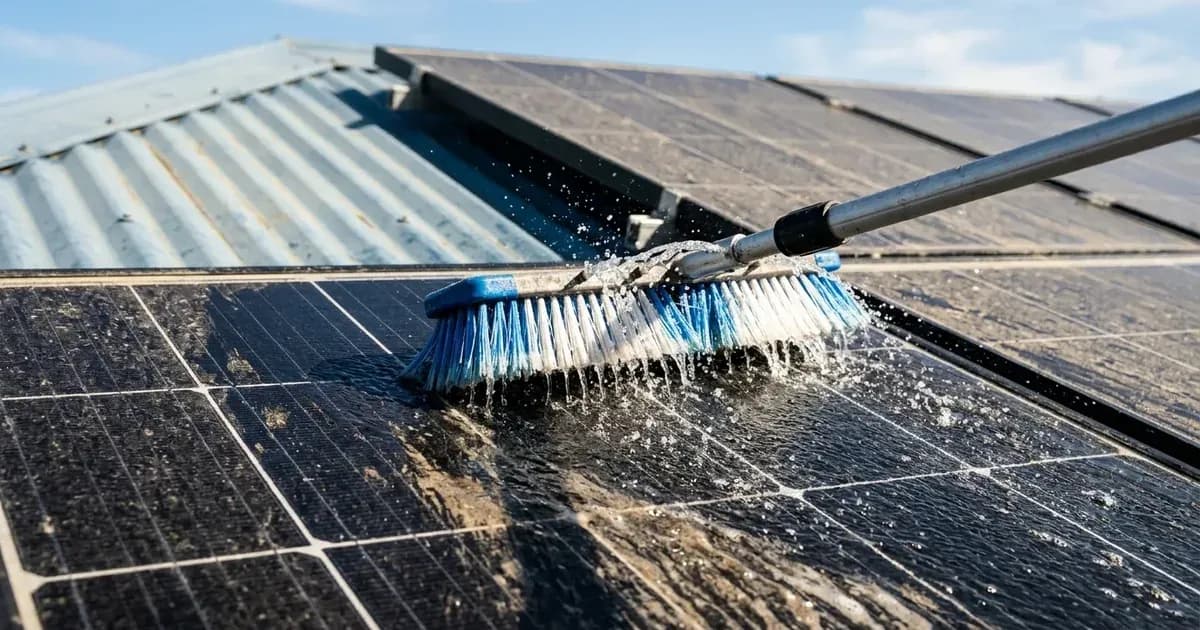
- Soft Non-Abrasive Tools: Avoid abrasive scourers, wire brushes, or harsh detergents that strip anti-reflective coatings. Use a soft microfibre mop or soft-bristle solar brush.
- Drying Procedure: Prevent water spots by drying the panels with a clean, soft cloth or rubber squeegee to prevent mineral scale deposits from hard tap water.
- Electrical Safety: Solar arrays generate high-voltage direct current whenever sunlight hits the modules. Never touch exposed wiring or cracked glass panels.
By adhering to a recommended schedule to clean solar panels at least once every 2-3 years to maintain their optimal performance, homeowners ensure maximum financial returns while preserving module warranties across their multi-decade operating life.
References
- Solar Choice - Solar Panel Cleaning Guide — accessed 16 September 2026
- Clean Energy Regulator - Rooftop Solar Systems — accessed 16 September 2026
Related guides
More from inverter errors & fixes.