Australian Solar DC Isolator and Rooftop Safety Switchgear: Compliance with AS/NZS 5033 and CEC Rules
Updated 18 September 2026 · By SolarNevs Research Desk, Dealer surveys + verified sources · 2 sources · Method ↗
Key Takeaways
- Australian rooftop solar installations must comply with Australian Standards, including AS/NZS 5033, for DC isolators and safety switchgear.
- The Clean Energy Council (CEC) plays a role in developing these standards and maintaining lists of approved products.
- As of 30 May 2024, installers and designers require accreditation from Solar Accreditation Australia (SAA) to claim Small-scale Technology Certificates (STCs).
- Always use an accredited installer for any work involving solar DC isolators or rooftop switchgear to ensure safety and compliance.
Understanding Australian Solar DC Isolator and Rooftop Safety Switchgear Requirements
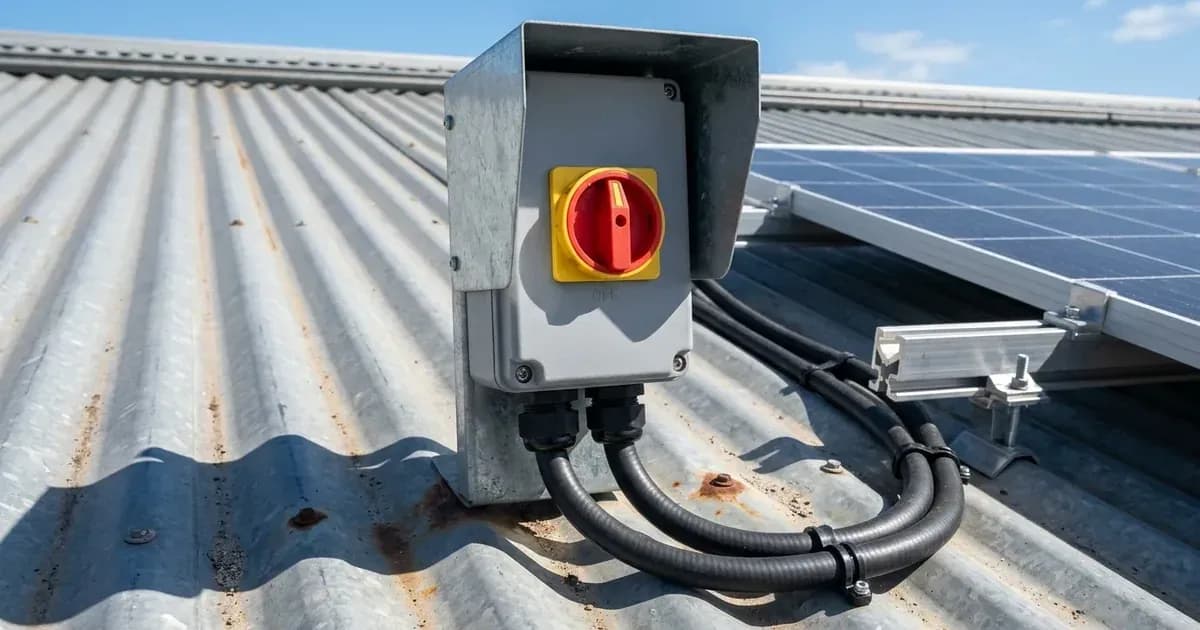
In Australia, the installation of solar photovoltaic (PV) systems, particularly rooftop DC isolators and safety switchgear, is governed by stringent safety standards and regulatory frameworks. These components are critical for the safe operation and maintenance of a solar system, providing means to isolate the DC current generated by solar panels. Compliance ensures the safety of homeowners, emergency services, and maintenance personnel. The primary standard guiding these installations is AS/NZS 5033, with oversight and accreditation managed by bodies like the Clean Energy Council (CEC) and Solar Accreditation Australia (SAA).
The Regulatory Framework for Solar Safety Components
The safe deployment of solar energy in Australia relies on a robust regulatory framework that dictates the design, installation, and components used in PV systems. This framework ensures that critical safety devices, such as DC isolators and rooftop switchgear, meet specific performance and safety criteria.
The Clean Energy Council (CEC) is a key organisation in this framework. It provides input into the development of Australian Standards, which include those relevant to solar PV installations. This involvement helps uphold the integrity of consumer energy resources. The CEC also maintains verified and tested lists of eligible solar PV modules, inverters, and battery storage products for Australian installations, ensuring that components used in systems meet Australian safety benchmarks and grid connection standards.
For installers and designers, accreditation is a mandatory requirement to ensure compliance. On 29 February 2024, the Clean Energy Regulator (CER) approved Solar Accreditation Australia (SAA) as the new accreditation scheme operator (ASO) under the Small-scale Renewable Energy Scheme (SRES). This change impacts how Small-scale Technology Certificates (STCs) are claimed.
Accreditation and Standards for STC Eligibility
The shift in accreditation bodies has specific implications for solar installers and designers in Australia, directly affecting their ability to claim STCs for new installations.
Requirement | Details |
|---|---|
SAA Scheme Operator | Solar Accreditation Australia (SAA) was approved on 29 February 2024 as the new installer and designer accreditation scheme operator under the Small-scale Renewable Energy Scheme (SRES). |
STC Eligibility Transition | Installers and designers must apply with Solar Accreditation Australia for accreditation to remain eligible for Small-scale Technology Certificates (STCs). |
SAA Accreditation Number | SAA issues a new accreditation number required to claim STCs for all installations completed from 30 May 2024. |
CEC Accreditation Validity | Clean Energy Council accreditation numbers can only be used to claim STCs for installations completed before 29 May 2024. |
SAA Electrical Licence | Installers holding grid-connect installation accreditation must maintain a valid current electrical licence number. |
SAA CPD Point Recognition | Solar Accreditation Australia recognises Continuing Professional Development (CPD) points completed through the Clean Energy Council. |
CEC Core CPD Points | Clean Energy Council core CPD courses are eligible for 20 points per course. |
CEC Elective CPD Points | Clean Energy Council elective CPD courses are eligible for 10 points per course. |
These changes underscore the importance of maintaining current and valid accreditation with the correct body to ensure that solar installations are compliant and eligible for government incentives.
What You Can Check Yourself, and What You Cannot
Solar DC isolators and rooftop safety switchgear are critical safety components of your solar PV system. As a homeowner, your interaction with these components should be limited to visual inspections and understanding their purpose.
What you can check yourself:
- Visual Inspection: Periodically check the external condition of the DC isolator and switchgear enclosure. Look for any visible signs of damage, such as cracks, discolouration, or loose covers.
- Clearance: Ensure that the area around the isolator and switchgear is clear of obstructions, debris, or vegetation, maintaining adequate ventilation and access for emergency services.
What you cannot do yourself:
- Never open or tamper with the enclosure: These units contain high-voltage DC electricity, which can be extremely dangerous. Opening them without proper training and safety equipment can lead to severe injury or death.
- Do not attempt repairs or modifications: Any work on DC isolators or switchgear must be performed by an accredited solar electrician. Attempting to repair or modify these components yourself can compromise the safety of your system and void warranties or compliance certificates.
- Do not operate switches without understanding their function: While isolators are designed to be operated, ensure you understand their purpose (e.g., emergency shutdown) before switching them. Your installer should provide clear instructions.
If you observe any damage, malfunction, or have concerns about your solar DC isolator or switchgear, contact an accredited solar installer immediately. They have the necessary qualifications and equipment to safely inspect, diagnose, and rectify any issues in accordance with Australian Standards.
What the Published Sources Do Not Tell You
While the Clean Energy Council and Solar Accreditation Australia provide essential information regarding compliance, accreditation, and approved products, specific technical details of Australian Standards are not publicly available through these sources.
For instance, direct verbatim text of paywalled Standards Australia publications, such as AS/NZS 3000 (Wiring Rules), AS/NZS 4509 (Stand-alone Power Systems), AS/NZS 4777 (Grid connection of energy systems via inverters), AS/NZS 5033 (Installation and safety requirements for photovoltaic (PV) arrays), and AS/NZS 5139 (Electrical installations – Safety of battery energy storage systems), is copyright Standards Australia. These detailed specifications, including precise requirements for DC isolator placement, type, and enclosure specifications, are accessed via licensed practitioner portals by accredited professionals. This means that while the necessity of compliance with AS/NZS 5033 is stated, the exact technical parameters within the standard are not provided in publicly accessible documents from the CEC or SAA. Homeowners rely on their accredited installers to interpret and apply these standards correctly.
Frequently asked questions
What is the role of Solar Accreditation Australia (SAA)?
Solar Accreditation Australia (SAA) is the new accreditation scheme operator for installers and designers under the Small-scale Renewable Energy Scheme (SRES), approved by the Clean Energy Regulator (CER) on 29 February 2024. Installers and designers must apply with SAA for accreditation to remain eligible for Small-scale Technology Certificates (STCs).
When did SAA accreditation become mandatory for STC claims?
SAA issues a new accreditation number required to claim STCs for all installations completed from 30 May 2024. Clean Energy Council accreditation numbers can only be used to claim STCs for installations completed before 29 May 2024.
What Australian Standards apply to solar rooftop installations?
Australian Standards, such as AS/NZS 5033, govern the installation of rooftop solar DC isolators and switchgear. The Clean Energy Council provides input into the development of these Australian Standards to uphold the integrity of consumer energy resources.
How does the Clean Energy Council (CEC) support solar compliance?
The Clean Energy Council maintains verified and tested lists of eligible solar PV modules, inverters, and battery storage products for Australian installations. It also administers the New Energy Tech Consumer Code (NETCC) program for approved sellers and consumer protection.
Are Clean Energy Council (CEC) CPD points recognised by Solar Accreditation Australia (SAA)?
Yes, Solar Accreditation Australia recognises Continuing Professional Development (CPD) points completed through the Clean Energy Council. CEC core CPD courses are eligible for 20 points per course, and elective CPD courses are eligible for 10 points per course.
References
- Clean Energy Council: Compliance Toolkit - Standards — accessed 26 August 2026
- Clean Energy Council: Renewable Energy Advocacy — accessed 26 August 2026
Related guides
More from schemes, subsidies & financing.