SA Power Networks Flexible Exports and Smart Inverter Telemetry Guide
Updated 19 September 2026 · By SolarNevs Research Desk, Dealer surveys + verified sources · 4 sources · Method ↗
Key Takeaways
- SA Power Networks enables dynamic capacity through compatible smart internet-connected inverters - receiving regular export limit updates from SA Power Networks, and matching exports to available grid capacity.
- Installers submit an application to install Inverters with a total capacity no greater than 30kVA for small embedded generation.
- Switchboard protection dictates that the installation of a correctly sized Meter Isolator will be critical to these installations, but this must be sized to protect the transformer.
- Connection classifications separate residential or small business new connections less than 100amps from commercial, industrial and developer new connections greater than 100amps.
- On rural single-wire earth-return lines, the Flexible Exports lower bound limit therefore is offered as 0kW export to SWER customers, instead of 1.5kW as in other parts of the network.
Dynamic Telemetry and Inverter Control Architecture
SA Power Networks manages network hosting capacity by streaming dynamic export signals directly to customer premises. This system operates as a flexible export limit enabled by compatible smart internet-connected inverters - receiving regular export limit updates from SA Power Networks, and matching exports to available grid capacity.
The technical development of dynamic telemetry has been thoroughly validated: the trial was made possible by working with the solar industry, inverter manufacturers and technology providers from 2021-2023. During this trial, utility engineers and equipment vendors refined CSIP-Aus telemetry communications and failover behaviors.
To prepare customer applications, contractors can check options in the Applications tab in the Portal or the Flexible Exports Service Performance Checker. In addition, you can view past Flexible Exports performance in your customers area using the Flexible Exports Service Performance Checker , which can be used as part of the discussion about what to install.
Equipment and Protection Standards
Connecting high-capacity solar systems to local distribution transformers requires precise physical switchboard engineering:
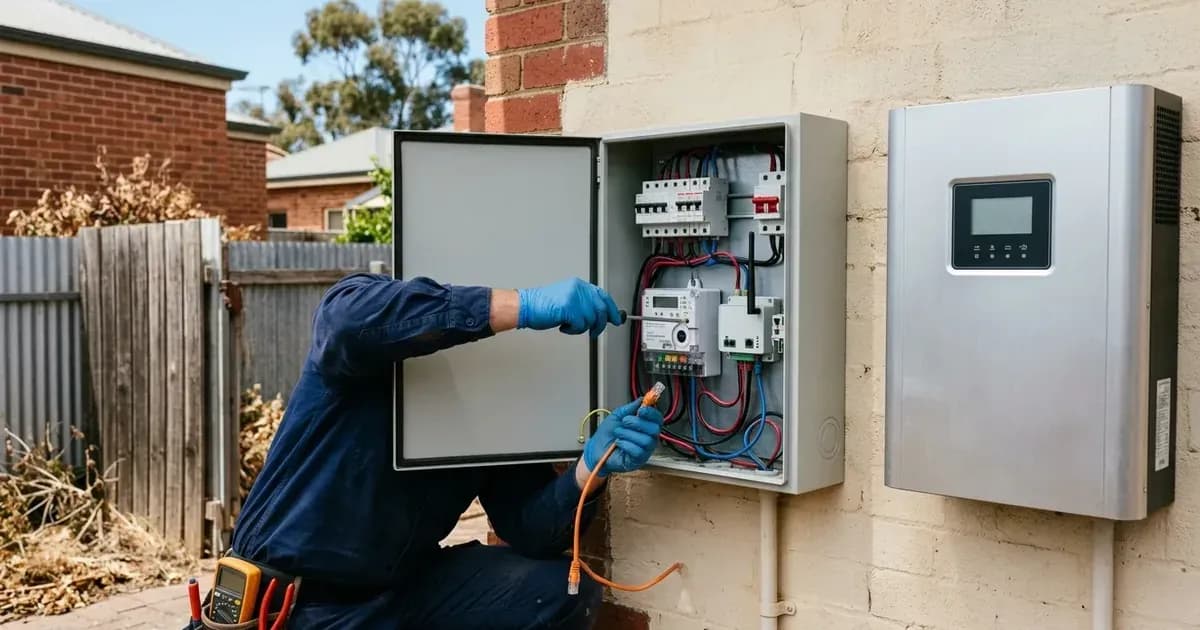
- The installation of a correctly sized Meter Isolator will be critical to these installations, but this must be sized to protect the transformer.
- Contractors must understand our technical standards and useful links associated with small embedded generation before final commissioning.
Connection scale dictates specific grid protection regimes:
- Standard small systems: Residential or Small Business new connections less than 100amps.
- Commercial connections: Commercial, industrial and developer new connections greater than 100amps.
- Equipment limits: Standard processing covers an application to install Inverters with a total capacity no greater than 30kVA.
Application Workflow and Portal Management
Solar applications must be lodged through the online utility connection portal:
- Portal transparency: All sites with a valid NMI and meter number will be retrievable by any registered user.
- Customer discussions: Installers should email/print the information on export options (including past Flexible Exports performance) to discuss the options with your customer.
- Application review: We have flagged these customers in the Portal and the application will move to Under Review status if you are selecting Flexible Exports.
- Technical assistance: If complications arise, call our Industry Enquiries line on 13 12 61 and advise them of your EG number and which export plan you wish to proceed with (fixed 0 export, or Flexible Exports).
Rural Feeder Telemetry on SWER Lines
Single-wire earth-return (SWER) networks present significant impedance challenges. High solar generation on long rural runs causes rapid local voltage rise.
Consequently, while dynamic exports allow rural customers to connect larger PV arrays, protective boundaries apply: the Flexible Exports lower bound limit therefore is offered as 0kW export to SWER customers, instead of 1.5kW as in other parts of the network.
What You Can Check Yourself, and What You Cannot
System owners can check their home internet gateway and router settings to ensure that the inverter maintains an active internet connection. Property owners can also verify their National Meter Identifier (NMI) on their power bill and view performance history via public portals.
However, system owners cannot modify utility telemetry parameters, alter inverter communication certificates, or adjust meter isolator ratings. Electrical isolation switchgear and telemetry provisioning must be configured solely by licensed electrical contractors.
What the Published Sources Do Not Tell You
The public technical literature does not publish the exact internal polling interval used by SAPN utility control servers during active constraint events. In addition, distribution transformer thermal modeling algorithms operate dynamically, meaning seasonal export profiles vary based on real-time feeder loading.
Frequently asked questions
How do smart inverters interact with SA Power Networks telemetry?
Dynamic export limits are enabled by compatible smart internet-connected inverters - receiving regular export limit updates from SA Power Networks, and matching exports to available grid capacity.
What is the small embedded generation capacity ceiling?
Installers submit an application to install Inverters with a total capacity no greater than 30kVA for standard low-voltage connections.
Why is meter isolator sizing important for these systems?
The installation of a correctly sized Meter Isolator will be critical to these installations, but this must be sized to protect the transformer.
What is the export lower bound on single-wire earth-return (SWER) lines?
The Flexible Exports lower bound limit therefore is offered as 0kW export to SWER customers, instead of 1.5kW as in other parts of the network.
References
- SA Power Networks - Flexible Exports for Industry — accessed 26 August 2026
- SA Power Networks - Flexible Exports for Solar PV Trial — accessed 26 August 2026
- SA Power Networks - Small Embedded Generation — accessed 26 August 2026
- SA Power Networks - Flexible Exports Eligibility — accessed 26 August 2026
Related guides
More from schemes, subsidies & financing.