Osaka TA-2500 Tall Tubular Battery (230Ah class)
Rs 72,900 verified 2 Aug 2026 — prices in Pakistan move weekly
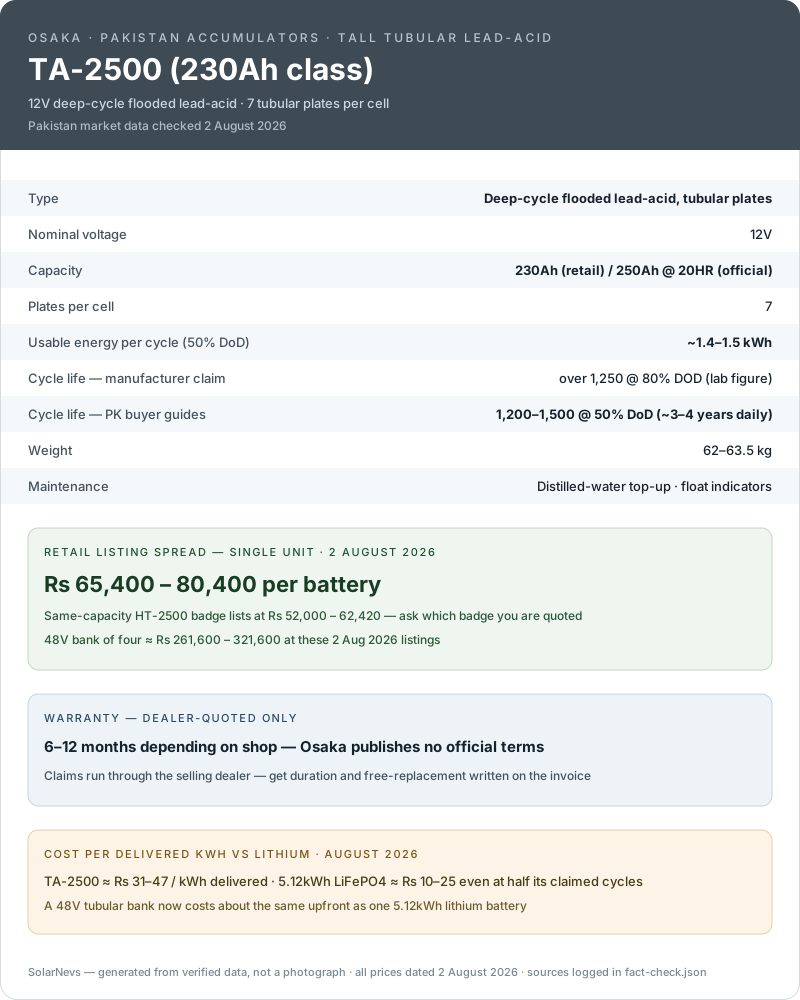
Specifications
| type | Deep-cycle flooded lead-acid, tubular positive plates |
|---|---|
| voltage | 12V |
| capacity | 230Ah (retail listings) / 250Ah at 20HR (official HT-2500 sheet) |
| platesPerCell | 7 |
| weight | 62-63.5 kg |
| cycleLifeClaim | over 1250 cycles at 80% DOD; 5000 cycles at 20% DOD (manufacturer) |
| maintenance | distilled-water top-up via float indicators |
| Warranty | Retailers quote 6 months to 1 year depending on shop; Osaka publishes no warranty terms on its official product page. Get the duration and free-replacement terms written on the invoice — the claim happens at the shop that sold it. |
The Osaka TA-2500 is the brand's best-known heavy tall tubular battery — a 12V deep-cycle flooded lead-acid unit with 7 tubular plates per cell, sold for 48V solar banks and long-backup UPS duty. As of 2 August 2026 it lists between Rs 65,400 and Rs 80,400 per unit at Pakistani retailers, with the same-capacity HT-2500 badge selling for Rs 52,000-62,420.
Retail listings rate it 230Ah; Osaka's official sheet for the equivalent HT-2500 says 250Ah at the 20-hour rate. Both numbers, and what they actually mean for backup time, are unpacked below.
Specifications
Spec | Value |
|---|---|
Type | Deep-cycle flooded lead-acid, tubular positive plates |
Nominal voltage | 12V |
Capacity | 230Ah (retail listings) / 250Ah @ 20HR (official HT-2500) |
Plates per cell | 7 |
Nominal energy | ~2.76-3.0 kWh (rate-dependent) |
Usable per cycle at 50% DoD | ~1.4-1.5 kWh |
Cycle life (manufacturer claim) | over 1,250 cycles @ 80% DOD; 5,000 @ 20% DOD |
Cycle life (PK buyer guides) | 1,200-1,500 cycles @ 50% DoD |
Weight | 62-63.5 kg |
Dimensions (official HT-2500) | 502 x 190 x 410 mm total height |
Maintenance | Distilled-water top-up, float indicators |
Warranty | 6-12 months, dealer-quoted (nothing published officially) |
The capacity discrepancy is not a typo on anyone's part: amp-hour ratings depend on discharge rate, and slower discharge extracts more. At the currents a 3-5kW inverter actually pulls, expect meaningfully less than either printed figure. Plan backup time around ~1.4 kWh usable per battery per cycle, not around "230Ah."
Honest assessment
Pros. This is the biggest-selling tier of the most widely distributed tubular brand in Pakistan: any battery shop in any city can test it, water it, or replace it, with zero compatibility questions — no BMS, no inverter protocol pairing, no firmware. The tubular plate construction is the genuine article for daily cycling, unlike the flat-plate batteries sold as "solar" at half the price. Owner threads include multi-year 48V banks on Voltronic-class inverters still performing.
Cons. The price spread is indefensible without an explanation nobody official provides: Rs 65,400 to Rs 80,400 for the TA badge while the HT badge — which is what Osaka's own website currently lists at this capacity, with matching plate count and case size — goes for Rs 52,000-62,420. Cycle economics against lithium have collapsed (maths below). Quality consistency is a known complaint: one documented owner report describes a unit that stopped accepting charge within its first month. And the manufacturer's "over 1,250 cycles at 80% DOD" claim is a lab figure — treat the Pakistani-guide figure of 1,200-1,500 cycles at a gentler 50% DoD as the honest planning number, which at daily cycling means 3-4 years.
Who should buy. Someone replacing one dead unit in an existing 48V tubular bank (mixing old and new chemistry types in one bank is a bad idea, and mixing lead-acid with lithium is impossible). Someone building a 24V backup setup where two tubulars still undercut any lithium option. For a new 48V system, run the numbers below first.
Pakistan reality check
The Rs/kWh-delivered maths — tubular vs lithium, August 2026. One TA-2500 at Rs 65,400-80,400 delivering ~1.4 kWh per cycle for 1,200-1,500 cycles produces roughly 1,700-2,100 kWh over its life — about Rs 31-47 per delivered kWh, before counting distilled water, charging losses (flooded lead-acid round-trips at ~80%), and the value of your time. A 5.12kWh LiFePO4 battery at Rs 185,000-310,000 (August 2026 market, most name brands Rs 210,000-260,000) claiming 6,000 cycles at 80% DoD delivers ~24,600 kWh — Rs 8-13 per kWh — and even if you distrust the claim and halve it to 3,000 cycles, it still lands at Rs 15-25 per delivered kWh. Lithium wins by roughly 2-4x on honest-to-pessimistic assumptions. What tubular still wins is minimum cash outlay per working battery: Rs 65,400 buys you a real, serviceable energy store today.
Heat. Flooded lead-acid loses water and self-discharges faster above ~35C ambient, which describes most Pakistani battery rooms from May to September. Site the bank in ventilated shade; a battery hot to the touch (50C+) must come off charge immediately — the PakWheels owner thread carries a first-hand account of a directly-panel-charged unit exploding.
Water and charge settings. Monthly float-indicator checks, distilled water only. Heavy daily cycling can drink ~250ml per battery per month; correct charge voltages and light duty can stretch top-ups to a few per year. Wrong charger settings boil the electrolyte off and cook the battery in months — have the installer set bulk/float per Osaka's card and verify.
Warranty claim reality. Quotes range from 6 months (SolarPricePakistan listing) to 1 year (TJMart title, BatteryUstad "as per company policy"); Osaka's official product page states nothing. The claim runs through your selling dealer, and documented owner experience shows in-warranty replacement does happen — through the shop, on the shop's judgement. Invoice with serial, model, and written warranty duration, or you have no claim at all. Deep-discharge abuse is the standard rejection reason.
Price context vs rivals (August 2026)
Battery (230-250Ah class, 12V) | Listed price (Aug 2026) |
|---|---|
Osaka HT-2500 (250Ah, current official badge) | Rs 52,000-62,420 |
Phoenix TX-2500 (230Ah) | Rs 45,000-74,000 across live listings (BatteryMAX Rs 72,000 in stock; OneStopMall Rs 55,999 sale / Rs 74,000 list) |
Osaka TA-2500 (this page) | Rs 65,400-80,400 |
One 5.12kWh LiFePO4 (replaces a 4-unit bank) | Rs 185,000-310,000 |
The TA-2500 badge is the most expensive way to buy this capacity of Osaka tubular. Phoenix's TX-2500 spread is just as chaotic across shops — in this market segment the shop matters more than the brand, so get two quotes per badge before paying. See the Osaka hub for the TA/HT badge situation and the TA-1800 page for the smaller bank size.
Frequently asked questions
What does the Osaka TA-2500 cost in Pakistan today?
As of 2 August 2026, live retail listings span Rs 65,400 (SolarPricePakistan, cut from Rs 70,400) to Rs 80,400 (SolarApp.pk), with a published June 2026 list at Rs 75,330. The same-capacity HT-2500 badge lists for Rs 52,000-62,420 — ask which badge you are being quoted.
Is the TA-2500 230Ah or 250Ah?
Retail listings label it 230Ah; Osaka's official page for the equivalent HT-2500 states 250Ah at the 20-hour rate. Both can be true — amp-hour ratings rise with slower discharge — but at real inverter loads you will see less than either number, and at a healthy 50% depth of discharge the usable energy is roughly 1.4-1.5 kWh per cycle.
How many TA-2500s do I need for a 48V solar system?
Four, wired in series — Rs 261,600-321,600 at 2 August 2026 listings. That bank holds about 12 kWh nameplate but only ~6 kWh usable at 50% DoD. Note that one 5.12kWh lithium battery now costs about the same upfront.
How long will a TA-2500 last?
Osaka claims over 1,250 cycles at 80% DoD; Pakistani buyer guides quote 1,200-1,500 cycles at 50% DoD, i.e. roughly 3-4 years of daily cycling with disciplined depth of discharge and watering. Owners who repeatedly run tubular banks flat report failure inside 2 years.
How much water does it need?
Check float indicators monthly, distilled water only. Owner reports range from ~250ml per battery per month under heavy cycling to a few top-ups a year on light duty. At 62-63kg dry-handling weight plus electrolyte, keep it where you can actually reach the caps.
References
- SolarPricePakistan — TA-2500 product page — accessed 2 Aug 2026
- SolarApp.pk — Osaka tubular category — accessed 2 Aug 2026
- SolarPanelPriceInPak — Osaka price list (15 Jun 2026) — accessed 2 Aug 2026
- Osaka official — HT-2500 spec page — accessed 2 Aug 2026
- TJMart — TA-2500 listing (out of stock) — accessed 2 Aug 2026
- BatteryMax — Phoenix TX-2500 rival listing — accessed 2 Aug 2026
- OneStopMall — Phoenix TX-2500 rival listing (Karachi) — accessed 2 Aug 2026
- SolarPanelRates — lithium battery prices (14 Jul 2026) — accessed 2 Aug 2026
- PakWheels forum — Osaka Tubular owner thread (2015-2021) — accessed 2 Aug 2026