E-Bike Charging at Home - Cost, Time, and Load Shedding Workarounds
Updated 2 August 2026 · By SolarNevs Research Desk, Dealer surveys + verified sources · 4 sources · Method ↗
E-Bike Charging at Home - Cost, Time, and Load Shedding Workarounds
{/* visual_plan - stat_block */}
Key Takeaways
- Full home e-bike charging consumes 1.5 kWh to 2.5 kWh of electricity, costing Rs 52 to Rs 87 (July 2026).
- Lithium batteries charge in 3.5 to 4.5 hours compared to 6 to 7 hours for lead-acid packs.
- Standard 220V household wall sockets supply adequate power without special electrical wiring upgrades.
- Rooftop solar systems with 2 panels (550W) generate enough daily energy to charge an e-bike for free.
- Removable lithium battery modules allow apartment residents to bypass outdoor load shedding constraints.
What are the costs and electrical requirements for charging an e-bike at home?
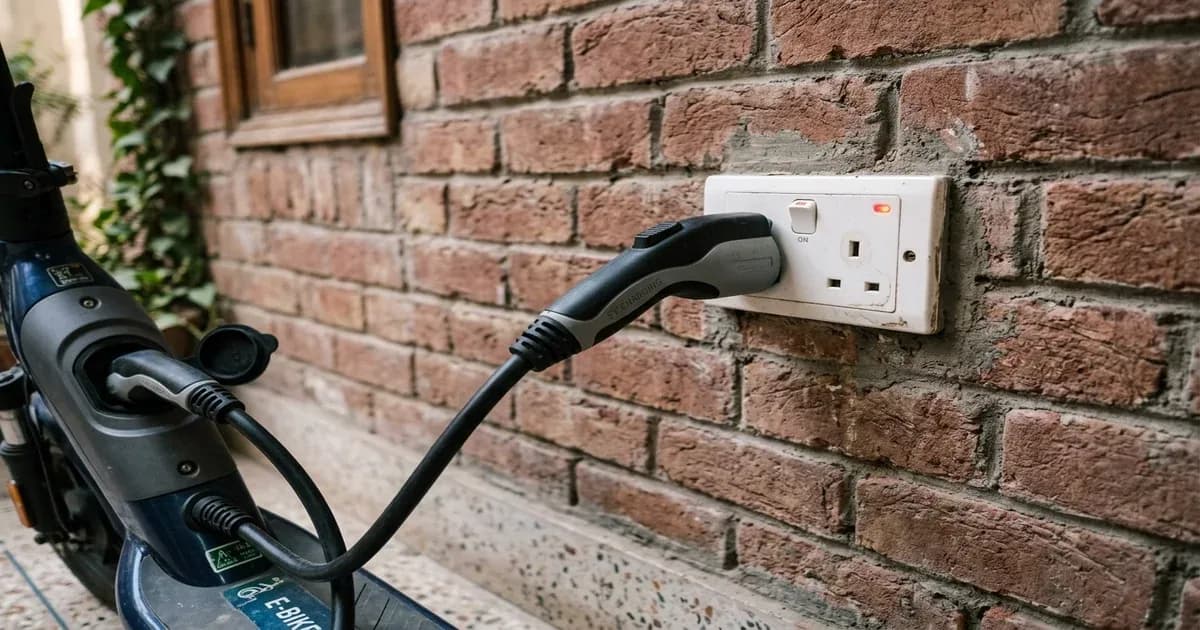
Charging an electric bike at home is simple and cost-effective across Pakistan. Most electric scooters and motorcycles include portable chargers compatible with standard 220V household wall outlets.
A full charging cycle for a 60V 26Ah battery pack consumes approximately 1.8 kWh of grid electricity. At a residential power tariff of Rs 35 (July 2026) per unit, a complete charge costs Rs 63 (July 2026). The table below outlines charging parameters across battery capacities.
Battery Voltage & Capacity | Stored Energy | Charging Time | Grid Consumption | Cost per Charge |
|---|---|---|---|---|
60V 20Ah (Lead-Acid) | 1.20 kWh | 6 Hours | 1.5 kWh | Rs 52.50 |
72V 20Ah (Lead-Acid) | 1.44 kWh | 6.5 Hours | 1.8 kWh | Rs 63.00 |
60V 30Ah (Lithium) | 1.80 kWh | 4 Hours | 2.1 kWh | Rs 73.50 |
72V 32Ah (Lithium) | 2.30 kWh | 4.5 Hours | 2.6 kWh | Rs 91.00 |
Figures as of July 2026.
Ensuring proper electrical grounding on home sockets protects charger circuits from voltage spikes.
How can you manage e-bike charging during load shedding in Pakistan?
Unannounced load shedding presents challenges for electric bike owners in urban and suburban areas. Adopting practical workarounds maintains daily vehicle readiness:
- Rooftop Solar Charging: Connecting your e-bike charger to a 3kW or 5kW hybrid solar inverter allows free daytime charging directly from solar panels. Just 2 panels of 550W capacity supply sufficient daily energy for a full charge.
- Removable Lithium Packs: Lithium scooters with removable battery modules allow users to carry packs inside offices or commercial shops to charge during grid availability.
- High-Capacity UPS System: Home hybrid UPS units equipped with tubular or lithium batteries can supply 250W charger power during load shedding intervals.
Charging Workaround | Initial Equipment Setup | Charging Time | Running Cost |
|---|---|---|---|
Rooftop Solar Inverter | 2x 550W Panels + Hybrid Inverter | 4 Hours (Daylight) | Rs 0 (July 2026) |
Office Wall Socket | Standard Charger in Office | 4 Hours | Rs 0 (July 2026) |
Home Battery UPS | 2kW+ Inverter Unit | 4.5 Hours | Standard Tariff Rate |
Integrating e-bike charging with daytime solar generation yields zero-cost daily commutes.
What safety precautions should you take when charging an e-bike at home?
Following basic electrical safety measures prevents charger overheating and extends battery life:
- Do not leave lead-acid chargers plugged in overnight beyond recommended charge times.
- Charge in well-ventilated areas away from flammable materials or direct sunlight.
- Avoid using thin extension cords that can overheat under continuous 10A current draw.
Practicing these precautions ensures safe and reliable home charging performance.
Frequently Asked Questions
Frequently Asked Questions
How much electricity does an electric bike consume per charge in Pakistan?
An electric bike consumes between 1.5 kWh and 2.5 kWh of electricity per charge, costing Rs 52 to Rs 87 (July 2026).
Can you charge an electric bike during load shedding in Pakistan?
Yes, electric bikes can be charged during load shedding using home hybrid solar systems or high-capacity UPS units.
What electrical outlet is required to charge an electric bike at home?
A standard 220V 5A to 15A household wall socket with proper grounding is required.
References
Frequently asked questions
How much electricity does an electric bike consume per charge in Pakistan?
An electric bike consumes between 1.5 kWh and 2.5 kWh of electricity per charge, costing Rs 52 to Rs 87 (July 2026).
Can you charge an electric bike during load shedding in Pakistan?
Yes, electric bikes can be charged during load shedding using home hybrid solar systems or high-capacity UPS units.
What electrical outlet is required to charge an electric bike at home?
A standard 220V 5A to 15A household wall socket with proper grounding is required.
References
- PakWheels — accessed 25 July 2026
- Solar Citizen — accessed 25 July 2026
- W11Stop — accessed 25 July 2026
- NEPRA — accessed 25 July 2026
Related guides
More from going electric in pakistan.