EV Charging Time Explained: AC vs DC and 20-80% Reality
Updated 2 August 2026 · By SolarNevs Research Desk, Dealer surveys + verified sources · 4 sources · Method ↗
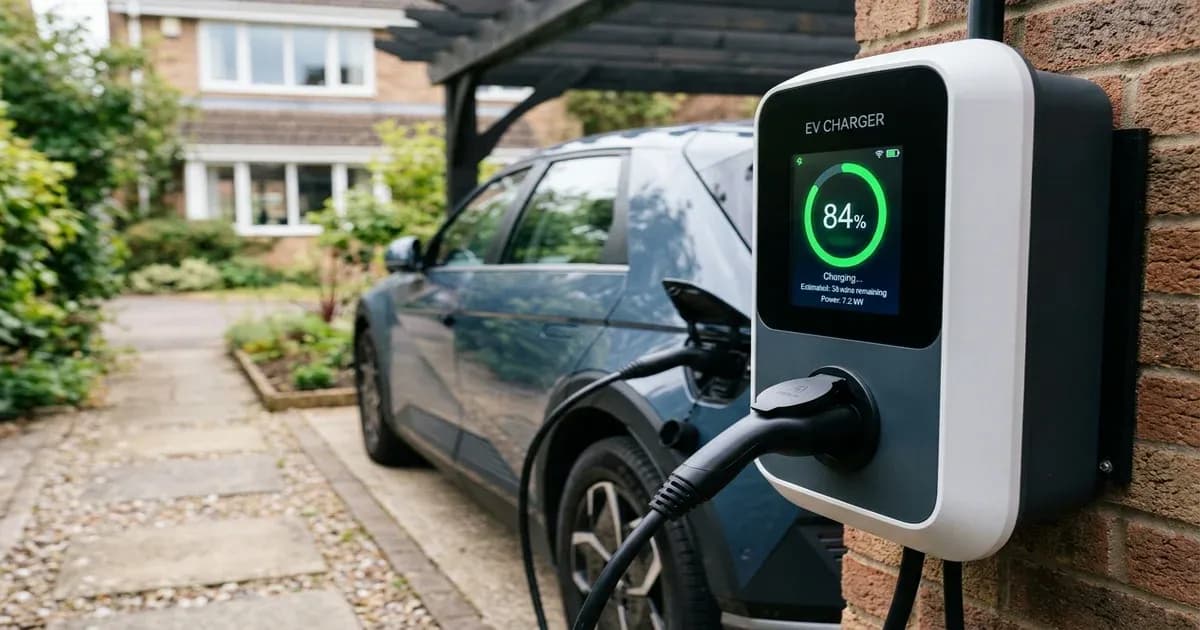
EV Charging Time Explained - AC vs DC and 20-80% Reality
{/* visual_plan - comparison_table */}
Key Takeaways
- AC home Wallbox chargers (7kW) require 6 to 7 hours to charge a 60 kWh EV battery from 20% to 80%.
- Public DC fast chargers (60kW to 120kW) charge an EV battery from 20% to 80% in 30 to 45 minutes.
- Charging speeds taper significantly above 80% capacity as the BMS protects lithium cell chemistry.
- Overnight AC home charging during off-peak hours provides the healthiest option for lithium battery life.
- Ambient summer heat above 40°C triggers thermal throttling, extending fast charging times slightly.
What is the difference between AC destination charging and DC fast charging?
Understanding electric vehicle charging times requires distinguishing between Alternating Current (AC) destination charging and Direct Current (DC) fast charging.
EV batteries store energy as DC power. AC chargers supply AC grid electricity to the vehicle onboard charger, which converts it to DC. DC fast chargers bypass the onboard charger, supplying high-voltage DC power directly to the battery. The table below compares charging times across hardware power ratings.
Charger Type | Power Rating | Current Type | 20% to 80% Time (60 kWh Battery) | Typical Location |
|---|---|---|---|---|
3-Pin Wall Socket | 2.3 kW (10A) | AC Single Phase | 18 to 20 Hours | Emergency Home Plug |
Home Wallbox | 7.4 kW (32A) | AC Single Phase | 6.5 to 7.5 Hours | Home Garage |
Commercial AC Hub | 22.0 kW (32A 3-Phase) | AC Three Phase | 3.5 to 4.5 Hours | Shopping Plazas |
Public DC Fast Hub | 60.0 kW | DC High Voltage | 40 to 45 Minutes | Fuel Stations / Highways |
Ultra-Fast DC Hub | 120.0 kW | DC High Voltage | 25 to 35 Minutes | Motorway Rest Areas |
Overnight AC home charging suits daily commuting routines, while DC fast charging enables inter-city highway travel.
Why does EV charging speed slow down above 80% capacity?
The 20% to 80% rule represents the optimal charging window for lithium-ion battery packs. Charging from 80% to 100% can take as long as charging from 20% to 80%.
Battery Management Systems (BMS) slow down current input above 80% to prevent lithium plating and thermal stress. Unplugging at 80% during long journeys saves time and protects long-term battery cell health.
Frequently Asked Questions
Frequently Asked Questions
How long does it take to charge an electric car at home in Pakistan?
A 7kW AC home Wallbox charger charges a standard 60 kWh EV battery from 20% to 80% in approximately 6 to 7 hours.
How fast is DC fast charging for electric cars in Pakistan?
A 60 kW to 120 kW public DC fast charger charges an EV battery from 20% to 80% in 30 to 45 minutes.
Why does EV charging slow down above 80% battery capacity?
Battery Management Systems (BMS) reduce charging current above 80% to protect lithium cell chemistry from thermal degradation.
References
Frequently asked questions
How long does it take to charge an electric car at home in Pakistan?
A 7kW AC home Wallbox charger charges a standard 60 kWh EV battery from 20% to 80% in approximately 6 to 7 hours.
How fast is DC fast charging for electric cars in Pakistan?
A 60 kW to 120 kW public DC fast charger charges an EV battery from 20% to 80% in 30 to 45 minutes.
Why does EV charging slow down above 80% battery capacity?
Battery Management Systems (BMS) reduce charging current above 80% to protect lithium cell chemistry from thermal degradation.
References
- Solar Citizen — accessed 25 July 2026
- W11Stop — accessed 25 July 2026
- PakWheels — accessed 25 July 2026
- NEPRA — accessed 25 July 2026
Related guides
More from going electric in pakistan.