LiFePO4 Explained - Why It Beats Other Lithium for Pakistani Heat
Updated 2 August 2026 · By SolarNevs Research Desk, Dealer surveys + verified sources · 4 sources · Method ↗
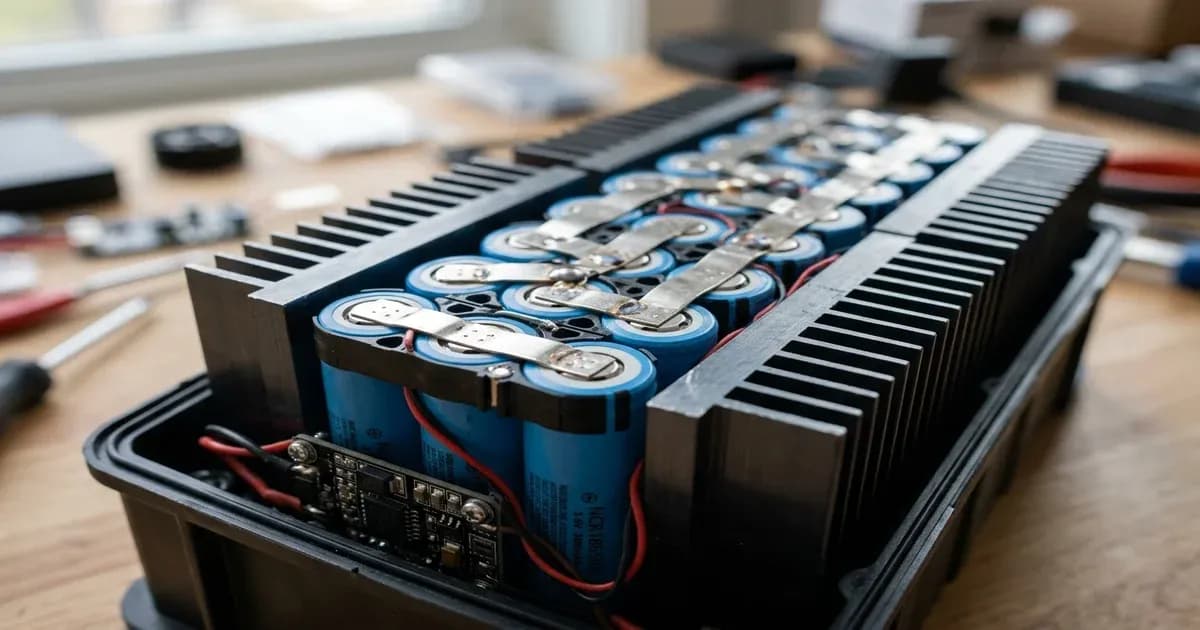
LiFePO4 Explained - Why It Beats Other Lithium for Pakistani Heat
{/* visual_plan. stat_block */}
Key Takeaways
- LiFePO4 withstands thermal breakdown up to 270 degrees Celsius, compared to 150 degrees Celsius for NMC batteries.
- Delivers 6,000 charge cycles (15 years) versus 1,500 cycles for NMC in high ambient heat environments.
- Eliminates cobalt and nickel, removing toxic heavy metal and fire risks for indoor residential installations.
- A 5.12 kWh LiFePO4 unit costing Rs 380,000 (July 2026) provides lower lifetime energy costs than cheaper lithium alternatives.
What makes LiFePO4 chemistry different from other lithium batteries?
Lithium Iron Phosphate (LiFePO4) belongs to the broader lithium-ion battery family, but its internal cathode crystal structure sets it apart. While mobile phones and electric vehicles often use Lithium Nickel Manganese Cobalt Oxide (NMC) or Lithium Cobalt Oxide (LCO) for high energy density, LiFePO4 utilizes strong covalent P-O chemical bonds.
These phosphorus-oxygen bonds create a rigid molecular lattice that remains stable under electrical stress and high temperatures. In contrast, the metal-oxygen bonds in NMC breakdown at lower temperatures, releasing oxygen gas that can trigger thermal runaway fires.
In July 2026, a standard 5.12 kWh (48V 100Ah) LiFePO4 wall battery in Pakistan costs between Rs 350,000 and Rs 480,000 (July 2026). The following table compares key technical parameters between LiFePO4 and NMC chemistries.
Technical Parameter | LiFePO4 (Lithium Iron Phosphate) | NMC (Nickel Manganese Cobalt) |
|---|---|---|
Thermal Runaway Temperature | 270 degrees Celsius | 150 degrees Celsius |
Cycle Life at 80% DoD | 4,000 to 6,000 Cycles | 1,200 to 2,000 Cycles |
Nominal Cell Voltage | 3.2V per cell | 3.7V per cell |
Chemical Toxicity | Non-toxic (Cobalt-free) | Contains Toxic Cobalt & Nickel |
Fire Risk Level | Extremely Low | Moderate to High |
Average 5.12 kWh Price | Rs 380,000 (July 2026) | Rs 320,000 (July 2026) |
Why is thermal stability critical for Pakistani summer climates?
Summer ambient room temperatures across Punjab, Sindh, and Balochistan frequently exceed 40 degrees Celsius, with unconditioned battery closets reaching 45 degrees Celsius.
Under high ambient temperatures, chemical reaction rates inside battery cells accelerate in accordance with the Arrhenius equation. In NMC cells, elevated temperatures cause rapid cathode degradation and electrolyte decomposition, reducing cycle life by up to 50%.
LiFePO4 chemistry tolerates ambient temperatures up to 55 degrees Celsius without structural crystal degradation. The rigid iron phosphate lattice prevents oxygen release even during short-circuit events, making LiFePO4 the safest choice for residential rooftop or garage installations in Pakistan.
How does cycle life compare between LiFePO4 and NMC in daily solar use?
Solar energy storage subjects batteries to one full charge and discharge cycle every day. Over a 15-year operational timeframe, a solar battery completes over 5,000 daily cycles.
LiFePO4 batteries deliver 6,000 cycles at 80% Depth of Discharge before capacity drops to 80% of original rating. This translates to 15 to 16 years of daily solar storage performance.
NMC batteries subjected to identical daily deep discharge cycles in hot climates degrade after 1,500 to 2,000 cycles (roughly 4 to 5 years). Despite a slightly lower initial purchase price of Rs 320,000 (July 2026), replacing an NMC battery three times over 15 years results in far higher cumulative expenditure.
How does LiFePO4 performance align with NEPRA net billing tariffs?
Under NEPRA prosumer net billing regulations, exported solar energy earns a credit rate of Rs 11 per kWh (July 2026), while peak grid power imports cost between Rs 50 per kWh and Rs 65 per kWh (July 2026).
Storing 4.6 kWh of usable solar power daily in a LiFePO4 battery costing Rs 380,000 (July 2026) avoids grid imports at Rs 50 per kWh (July 2026). Offsetting peak imports saves Rs 39 per kWh (July 2026) compared to exporting, producing daily savings of Rs 179.4 or Rs 65,481 (July 2026) annually.
Because LiFePO4 maintains 95% round-trip charging efficiency over thousands of cycles, prosumers preserve almost all captured solar energy, achieving full capital payback in under 5.8 years.
What key factors should you check when buying a LiFePO4 battery?
To verify you receive genuine LiFePO4 performance, verify that the manufacturer specifies Lithium Iron Phosphate chemistry on the product nameplate. Beware of generic lithium labels that hide lower-grade NMC pouch cells.
Confirm that the battery pack uses Grade-A prismatic cells from reputed manufacturers such as CATL, EVE, or BYD. verify the internal smart BMS includes temperature sensors attached directly to cell terminals for automatic thermal throttling.
Finally, purchase through authorized local distributors offering a 5-year or 10-year written warranty with official serial number validation.
Frequently Asked Questions
Why is LiFePO4 safer than NMC lithium batteries in high heat?
LiFePO4 has a thermal runaway breakdown threshold of 270 degrees Celsius compared to 150 degrees Celsius for NMC, making it resistant to thermal breakdown in summer heat.
How many cycles does a LiFePO4 battery last in Pakistan?
Quality LiFePO4 batteries deliver 4,000 to 6,000 charge cycles at 80% depth of discharge, providing 12 to 15 years of daily operation.
What is the cost of a 5.12 kWh LiFePO4 battery in Pakistan?
A standard 5.12 kWh (48V 100Ah) LiFePO4 wall battery costs between Rs 350,000 and Rs 480,000 (July 2026) depending on brand and BMS features.
References
Frequently asked questions
Why is LiFePO4 safer than NMC lithium batteries in high heat?
LiFePO4 has a thermal runaway breakdown threshold of 270 degrees Celsius compared to 150 degrees Celsius for NMC, making it resistant to thermal breakdown in summer heat.
How many cycles does a LiFePO4 battery last in Pakistan?
Quality LiFePO4 batteries deliver 4,000 to 6,000 charge cycles at 80% depth of discharge, providing 12 to 15 years of daily operation.
What is the cost of a 5.12 kWh LiFePO4 battery in Pakistan?
A standard 5.12 kWh (48V 100Ah) LiFePO4 wall battery costs between Rs 350,000 and Rs 480,000 (July 2026) depending on brand and BMS features.
References
- Pylontech — accessed 25 July 2026
- Solar Citizen — accessed 25 July 2026
- W11Stop — accessed 25 July 2026
- FBR — accessed 25 July 2026
Related guides
More from what to buy — and how not to get cheated.