Solar Battery Storage Buying Guide Ireland: Sizing, Types & Costs
Updated 18 September 2026 · By SolarNevs Research Desk, Dealer surveys + verified sources · 3 sources · Method ↗
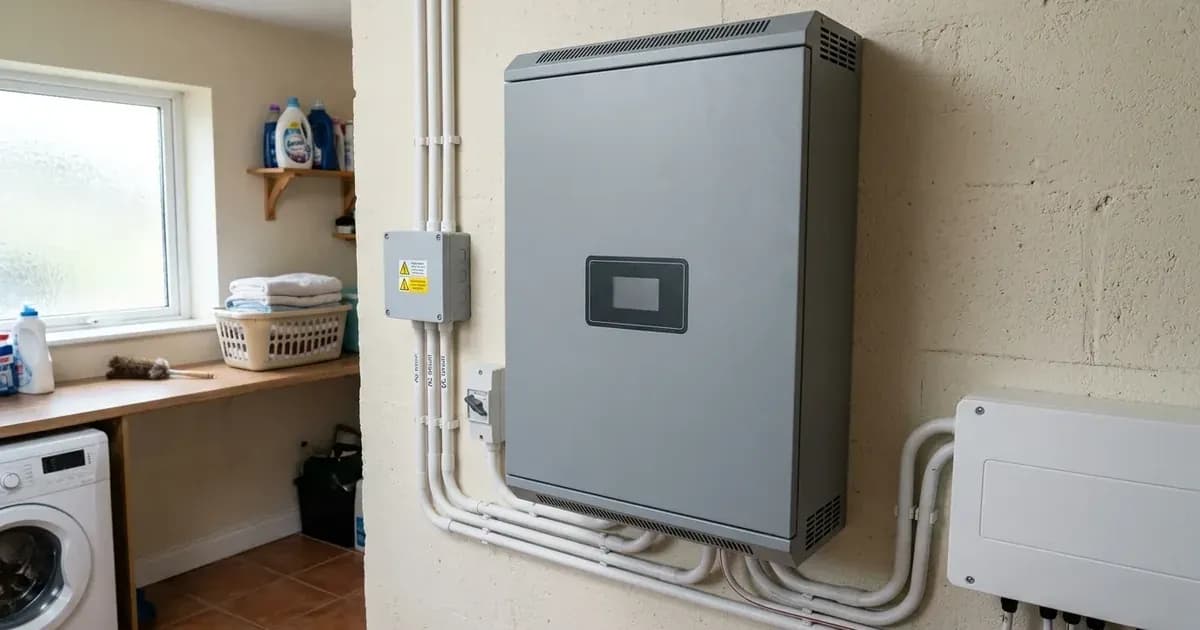
Adding battery storage to a residential solar photovoltaic array in Ireland enables homeowners to store excess daytime generation for evening domestic use, significantly boosting self-consumption. With modern dynamic and day-night electricity tariffs available across the Irish energy market, home energy storage also allows households to charge during cheap night hours to power morning peak appliances.
However, selecting the right battery involves balancing cell chemistry, usable capacity, inverter integration, and compliance with strict domestic installation standards. This guide breaks down the essential factors Irish homeowners need to evaluate before purchasing residential energy storage.
1. Battery Architecture: All-in-One vs Modular Systems
Residential energy storage in Ireland generally falls into two physical form factors: integrated all-in-one systems and modular expandable battery packs.
Integrated All-in-One Units
Integrated units combine the battery cells, battery management system (BMS), and power conversion electronics within a single floor- or wall-mounted chassis:
- Capacity Baseline: Manufacturers such as GivEnergy offer an All-in-One Capacity Around 13.5kWh usable storage in a single enclosure.
- Warranty Longevity: Integrated premium units frequently provide extended coverage, with the All-in-One Warranty Around 12 years reflecting high manufacturing confidence.
- Aesthetic Appeal: These units provide a neat, unified appearance with internal cable management, making them popular for tidy garage or utility room installations.
Modular Expandable Batteries
Modular systems utilize individual battery packs that can be connected in parallel to match the home's specific daily load profile:
- Flexible Capacities: Modular systems allow homeowners to tailor their storage, featuring Modular Capacities 3.3kWh / 5.2kWh / 9.5kWh / 13.5kWh across various module groupings.
- Stepwise Expansion: Homeowners can begin with a single 5.2kWh block and add additional modules later as electricity demand grows—such as when installing a heat pump or purchasing an electric vehicle.
- Dedicated Inverter Pairing: Modular batteries connect to an external hybrid inverter, offering flexibility to replace or upgrade components independently over time.
2. Cell Chemistry: The LiFePO4 Benchmark
Modern domestic energy storage in Ireland is dominated by lithium iron phosphate chemistry:
- Thermal Safety: Leading manufacturers specify Battery Chemistry LiFePO4 (lithium iron phosphate) due to its superior chemical stability compared to traditional nickel-manganese-cobalt (NMC) chemistries.
- Degradation Resistance: LiFePO4 cells endure thousands of deep charge and discharge cycles with minimal capacity fade, ensuring reliable operation over a decade or more.
- Non-Toxic Composition: Iron phosphate contains no cobalt, reducing environmental impact and eliminating the risk of runaway thermal escalation under normal domestic operating parameters.
3. AC Coupling vs DC Hybrid Topologies
When buying battery storage in Ireland, the choice between AC-coupled and DC-coupled systems depends primarily on whether the installation is a new solar build or a retrofit:
- DC-Coupled (Hybrid Systems): In a DC-coupled system, solar panels and battery storage connect directly to a shared hybrid inverter. Solar electricity charges the battery directly in DC form without passing through intermediate conversion stages, maximizing round-trip efficiency. This is the preferred topology for new solar installations.
- AC-Coupled (Retrofit Systems): If you already have a working string solar system with an existing grid-tied inverter, replacing the inverter is not required. An AC-coupled battery system features its own dedicated bi-directional inverter, connecting straight to your domestic AC consumer unit to store surplus solar power or off-peak grid electricity.
4. Inverter Compatibility & Brand Options
Selecting a battery requires verifying communication and voltage compatibility with your chosen inverter:
- Broad Hybrid Compatibility: Leading low-voltage modular batteries—including the low-voltage US5000 and the high-voltage Force-H2 pair with a huge range of hybrid inverters across the Irish market.
- Established Pairings: Brands report extensive verified operation, noting Inverter Pairing Solis Sunsynk GoodWe & many other hybrids for seamless communication.
- Primary Product Series: The Main Models US5000 (low-voltage) Force-H2 (high-voltage) represent two distinct architectural tiers, allowing installers to select between low-voltage DC and high-voltage DC bus configurations.
- High Conversion Efficiency: Quality residential storage provides a Round-Trip Efficiency ~95%, ensuring that minimal energy is lost as heat during charging and discharging cycles.
- Warranty Terms: Standard modular packs come with a Warranty ~10 years Monitoring Via paired inverter app, providing long-term peace of mind.
5. Smart Tariff Charging & App Control
With Irish electricity suppliers offering competitive night rates and specialized EV/smart tariffs, intelligent software management is essential:
- Automated Time-of-Use Scheduling: Systems provide Tariff Charging Yes time-of-use / dynamic tariff scheduling, enabling homeowners to automatically charge the battery from the grid during off-peak night hours.
- Winter Energy Security: During dark Irish winter months when daytime solar generation is low, scheduled grid charging ensures the battery is full each morning, powering daytime heat pumps and home appliances at off-peak rates.
6. Irish Regulatory Standards & Siting Rules
Under Irish electrical safety regulations and the Sustainable Energy Authority of Ireland (SEAI) Domestic Solar PV Code of Practice, battery and inverter systems must adhere to strict installation rules:
- National Wiring Compliance: All domestic solar and storage installations must comply with I S 10101 have a rated efficiency of 95 percent or higher.
- ESB Networks Interface Settings: Grid-connected inverters must comply with EN50549 with Irish Protection Settings to provide certified anti-islanding and loss-of-mains protection.
- Airing Cupboard Prohibition: Power conversion equipment and storage batteries must not be installed in domestic hot presses due to the higher ambient temperatures and risk of ventilation paths being obstructed unintentionally.
- Class 0 Fire-Resistant Substrates: In uninhabited spaces such as attics, the inverter must be installed on a fire-resistant substrate (Class 0) which extends to a minimum of 150mm beyond the edge of the inverter.
- Dedicated AC Isolation: For emergency maintenance and firefighter safety, an AC isolator 2 pole switching live and neutral must be installed between the inverter and the consumer unit.
- Safe Electric REC Sign-Off: All electrical connections must be installed, tested, and certified by a Safe Electric Registered Electrical Contractor (REC).
Frequently asked questions
What battery capacity is typical for a family home in Ireland?
Most Irish family homes install modular storage systems sized between 5.2kWh and 9.5kWh, with larger properties selecting integrated units reaching 13.5kWh.
Are home batteries covered by the SEAI solar grant in Ireland?
Under current SEAI domestic grant rules, grant funding is focused on the solar PV array itself rather than standalone battery hardware.
What battery cell chemistry is recommended for Irish residential installations?
Lithium iron phosphate (LiFePO4) is the industry benchmark in Ireland due to its high thermal stability, long service life, and robust safety profile.
References
- Solarinfo.ie GivEnergy Battery Review — accessed 28 August 2026
- Solarinfo.ie Pylontech Battery Review — accessed 28 August 2026
- SEAI Domestic Solar Photovoltaic Code of Practice — accessed 28 August 2026
Related guides
More from what to buy — and how not to get cheated.