Dyness Battery Storage Ireland Buying Guide: Sizing, Winter Care & Setup
Updated 18 September 2026 · By SolarNevs Research Desk, Dealer surveys + verified sources · 4 sources · Method ↗
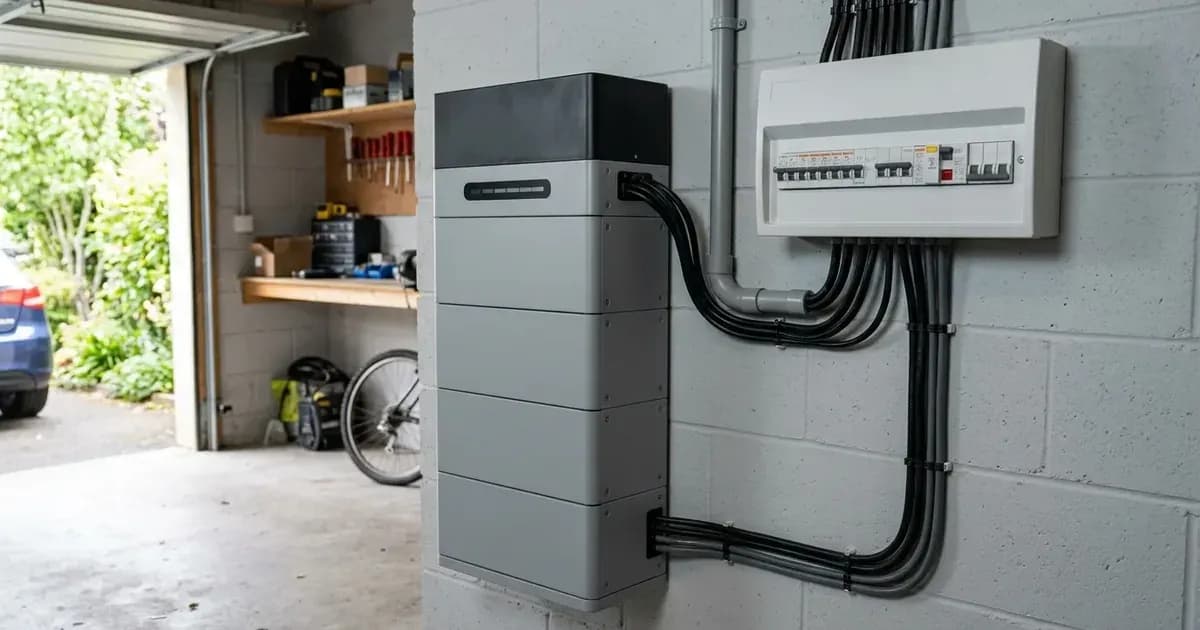
Dyness has emerged as one of the most widely specified residential battery brands across Ireland, primarily due to its proven compatibility with Ginlong Solis hybrid inverters and accessible modular pricing. Utilizing lithium iron phosphate cell chemistry, Dyness systems provide a durable energy storage foundation for Irish households seeking to maximize solar self-consumption and exploit night-rate electricity tariffs.
When planning a Dyness installation, homeowners must understand module sizing, evening consumption matching, winter protection parameters, and compliance with Irish electrical safety rules.
1. Household Sizing Principles & Usable Capacity
Determining the ideal battery capacity requires analyzing actual household consumption patterns rather than headline battery specifications:
- Establish Daily Consumption Baseline: Sizing begins with your historical meter records: find your average daily use (check a bill, or divide annual kWh by 365).
- Focus on the After-Dark Window: Because solar panels power daytime domestic appliances directly, installers estimate the share used after dark, when solar is not generating (often around half).
- Target Evening Storage Requirement: That evening and overnight figure is roughly the usable capacity you want to store.
- Avoid Daily Oversizing: If you self-consume a chunk of generation during the day, you do not need a battery big enough for your whole daily total. Size it for the after-dark window.
- Compare Usable Energy: Two batteries with the same headline capacity can deliver different usable energy. Always compare on usable kWh. See our depth of discharge guide for why.
2. Array Sizing Harmony & Year-Round Surplus
A domestic battery can only capture surplus generation that the solar rooftop array produces:
- Generation Constraints: A battery can only store what the panels make. A 4 kWp array yields around 3,400 kWh a year in Ireland.
- Year-Round Realistic Sizing: A large battery paired with a small array, or assessed only on summer generation, looks under-used for much of the Irish year. Match the battery to realistic year-round surplus.
- The Safety Margin of Undersizing: Investing in excessive storage yields poor economic returns: undersizing is the lesser risk: a battery that is a little too small simply exports the leftover surplus under the Clean Export Guarantee, rather than sitting empty.
3. Irish Winter Operation & Low-Generation Maintenance
Ireland experiences pronounced seasonal variation in solar irradiance, with winter generation dropping to a fraction of summer output. Without proper configuration, lithium batteries can suffer dormancy damage or deep depletion:
- Seasonal SOC Thresholds: To prevent extended low-voltage stress during dark winter periods, Ginlong advises that setting the overdischarge soc at 40 and the forcecharge soc at 30 could help extend battery life and avoid the situation when the battery becomes depleted.
- Off-Peak Grid Replenishment: Homeowners on day-night or smart tariffs should configure night replenishment: to prevent deep discharges regularly charge the battery from the grid using the time charging function.
- Extended Hibernation Protocol: If a homeowner plans to shut down storage during winter vacations, follow the safe shutdown sequence: switch off the battery in winter when pv generation is low if you do not want to use the grid for the regular charging before doing so ensure the battery is charged to around 50 and change the inverter setting to no battery.
4. SEAI Standards & Siting Rules in Ireland
Under the Sustainable Energy Authority of Ireland (SEAI) Domestic Solar PV Code of Practice and national electrical installation standard NSAI I.S. 10101:2020, battery installations must meet stringent safety requirements:
- Appliance Efficiency Benchmark: All solar and storage equipment must comply with I S 10101 have a rated efficiency of 95 percent or higher.
- Airing Cupboard Prohibition: Inverters and storage batteries must never be sited in domestic airing cupboards due to the higher ambient temperatures and risk of ventilation paths being obstructed unintentionally.
- Dual Pole Isolation: Safe maintenance requires that an AC isolator 2 pole switching live and neutral must be installed between the inverter and the consumer unit.
- Safe Electric Siting Notice: Safe Electric emphasizes the severe danger of restricted spaces: when these switches are enclosed in tight spaces or obstructed by clothing, the lack of ventilation can lead to thermal stress, electrical failure, or even ignition. All domestic solar works must be tested and certified by a Safe Electric Registered Electrical Contractor (REC).
Frequently asked questions
How should an Irish homeowner determine the right battery storage capacity?
Sizing depends on evening electricity usage rather than total daily consumption, since daytime solar generation is self-consumed directly as it is generated.
What happens if a battery is undersized relative to household solar generation?
Undersizing is low risk in Ireland because any excess generation not absorbed by the battery is automatically exported to the grid under the Clean Export Guarantee.
How should a Dyness battery be protected during Irish winter months?
To prevent deep depletion during low-sunlight months, configure an overdischarge SOC limit of 40% and a forcecharge SOC limit of 30%, using scheduled off-peak night grid charging.
References
- Solar Info Ireland - What Size Solar Battery Guide — accessed 28 August 2026
- Solis Service Center - Battery Behaviour During Winter Time — accessed 28 August 2026
- SEAI Domestic Solar Photovoltaic Code of Practice — accessed 28 August 2026
- Safe Electric Ireland - Solar PV Technical Guidance — accessed 28 August 2026
Related guides
More from what to buy — and how not to get cheated.