UK Historic England BIPV Solar Roof Tiles and In-Roof Guide
Updated 15 September 2026 · By SolarNevs Research Desk, Dealer surveys + verified sources · 5 sources · Method ↗
Key Takeaways
- Building-Integrated Photovoltaics (BIPV), including solar roof tiles and solar slates, integrate directly into the building envelope in place of conventional roof coverings.
- Section 7 of the Planning (Listed Buildings and Conservation Areas) Act 1990 prohibits unauthorised alterations affecting the architectural character of listed assets.
- Section 16 mandates that decision-makers must have special regard to the desirability of preserving listed buildings, their historic fabric, and their setting.
- Local planning authorities are increasingly issuing Local Listed Building Consent Orders (LLBCOs) to grant blanket consent for compliant microgeneration technologies.
- Historic England guidance on solar installations incorporates technical fire safety mitigation and preservation of historic timber structures.
- On unlisted properties in conservation areas, solar roof installations are permitted development provided they do not mount to highway-facing walls and conform to protrusion limits.
The Role of BIPV in Heritage Architecture
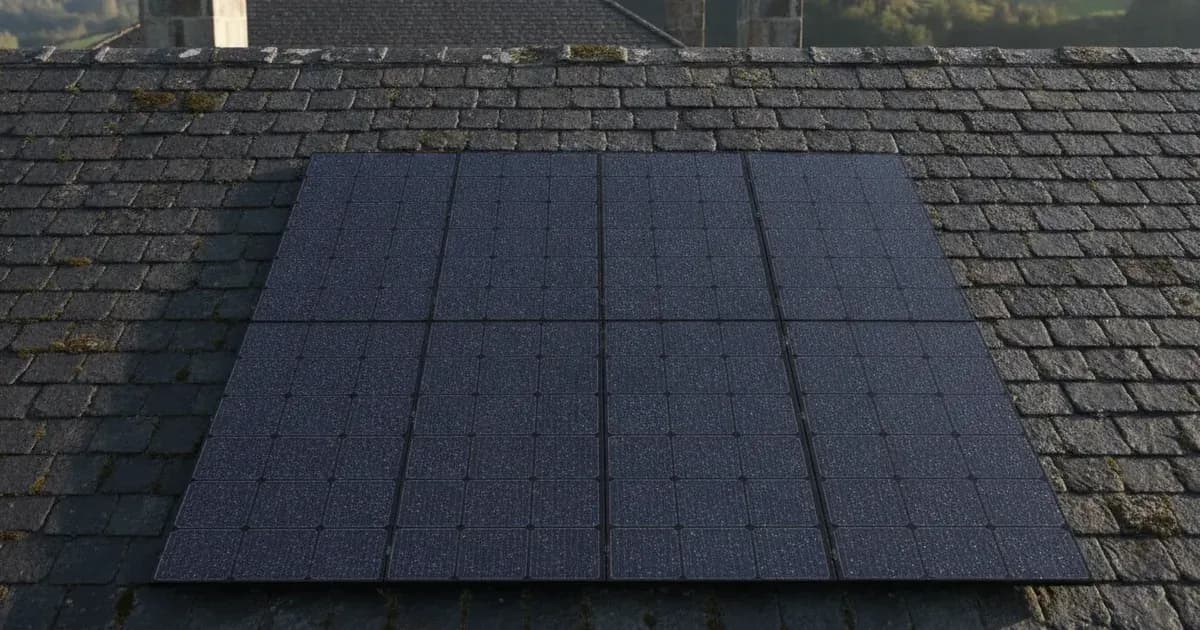
Traditional on-roof solar PV arrays—mounted on aluminum rail systems projecting from roof slopes—can disrupt the uniform sightlines of heritage streetscapes. Building-Integrated Photovoltaics (BIPV) offers an architectural alternative by integrating photovoltaic cells directly into the roofing material, replicating the texture, finish, and profile of traditional Welsh slate or plain clay tiles.
While BIPV products deliver significant aesthetic advantages, their deployment on historic properties introduces complex conservation challenges regarding fabric reversibility and listed building consent.
Statutory Planning Controls: Section 7 and Section 16 Duties
Works affecting designated heritage assets in England and Wales are governed by strict statutory duties:
Section 7 Alteration Controls
Under Section 7 of the Planning (Listed Buildings and Conservation Areas) Act 1990, no person shall execute or cause to be executed any works for the demolition of a listed building or for its alteration or extension in any manner which would affect its character as a building of special architectural or historic interest, unless the works are authorised.
Because fitting BIPV solar slates involves stripping existing roofing materials, the intervention constitutes a material alteration. Installing BIPV on a listed building without prior Listed Building Consent (LBC) is a criminal offense.
Section 16 Evaluation Duty
In determining an application for LBC, the local planning authority is legally bound by Section 16: in considering whether to grant listed building consent for any works the local planning authority or the Secretary of State shall have special regard to the desirability of preserving the building or its setting or any features of special architectural or historic interest which it possesses.
Conservation officers evaluate whether the loss of authentic historic roof tiles (such as 18th-century handmade pantiles or original Westmorland slate) is outweighed by public heritage benefits or reversible interventions.
Permitted Development Boundaries and Heritage Constraints
For unlisted properties located within designated heritage zones, the Town and Country Planning (General Permitted Development) (England) Order 2015 provides a clear legal framework:
Property / Installation Type | Planning Route & Statutory Basis | Key Dimensional / Legal Conditions |
|---|---|---|
Listed Building (Grade I, II*, II) | Listed Building Consent (LBC) required under Section 7 | Assessed under Section 16 preservation duty; criminal offense if unauthorised |
LLBCO Designated Property | Blanket Local Listed Building Consent Order | No individual LBC application needed if adhering to pre-approved specs |
Pitched Roof (Unlisted Property) | Permitted Development (GPDO Part 14) | Max 200mm projection from roof slope; cannot exceed roof ridge height |
Flat Roof (Unlisted Property) | Permitted Development (GPDO Part 14) | Equipment must not exceed 600mm above highest part of the roof |
Conservation Area / World Heritage | Permitted Development with restrictions | Strictly prohibited on walls/elevations fronting a public highway |
Conservation Area Restrictions
- Highway Frontage: If your property is in a conservation area, or in a World Heritage Site, panels must not be fitted to a wall which fronts a highway.
- Protrusion Threshold: On a pitched roof, panels should not be installed above the highest part of the roof (excluding the chimney) and should project no more than 200mm from the roof slope or wall surface. Because BIPV systems sit flush with adjacent tiles, they easily satisfy this 200mm limit.
- Flat Roof Height: On a flat roof the highest part of the solar PV equipment cannot be more than 600mm higher than the highest part of the roof (excluding chimney).
- Curtilage Exclusion: Development is not permitted if equipment is installed on a building within the curtilage of a listed building or on a scheduled monument.
General Amenity Conditions
Under statutory conditions, solar equipment must be sited, so far as practicable, to minimise its effect on the external appearance of the building and the amenity of the area, and must be removed as soon as reasonably practicable when no longer needed.
Local Listed Building Consent Orders and Fire Safety
To reconcile climate adaptation with heritage protection, government policy actively supports streamlined consenting routes:
Local Listed Building Consent Orders (LLBCOs)
As highlighted in the Department for Levelling Up, Housing and Communities historic homes review, Local Listed Building Consent Orders (LLBCOs) for solar panels and other measures provide a general grant of listed building consent for these works, removing the need to submit individual applications. When an LLBCO covers solar tiles, owners can proceed without bespoke listed building consent applications, provided works adhere to pre-approved specifications.
Historic England Fire Safety Standards
Historic England guidance on solar panels has been updated to include advice on mitigating the risk of fire. For BIPV installations where PV cells sit in close proximity to historic timber rafters and sarking felt, designs must incorporate non-combustible backing trays, DC rapid shutdown mechanisms, and robust ventilation cavities.
Frequently asked questions
What is Building-Integrated Photovoltaics (BIPV)?
BIPV refers to solar technologies, such as solar roof tiles or solar slates, that replace traditional building materials and integrate directly into the roof fabric.
Does installing BIPV solar roof tiles require Listed Building Consent?
Yes, replacing historic roof coverings with BIPV tiles alters the fabric and character of a listed building, requiring formal Listed Building Consent under Section 7.
How do local planning authorities evaluate BIPV on historic buildings?
Authorities are required under Section 16 of the Planning Act 1990 to have special regard to preserving the building's architectural interest, setting, and historic materials.
What are Local Listed Building Consent Orders (LLBCOs)?
LLBCOs provide blanket consent from local councils for specified solar installations on certain listed buildings, avoiding the need for individual applications.
Can in-roof solar tiles be installed under permitted development on unlisted homes?
On unlisted homes outside conservation areas, in-roof solar tiles qualify as permitted development provided they do not exceed the ridge height of the roof.
References
- Planning Listed Buildings and Conservation Areas Act 1990 Section 16 — accessed 28 August 2026
- Planning Listed Buildings and Conservation Areas Act 1990 Section 7 — accessed 28 August 2026
- GOV.UK Review of Adapting Historic Homes for Energy Efficiency — accessed 28 August 2026
- Planning Portal Domestic Solar Equipment Mounted Guidance — accessed 28 August 2026
- Town and Country Planning General Permitted Development Order 2015 Part 14 — accessed 28 August 2026
Related guides
More from what to buy — and how not to get cheated.