UK MCS 012 Solar Roof Mounting and Weathertightness Guide
Updated 15 September 2026 · By SolarNevs Research Desk, Dealer surveys + verified sources · 4 sources · Method ↗
Key Takeaways
- MCS 012 establishes rigorous testing standards for solar PV pitched roof mounting kits, certifying wind uplift resistance and weathertightness.
- Mounting fixings must preserve structural timber rafter integrity without cracking tiles or creating moisture ingress pathways.
- Installations must adhere to statutory fire safety standards outlined in Approved Document B Volume 1 for Dwellings.
- Contractors and property owners are legally bound to implement general fire precautions ensuring employee and premises safety.
- Co-located vehicle charging infrastructure operates under permitted development rules with a 1.6-metre upstand limit.
- Public EV infrastructure must meet national performance, maintenance, and payment availability rules.
Mechanical Loading and MCS 012 Performance Criteria
Pitched roof solar arrays face cyclic wind turbulence and negative suction pressures:
- Wind Uplift Testing: MCS 012 testing measures the maximum tensile force mounting brackets and roof hooks can withstand before yielding or pulling out of timber rafters.
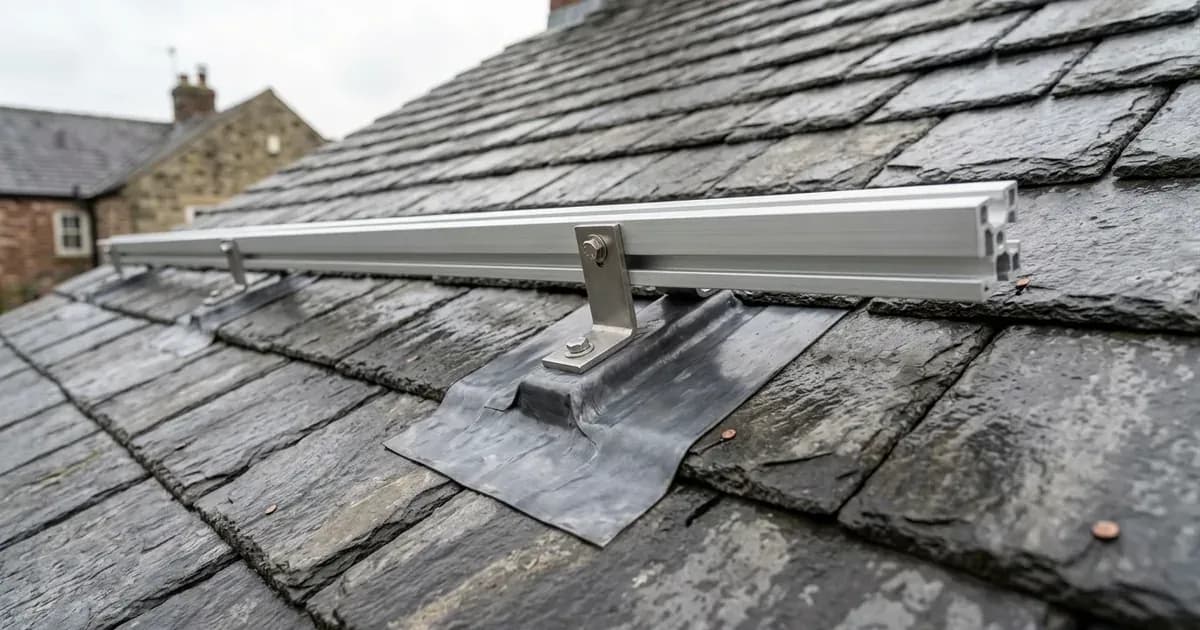
- Weathertightness Certification: Kits are subjected to dynamic driving rain and wind simulations to ensure flashing kits prevent moisture intrusion into the roof substructure.
- Timber Rafter Engagement: Fixings must achieve minimum embedment depths into structural rafters without splitting structural timber members.
Building Fire Safety Codes: Part B Compliance
Roof-mounted solar arrays form an integral part of the building external envelope:
- Statutory Guidance: Aligns with Approved Document B (fire safety) volume 1: Dwellings, 2019 edition incorporating 2020, 2022 and 2025 amendments.
- Employee Protection: Dutyholders must take such general fire precautions as will ensure, so far as is reasonably practicable, the safety of any of his employees; and.
- Premises Security: Obligates dutyholders to take such general fire precautions as may reasonably be required in the circumstances of the case to ensure that the premises are safe.
Co-Located Charging Infrastructure and Permitted Development
Solar installations often interface with electric vehicle charging amenities:
- Wall Recharging Outlets: Protects The installation, alteration or replacement, within an area lawfully used for off-street parking, of an electrical outlet mounted on a wall for recharging electric vehicles.
- Roadway Clearances: Units must not face onto and be within 2 metres of a highway.
- Upstand Permitted Scope: Covers The installation, alteration or replacement, within an area lawfully used for off-street parking, of an upstand with an electrical outlet mounted on it for recharging electric vehicles.
- Maximum Upstand Height: Confirms that upstands must not exceed 1.6 metres in height from the level of the surface used for the parking of vehicles;.
- Space Allocation Limit: Restricts development so it does not result in more than 1 upstand being provided for each parking space.
- Mandatory Reinstatement: Requires that the development is removed as soon as reasonably practicable; when decommissioned.
Automated and Electric Vehicles Act 2018 Mandates
Commercial or communal EV charging hubs connected to solar schemes must observe statutory accessibility rules:
- Statutory Imposition: Governed under Regulations may impose requirements on operators of public charging or refuelling points in connection with.
- Payment Standards: Regulates the method of payment or other way by which access to the use of public charging or refuelling points may be obtained;.
- Operational Availability: Mandates standards for performance, maintenance and availability of public charging or refuelling points;.
Frequently asked questions
What is the primary purpose of the MCS 012 mounting standard?
MCS 012 certifies pitched roof solar mounting kits for mechanical resistance against wind uplift and long-term weathertightness.
How does rooftop solar interact with building fire safety regulations?
Installations must comply with Approved Document B Volume 1 for Dwellings, ensuring roof coverings maintain fire resistance and prevent spread.
What statutory duty requires employers to maintain fire precautions during roofing works?
Dutyholders must take such general fire precautions as will ensure employee safety and ensure premises are safe.
What planning rules govern EV charging points co-located with rooftop solar?
Electrical upstands in off-street parking areas must not exceed 1.6 metres in height under permitted development orders.
What regulations apply to public charging points connected to solar schemes?
Regulations impose requirements regarding payment methods, performance, maintenance, and accessibility under the 2018 AEV Act.
References
- Building Regulations Approved Document B Volume 1 Dwellings — accessed 28 August 2026
- Regulatory Reform (Fire Safety) Order 2005 Article 8 Fire Precautions — accessed 28 August 2026
- Town and Country Planning (General Permitted Development) Order 2015 Part 2 — accessed 28 August 2026
- Automated and Electric Vehicles Act 2018 Section 10 — accessed 28 August 2026
Related guides
More from what to buy — and how not to get cheated.