UK School and Public Sector Decarbonisation Scheme PSDS Guide
Updated 16 September 2026 · By SolarNevs Research Desk, Dealer surveys + verified sources · 4 sources · Method ↗
Key Takeaways
- The Public Sector Decarbonisation Scheme (PSDS) provides grant funding to public sector bodies for heat decarbonisation and energy efficiency measures.
- The scheme targets a 75% reduction in public sector building emissions by 2037 compared to a 2017 baseline.
- Managed by Salix Finance, the scheme coordinates capital grants across schools, academies, hospitals, and local authority buildings.
- Funding supports heat decarbonisation plans through the companion Public Sector Low Carbon Skills Fund.
- Rooftop solar arrays are funded as indirect carbon reduction measures, while battery storage is classified as an enabling technology.
- Contractors must examine equipment and connection parameters to determine whether the DNO must be notified before or after installation.
Strategic Scheme Architecture
Local authorities and multi-academy trusts rely on structured funding to decarbonise complex estates:
Scheme Stream | Administering Body | Core Purpose & Deliverables | Geographic Eligibility |
|---|---|---|---|
PSDS (Decarbonisation Scheme) | Salix Finance | Capital grants for heat decarbonisation and energy efficiency | England & UK reserved public services |
LCSF (Low Carbon Skills Fund) | Salix Finance | Planning grants to produce site heat decarbonisation plans | England & UK reserved public services |
- Grant Support Mandate: The Public Sector Decarbonisation Scheme provides grants for public sector bodies to fund heat decarbonisation and energy efficiency measures.
- Statutory Emissions Objective: The Public Sector Decarbonisation Scheme supports the aim of reducing emissions from public sector buildings by 75% by 2037, compared to a 2017 baseline.
- Delivery Body Partner: The department’s delivery body, Salix Finance, manages the Public Sector Decarbonisation Scheme. Visit the Salix Finance site for more information about the scheme.
- Planning Grants: The Public Sector Low Carbon Skills Fund provides grants for public sector bodies to put in place a heat decarbonisation plan, providing them with information they need to develop future applications to the Public Sector Decarbonisation Scheme.
- Eligible Geographies: Both the Public Sector Decarbonisation Scheme and the Public Sector Low Carbon Skills Fund are open to public sector bodies in England and areas of reserved public services across the UK.
Multiannual Grant Deployment
Capital funding has expanded rapidly across multiple programme cycles:
- Phase 3 Capital: Phase 3 of the Public Sector Decarbonisation Scheme will provide over £1.425 billion of grant funding over the financial years 2022 to 2023 and 2025 to 2026, through multiple application windows.
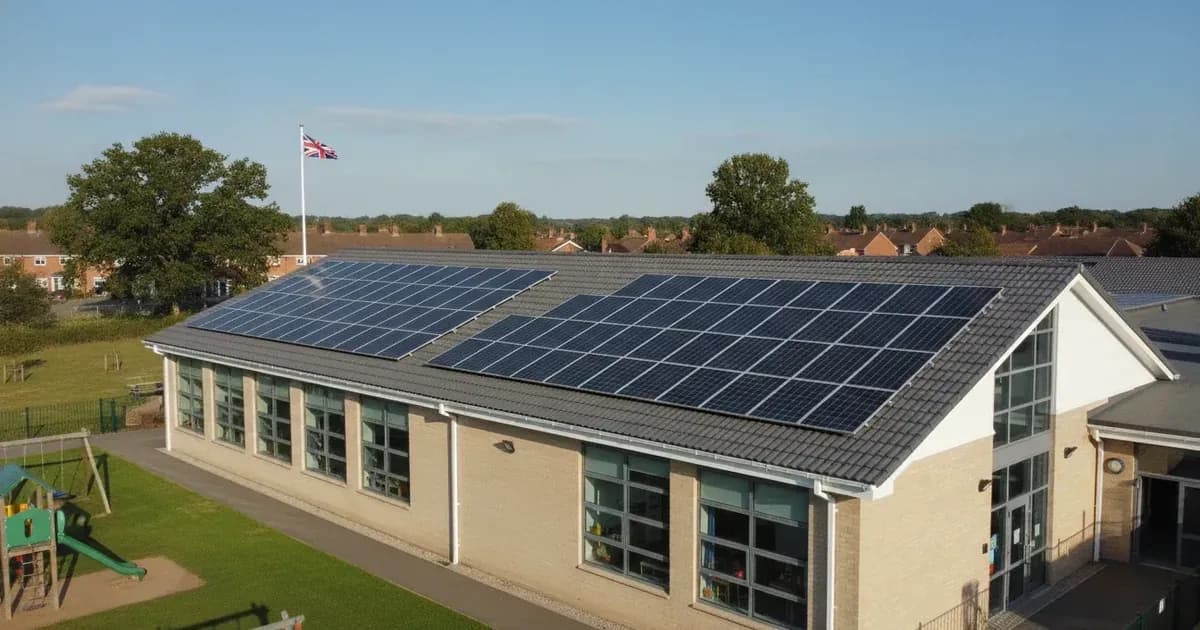
- Estate Transformation: Hundreds of public buildings across England have installed energy-saving solar panels thanks to a pioneering Government decarbonisation scheme.
- Educational and Public Reach: Schools, hospitals, libraries, town halls and more can boast an array of solar PV panels helping to power their sites, thanks to the Public Sector Decarbonisation Scheme .
- Net Zero Target: The scheme, delivered by Salix, was launched in 2020 aimed at supporting the UK’s efforts to reach net zero by 2050.
Technical Classification: Solar and Storage
Public sector proposals are assessed using structured technical categories:
- Indirect Emissions Savings: Measures that only save indirect carbon (typically electricity savings) such as Solar PV, LED lighting and energy efficient ventilation.
- Enabling Investments: Measures that do not save carbon but enable the installation of measures that do. This can include measures such as electrical infrastructure upgrades, metering, energy storage, etc.
- Solar PV installations generate zero-carbon electricity to run ventilation fans and heat pumps, drastically reducing operational grid import bills.
Distribution Network Operator Alignment
Grid integration requires strict compliance with statutory energy device rules:
- Contractor Assessment Duty: Installation contractors must examine the energy device and required connection to determine whether the Distribution Network Operator needs to be informed before or after installation.
Frequently asked questions
What is the main objective of the Public Sector Decarbonisation Scheme?
The PSDS provides capital grants for public sector bodies to fund heat decarbonisation and energy efficiency measures.
What carbon emissions target does the scheme support for public buildings?
It supports the aim of reducing emissions from public sector buildings by 75% by 2037, compared to a 2017 baseline.
Who manages the scheme on behalf of DESNZ?
Salix Finance manages the Public Sector Decarbonisation Scheme as the official delivery body.
What is the Public Sector Low Carbon Skills Fund?
It provides grants for public sector bodies to put in place heat decarbonisation plans needed for future PSDS applications.
What examination duty applies to installation contractors under grid rules?
Contractors must examine the energy device and connection to determine whether the DNO must be informed before or after installation.
References
- DESNZ Public Sector Decarbonisation Scheme Collection — accessed 28 August 2026
- Salix Finance Phase 3b Eligibility and Criteria Guidance — accessed 28 August 2026
- Salix Finance News Solar PV Deployment — accessed 28 August 2026
- DESNZ Guidance on Registering Energy Devices — accessed 28 August 2026
Related guides
More from what to buy — and how not to get cheated.