FranklinWH Meter Adapter Controller (MAC) Buying Guide: Specs and Setup
Updated 18 September 2026 · By SolarNevs Research Desk, Dealer surveys + verified sources · 1 source · Method ↗
Key Takeaways
- The FranklinWH Meter Adapter Controller (MAC) resolves combo panel integration constraints by inserting directly behind the utility revenue meter socket.
- Physical installation labor drops from approximately 4 hours for conventional panel rebuilds down to 20 minutes with the collar solution.
- By eliminating structural rewiring and additional generation subpanels, the MAC saves up to several thousand dollars in project costs.
- Certified under UL 1741, UL 1741 PCS, UL 3741, and IEEE 1547, the collar supports residential service entrances rated up to 200 A.
The Combo Panel Challenge
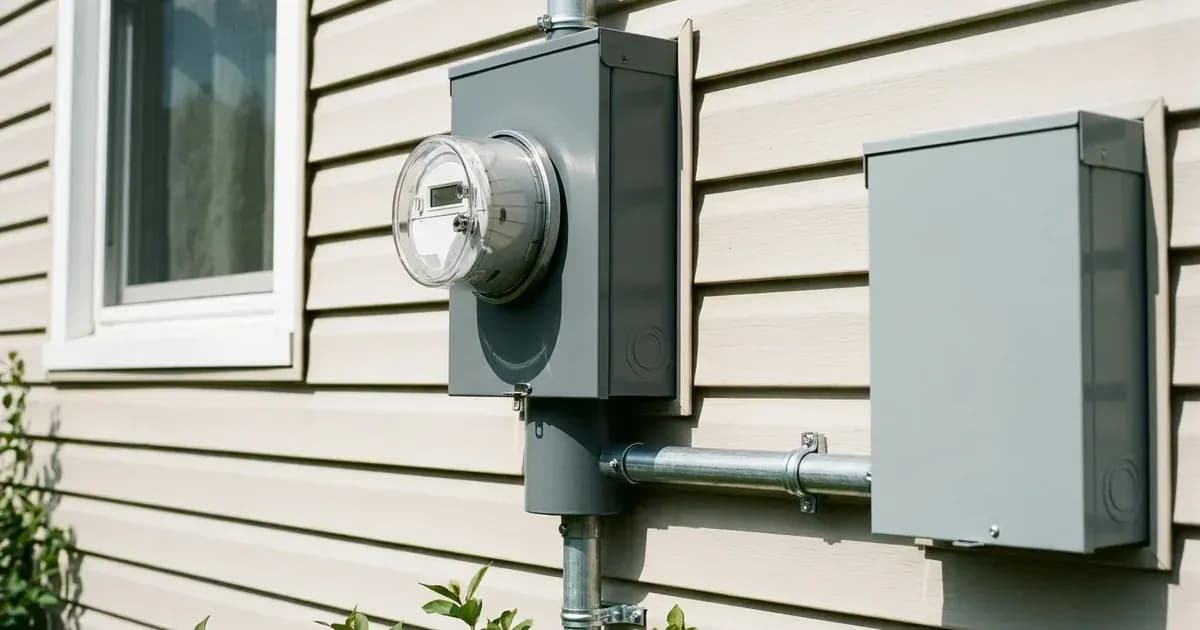
Throughout residential neighborhoods across the Western and Southwestern United States, homes are predominantly constructed with "all-in-one" meter-main combination panels. These assemblies house the utility revenue meter socket and the residential distribution busbars within a single shared metal enclosure.
In North America, combo-style electrical panels can pose great challenges for energy storage system integration, requiring costly and time-consuming panel modifications. Because the physical wiring between the meter socket and the main service breaker is encapsulated behind factory busbars, installers cannot land conventional microgrid transfer switches without cutting open the panel, rewiring branch circuits into a separate critical loads subpanel, or replacing the entire service entrance. When evaluating how to read a solar quote, unexpected panel rework often adds thousands of dollars in unexpected change orders.
The MAC Collar Architecture
The FranklinWH Meter Adapter Controller (hereafter referred to as MAC) is a game-changing solution where system integration is achieved by directly integrating its critical auxiliary modules with the electrical meter in the combo panel, avoiding panel overhauls and significantly reducing installation time and costs.
Rather than intercepting wiring downstream of the service breaker, the MAC sits directly behind the glass utility meter. The unit plugs into the existing meter jaws of the panel, and the utility meter plugs into the outer face of the MAC. Internal power contacts route grid electricity through the controller, allowing the system to monitor household energy flow and isolate the service entrance during grid failures.
When a power outage occurs, the compact MAC-based FranklinWH system automatically and seamlessly switches to backup power from the aPower battery, ensuring an uninterrupted power supply for your home. With its compact size, the MAC is easy and flexible to set up without the space constraints of larger products, making it ideal for tight stucco side-yards where wall space is constrained.
Labor & Installation Time Reductions
The primary economic advantage of the MAC architecture lies in the reduction of skilled electrician labor and physical balance-of-system hardware.
In a conventional retrofit on a combo panel:
- Traditional integration solutions require approximately 4 hours of electrical demolition, conduit bending, wire tracing, and breaker re-landing.
- Installers must add an external generation subpanel or rewire dozens of branch circuits.
With the FranklinWH meter collar:
- The MAC integration solution completes in approximately 20 minutes.
- By eliminating rewiring and the addition of a new panel, the MAC solution saves up to several thousand dollars in installation costs while ensuring an uncompromised energy management experience.
For homeowners reviewing adding a battery to existing solar, avoiding panel replacement shortens project timelines and dramatically lowers installation disruption.
Technical Sizing & Service Panel Limits
Electrical compatibility must match local residential service characteristics. The MAC is engineered with specific ampacity boundaries:
- Installation compatibility: Approved for use with main service panels up to 200 A.
Because 200 A represents the standard service size for modern American single-family construction, the MAC accommodates the vast majority of suburban single-family residences without requiring service derating. During grid operation, full 200 A utility current passes transparently through the adapter. When solar generation or battery storage is active, the internal power control system regulates current injection to maintain code compliance.
Warranty & Regulatory Standards
Because utility meter collars interface directly with utility-owned revenue meters and premises wiring, compliance with national electrical safety and utility standards is mandatory. The MAC is thoroughly certified:
- Safety Standards: UL 1741, UL 1741 PCS, UL 3741, CSA C22.2 No.107.1-16.
- Grid Interconnection Standards: IEEE 1547, IEEE 1547.1.
- Electromagnetic Compatibility: FCC Part 15 Class B, ICES-003.
- Consumer Health Disclosure: California Proposition 65.
The listing under UL 1741 PCS certifies the device as an intelligent Power Control System, allowing it to dynamically limit backfeed current to prevent service panel overloading. Listing under UL 3741 satisfies photovoltaic rapid shutdown requirements.
UTILITY METER INTERCONNECTION & ARC FLASH SAFETY Interfacing behind utility revenue meters involves working with unmetered utility service entrance conductors that cannot be de-energized by an internal building breaker. Meter removal and collar installation must only be conducted after obtaining utility authorization and service pull permits. Electricians must wear appropriate NFPA 70E personal protective equipment (PPE) and use insulated tools to prevent fatal arc-flash incidents.
When property owners evaluate how long solar batteries last and how hardware components age, warranty protections are essential. FranklinWH provides an industry-leading 15-year warranty, demonstrating meticulous engineering for extraordinary longevity and rock-solid reliability. For homes equipped with difficult combo panels, pairing the MAC with the best solar batteries offers an efficient path to whole-home backup.
Frequently asked questions
What is the FranklinWH Meter Adapter Controller (MAC)?
The MAC is a compact meter collar hardware device that plugs directly between the utility revenue meter and a combo service panel, providing energy storage integration without requiring panel overhauls.
How much installation time does the FranklinWH MAC save?
The MAC integration solution installs in approximately 20 minutes, compared to traditional electrical panel rewiring and subpanel installations that typically require 4 hours of labor.
What is the maximum electrical service panel size supported by the MAC?
The FranklinWH MAC is approved for installation on main electrical service panels rated up to 200 A.
What safety and grid standards does the FranklinWH MAC satisfy?
The MAC is listed under UL 1741, UL 1741 PCS, UL 3741, CSA C22.2 No.107.1-16, IEEE 1547, IEEE 1547.1, FCC Part 15 Class B, and ICES-003.
References
- FranklinWH Meter Adapter Controller (MAC) Overview & Specifications — accessed 16 September 2026
Related guides
More from what to buy — and how not to get cheated.