Adding a Battery to Existing Solar: AC vs DC Coupling
Updated 17 September 2026 · By SolarNevs Research Desk, Dealer surveys + verified sources · 2 sources · Method ↗
Key Takeaways
- Retrofitting is routine, not exotic — AC-coupled batteries attach to any existing grid-tied system, any age, any brand.
- AC coupling = simplicity (own inverter, bolt-on) at a small efficiency toll; DC coupling = efficiency when you're replacing the inverter anyway.
- The quiet retrofit risks are paperwork-shaped: interconnection re-review and tariff grandfathering deserve a call before any contract.
- Decide backup or self-consumption up front — islanding hardware and subpanels are the cost fork.
Why retrofits became boring (good)
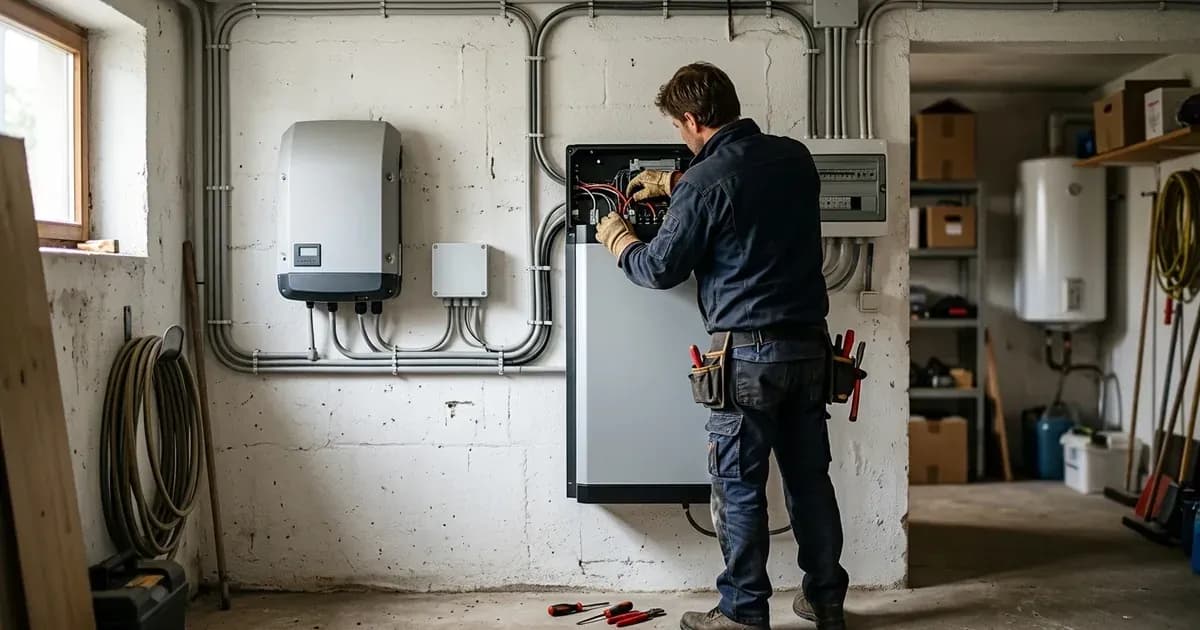
The sequencing this site keeps recommending — panels first, storage when the tariff says so — only works because adding a battery later is genuinely easy now. The industry solved it with AC coupling: the battery ships with its own inverter, connects on the house side like a major appliance, and coexists with your existing solar inverter without caring who made it or when. Your panels keep doing exactly what they always did; the battery watches the meter and absorbs what would have exported.
The two architectures, honestly compared
| AC-coupled | DC-coupled |
|---|---|---|
How it connects | Own inverter, house-side bolt-on | Shares a hybrid inverter with panels |
Fits existing systems | Any, regardless of age/brand | Best when replacing the inverter anyway |
Efficiency | Small double-conversion loss (DC→AC→DC→AC) | Single conversion — a few percent better |
Complexity of retrofit | Low — the default choice | Higher — inverter surgery |
When it wins | Almost every retrofit | Inverter end-of-life, or new installs |
Standard architecture trade-offs; the kW/kWh specs matter identically in both.
The rule of thumb writes itself: retrofit = AC-coupled, unless your string inverter is approaching its mid-life replacement — the one component swap our how-solar-works primer tells every owner to expect — in which case a hybrid inverter plus DC-coupled battery turns two projects into one.
The checklist before anyone drills
- Name the job. Self-consumption only (cheapest, simplest) or outage backup (adds islanding gear and usually an essential-loads subpanel — the sizing question our battery-count guide handles).
- Call the utility first. Retrofits can trigger interconnection re-review, and some utilities use the moment to migrate you off grandfathered net-metering terms. If you hold a legacy tariff — increasingly the most valuable thing a solar household owns — confirm in writing that storage doesn't forfeit it.
- Audit panel and placement. Main-panel capacity, a shaded conditioned wall (heat ages cells — the lifespan lever), and conduit paths set the labor half of the quote.
- Check monitoring unification. Two inverters means two apps unless the battery's platform ingests the solar data — a convenience question worth one showroom minute.
- Permit like new work. Storage retrofits are permitted electrical installations with inspection; a bid that waves that away is telling you about its other corners.
The retrofit's strategic meaning
An easy retrofit path changes when to buy more than whether. Your first solar year generates the data — real export volumes, real evening consumption, real outage count — that turns storage from a guess into a measured purchase. Buy the battery your meter demonstrates, on the architecture your inverter's age dictates, under the tariff terms you've confirmed survive the addition. The households disappointed by storage are overwhelmingly the ones who bought it as an accessory; the satisfied ones bought it as a solution to a leak they'd already measured.
Frequently asked questions
Can I add a battery to my existing solar system?
Almost always, yes. AC-coupled batteries carry their own inverter and attach to any grid-tied system regardless of age or brand; DC-coupled retrofits make sense when your string inverter is due for replacement anyway.
What's the difference between AC and DC coupling?
AC-coupled batteries convert power at their own inverter — simple retrofit, slight double-conversion loss. DC-coupled batteries share a hybrid inverter with the panels — more efficient, but a bigger surgery on an existing system.
Will adding a battery affect my net metering agreement?
It can — some utilities re-review interconnection or move retrofitted homes to newer tariffs. Check before you sign anything; grandfathered terms are worth protecting.
Does a retrofit battery give me backup power?
Only if the installation includes islanding hardware and, usually, an essential-loads subpanel. Self-consumption-only retrofits are simpler and cheaper — decide which product you're buying first.
References
- US DOE – Grid-connected renewable energy systems — accessed 5 August 2026
- NREL – Energy storage research — accessed 5 August 2026
Related guides
More from sizing, net billing & installation.