How Do Solar Panels Work? Explained Simply
Updated 17 September 2026 · By SolarNevs Research Desk, Dealer surveys + verified sources · 3 sources · Method ↗
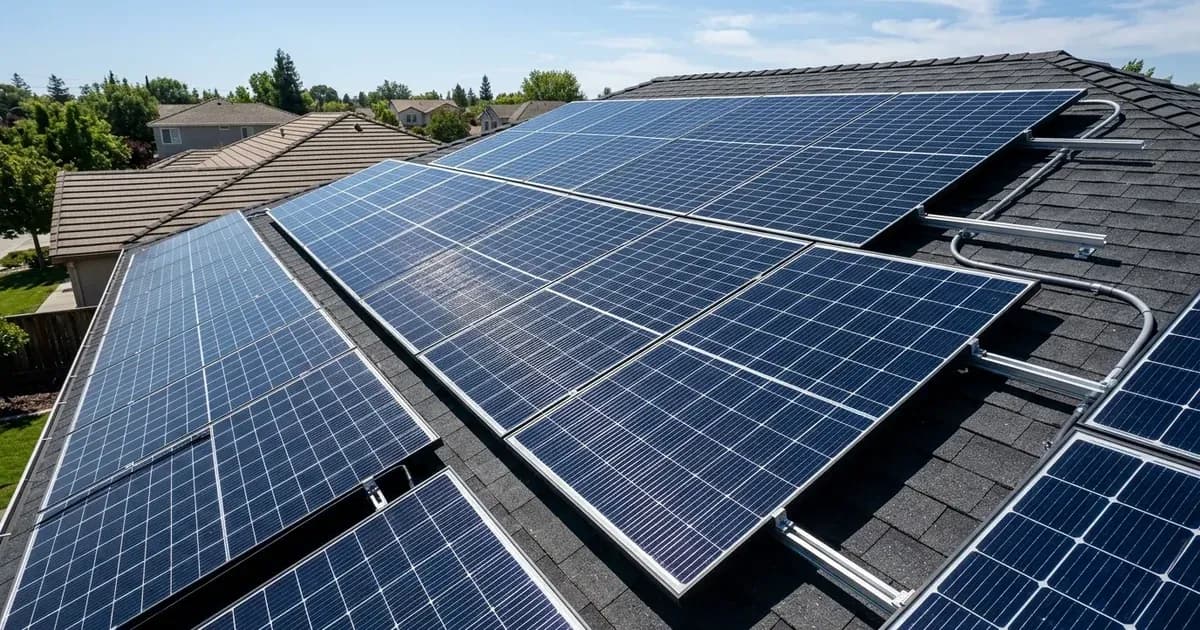
Key Takeaways
- Sunlight arrives as photons; silicon cells convert their energy into moving electrons — electricity — via the photovoltaic effect.
- Panels make DC power; an inverter converts it to the AC your home and the grid use.
- Panels don't store anything: power is used, exported, or lost the instant it's made, which is why batteries and net metering matter.
- The whole chain has no moving parts — the reason solar systems routinely outlast their 25-year warranties.
Step 1: Sunlight hits silicon
Sunlight is a stream of energy packets called photons. A solar panel's working layer is a wafer of silicon — the Department of Energy notes a cell is often thinner than four human hairs — treated so that its two faces have opposite electrical personalities. When a photon strikes the silicon, it transfers its energy to an electron, kicking it out of its fixed position. In DOE's phrasing, the photovoltaic effect is exactly this: light creating voltage by knocking electrons "into a higher state of energy" where they can move.
One cell produces only a trickle, so manufacturers wire dozens into a module (the panel on your roof), and installers wire panels into arrays. Everything else in the system exists to collect, convert, and count what the silicon produces.
Step 2: The field gives the electrons a direction
Loose electrons alone aren't electricity — they need to flow one way. That's the job of the cell's built-in electric field, created where the two differently-treated silicon layers meet. The field acts like a one-way valve: freed electrons are pushed toward the cell's metal contacts, funneled into wiring, and sent off the roof as direct current (DC). No combustion, no turbine, no moving parts — the panel just sits there converting light into current at the atomic level, silently, for decades.
Step 3: The inverter makes it household power
Your home, your appliances, and the grid all run on alternating current (AC), so between the roof and your breaker panel sits the system's one genuinely busy component: the inverter. It converts DC to AC, matches the grid's voltage and frequency, shuts the system down instantly if the grid goes dark (a safety requirement), and usually hosts the monitoring app that tells you what your roof did today. Whether it's one central unit or micro-inverters under each panel, this is the component that turns physics into usable power — and the one most likely to be replaced once during the system's life.
Step 4: The meter does the accounting
From the breaker panel, solar power follows the path of least resistance: your running appliances consume it first, and any surplus flows out through your meter to the grid. What that exported surplus is worth — full retail credit, a discounted rate, or something hourly — is set by your utility's net metering or net billing policy, not by the hardware. At night the flow reverses and you buy grid power as usual, unless a battery has banked the day's surplus.
Component | Job | Failure profile |
|---|---|---|
Panels (cells → modules → array) | Convert light to DC | Decades; gradual output decline |
Inverter | DC → AC, safety, monitoring | The one mid-life replacement to expect |
Meter / utility tariff | Values your surplus | Changes by policy, not wear |
Battery (optional) | Stores surplus for later | Chemistry-dependent lifespan |
Component roles per DOE solar basics; policies vary by utility.
The misconceptions worth retiring
"Panels store power." They don't — generation is instantaneous. Storage is a battery's job, and most US systems still run without one.
"They need heat." They need light. Cool, bright days are ideal; heat actually reduces silicon's efficiency slightly, which is why panels are rated at a standard test temperature.
"Cloudy means zero." Diffuse light still generates — reduced, not eliminated. (We cover night, clouds, and winter in their own guides.)
"It's complicated to run." There is nothing to run. The system's owner-facing surface is a phone app and, once a year, a glance at the panels to see if they need a rinse.
The elegance is the point: a slab of engineered sand turns daylight into your dishwasher's power supply through nothing but physics, and the only decision left to the household is what to do with the surplus.
Keep reading: solar at night · cloudy-day output · winter and snow.
Frequently asked questions
How do solar panels work in simple terms?
Sunlight carries energy in packets called photons. When photons hit the silicon in a solar cell, they knock electrons loose, and the cell's internal electric field pushes those electrons in one direction — that flow is electricity. An inverter converts it to the AC power your home uses.
What is the photovoltaic effect?
The creation of voltage in a material exposed to light — photons boost electrons to a higher energy state so they can leave their positions and join an electrical circuit, as the Department of Energy describes it.
Do solar panels store electricity?
No. Panels generate in real time; power is used immediately, exported to the grid, or stored in a separate battery. A panel with no load simply doesn't collect anything.
Why do solar panels need an inverter?
Cells produce direct current (DC), while homes and the grid run on alternating current (AC). The inverter converts DC to AC and manages voltage, safety shutoff, and monitoring.
References
- US DOE – How Does Solar Work? — accessed 5 August 2026
- US DOE – Solar Photovoltaic Technology Basics — accessed 5 August 2026
- NREL – Solar Research — accessed 5 August 2026
Related guides
More from sizing, net billing & installation.