Solar Panel Kits: What's in the Box and Who They Fit
Updated 16 September 2026 · By SolarNevs Research Desk, Dealer surveys + verified sources · 2 sources · Method ↗
Key Takeaways
- A kit is matched components in one box — panels, inverter/charge controller, racking, wiring — with the design decisions made for you.
- Kits shine exactly where projects are self-contained: sheds, RVs, campers, cabins, balconies. They dilute where projects are mostly paperwork and electrical work: whole homes.
- The box never includes the hard parts of grid-tied solar: permits, interconnection, panel upgrades, inspections.
- Buy by daily kWh of the job, not by wattage vanity — the sizing math from our sizing guides applies at every scale.
What a kit actually is
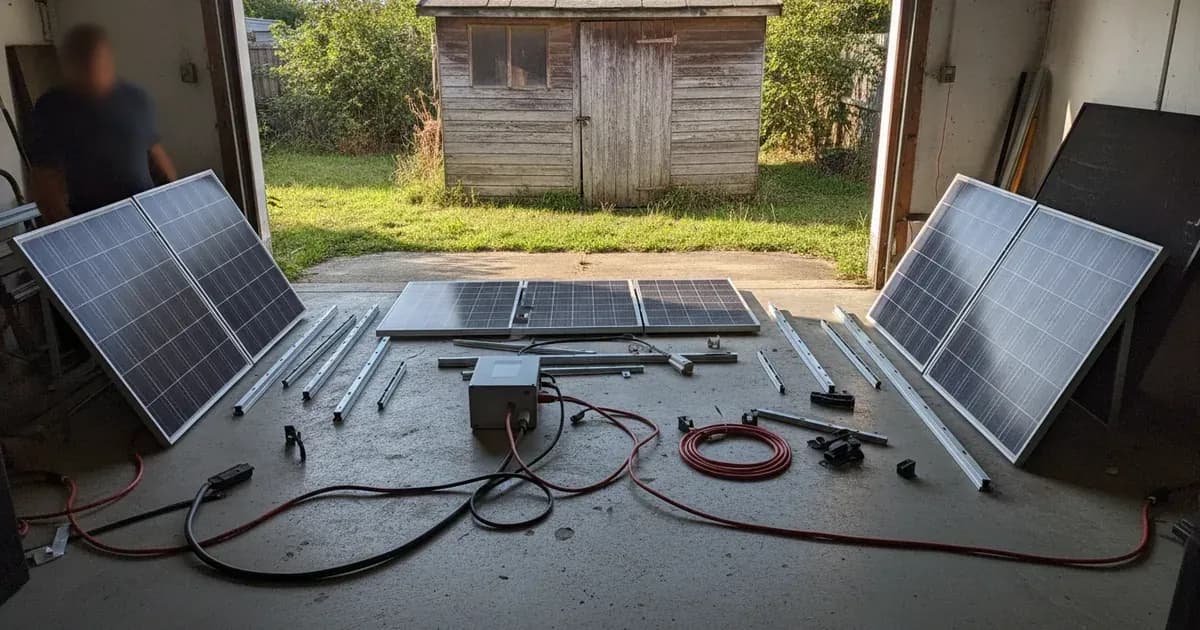
Strip the marketing: a solar kit is a bill of materials someone competent already reconciled. Panels whose voltage suits the included controller; an inverter sized to the array; racking that fits those exact frames; connectors crimped to the right gauge. For the buyer, the kit's real product is compatibility — the elimination of the failure mode where four individually fine components meet in a garage and disagree.
The box varies by mission. Off-grid kits pair panels with a charge controller (often bundled with or sized for batteries) — the shed, cabin, and RV lineage. Grid-tie kits center on grid-legal inverters and roof racking — hardware-complete, paperwork-empty. Portable/folding kits trade permanence for a kickstand. Battery-included versions of each exist; most kits leave storage as the deliberate à-la-carte item, since battery needs diverge fastest between buyers.
Where kits are genuinely the right answer
Job | Why the kit fits |
|---|---|
Shed / workshop power | Self-contained, off-grid, no permits in most rural settings — the archetypal kit project |
RV, van, camper | 12/24 V ecosystems where matched components matter most — see our RV solar guide |
Off-grid cabin | Kit-plus-batteries is the standard recipe; steep-tilt mounting for snow country |
Balcony / plug-in setups | Small, renter-friendly; check local utility rules on plug-in generation |
Battery/generator recharging | 100–400 W trickle tiers exist precisely for this |
Learning solar hands-on | The best classroom that also powers something |
The common thread: projects where you own the whole electrical scope.
For all of these, the alternative to a kit is amateur systems integration — and the kit wins on error rate alone. Sizing follows the same arithmetic as everything on this site: the job's daily kilowatt-hours, divided by honest panel-day output (our per-panel and kW-vs-kWh guides), with a margin for weather if batteries depend on it.
Where kits mislead: the whole-house dream
The seductive pitch — "a home's worth of solar, one checkout" — founders not on hardware but on everything around it. A grid-tied home system is a permitted electrical installation interconnected with a utility: plan review, code-compliant wiring (licensed work in many jurisdictions), a possible service-panel upgrade, inspection, and an interconnection agreement before the meter spins backward. The kit delivers none of that, and those line items — not panel prices — dominate modern residential solar costs. A capable DIYer in a permissive jurisdiction can run this gauntlet and save real money; the realistic median buyer discovers the kit was 40% of the project wearing 100% of the box.
The honest decision rule: if the project ends at your own battery or an outlet, the kit is probably the whole answer. If it ends at the utility's meter, the kit is a parts discount inside a professional-scale project — price the whole project first (our worth-it and cost guides), then decide whether the discount survives contact with your jurisdiction.
Buying checklist, whatever the size
- Start from daily kWh, not watts — the mission defines the machine.
- Check the controller/inverter headroom — expansion room costs little now, everything later.
- Verify the mounting matches your surface — roof rail, ground rack, and RV glue-down are different planets.
- Price the missing pieces — batteries, cabling runs, fusing; the box's gaps are where budgets slip.
- Read the fine print on grid legality — plug-in and grid-tie kits live under utility and code rules that vary by state; our policy guides map the landscape.
The kit is one of solar's genuinely good products — a compatibility guarantee with a handle on top. Just buy it for the jobs it finishes, not the ones it merely begins.
Frequently asked questions
What comes in a solar panel kit?
Typically panels, an inverter or charge controller, mounting hardware, and pre-terminated wiring — matched components in one purchase. Batteries are included in some off-grid kits and sold separately in most others.
Are solar panel kits worth it?
For small, self-contained jobs — sheds, RVs, campers, cabins, balcony setups — emphatically: matched components without design work. For whole-house grid-tied solar, the kit saves hardware money but not the permitting, interconnection, and electrical work that dominate the project.
Can I legally install a solar kit myself?
Off-grid and plug-in setups on your own property, generally yes within local rules. Grid-tied systems require permits, code compliance, utility interconnection agreements, and in many jurisdictions licensed electrical work regardless of who mounts the panels.
What size kit should I buy?
Size to the job's daily kWh: our sizing guides walk the math. Common tiers run 100–400 W for trickle jobs, 1–2 kW for camper/shed life, and 5 kW+ for cabins and serious off-grid.
References
- US DOE – Solar Photovoltaic Technology Basics — accessed 5 August 2026
- NREL – PVWatts Calculator — accessed 5 August 2026
Related guides
More from what to buy — and how not to get cheated.