Kansas Evergy Solar Interconnection and Safety Standards Guide
Updated 19 September 2026 · By SolarNevs Research Desk, Dealer surveys + verified sources · 1 source · Method ↗
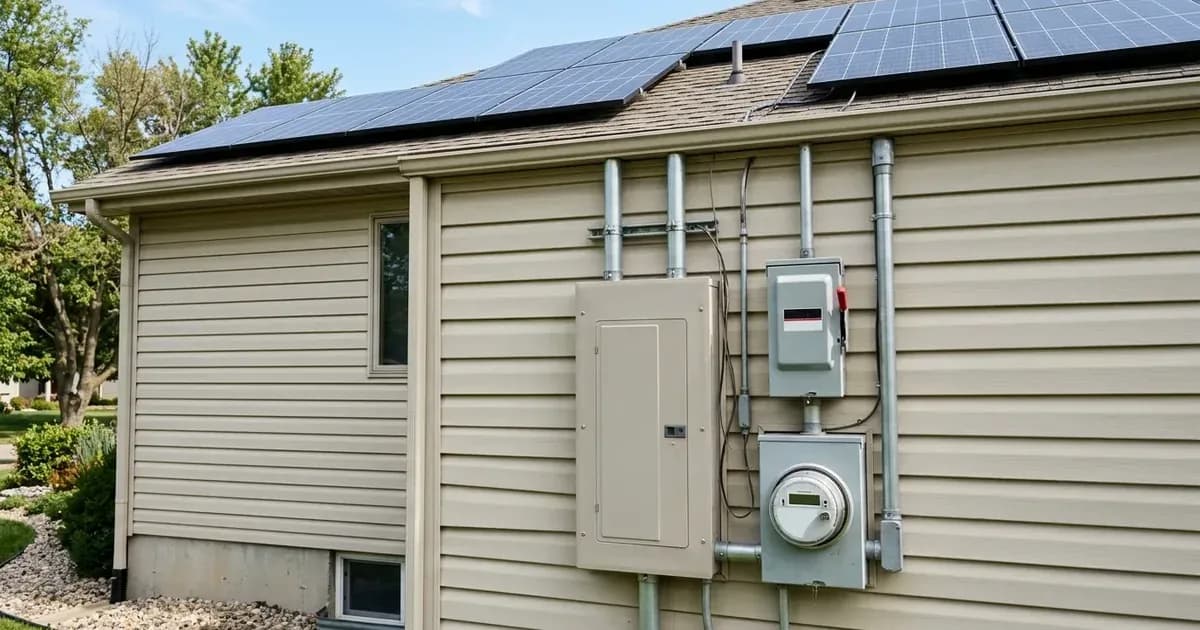
Connecting a solar energy system to the grid in Kansas, particularly within Evergy's service territory, involves adherence to specific state statutes and utility requirements. These rules ensure the safe and reliable operation of your distributed energy system in parallel with the utility grid. This guide outlines the key interconnection and safety standards you need to know.
General Interconnection Requirements
Parameter / Provision | Statutory Rule (K.S.A. 66-1,184) | Operational & Technical Standard |
|---|---|---|
Application Review Window | 90 Calendar Days | Utility approval or denial timeline from receipt of application |
System Sizing Factor | 0.144 Capacity Factor | Sized via 12-month usage / (8,760 × 0.144) or 7.15 kWh/sq ft default |
Equipment Safety Standard | Listed Device Standard | Must be certified to applicable IEEE safety standards |
Manual Disconnect Switch | Utility Accessible | Switch/breaker accessible by utility at meter at all times |
Export Limiter Failsafe | 15-Minute Threshold | Must cease operation if limit exceeded for > 15 minutes in a single event |
Noncompliance Cure Period | 90-Day Notice | Utility must provide 90 days to cure non-emergency deficiencies |
Export Compensation Floor | ≥ 100% Avoided Cost | Paid or credited at monthly avoided cost (LMP rules expire July 1, 2030) |
In Kansas, every utility providing retail electric service must enter into a contract for parallel generation service with customers in good standing. This contract authorizes you to connect a listed device for exporting excess electrical power to the utility's system.
Your distributed energy system must be designed to prevent damage to the utility's system or equipment and must not present an undue hazard to utility personnel.
Application and Approval Process
Before connecting your system, Evergy may require you to submit an application. This application helps the utility verify that your system is constructed, installed, and operated according to all applicable standards and codes.
- Review Period: A utility shall approve or deny any such application or a request for system certification pursuant to such an application within 90 calendar days following receipt of such application or request.
- Studies and Delays: If additional studies are required, the 90-day deadline does not apply. The utility will provide an estimated timeframe and act as soon as practicable after studies are completed.
- Denial: If your application is denied, the utility must provide a list of reasons for the denial and outline the corrective actions needed for approval.
Interconnection Costs
Utilities may assess certain costs for interconnection:
- Application Fee: A fair and reasonable nonrefundable interconnection application fee may be charged.
- Study Costs: Any applicable costs incurred by the utility for studies to verify and allow the requested export capacity to be interconnected.
- System Upgrades: Costs associated with any related system upgrade costs, devices, and equipment required to be furnished by the utility for accepting the requested export capacity.
System Sizing
Your renewable energy system's export capacity must be appropriately sized for your anticipated electric load. For customers in an investor-owned utility's service territory like Evergy, this is calculated by dividing your historic consumption in kilowatt-hours for the previous 12-month period by 8,760, then dividing that quotient by a capacity factor of 0.144. If historic data is unavailable, a default of 7.15 kilowatt-hours per square foot of conditioned space is used. The final amount is rounded up to the nearest one kilowatt alternating current power increment.
Equipment Standards and Safety
All equipment used for parallel generation must be "listed." A listed device means that the device or equipment has been tested and certified to meet the institute of electrical and electronics engineers safety standards that specifically pertain to the intended function of the device or equipment.
Disconnect Switches and Accessibility
The utility may install, own and maintain a disconnecting device located near the electric meter or meters or may require that a customer's distributed energy system contain a switch, circuit breaker, fuse or other device or feature that may be accessed by the utility at any time and would provide an authorized utility worker the ability to manually disconnect the customer's distributed energy system from the utility's electric distribution system.
Interconnection facilities between your equipment and the utility's equipment must be accessible at all reasonable times to utility personnel.
Witness Tests and Certifications
Before initial energizing and start-up testing, you must notify the utility. Prior to granting permission to operate, the utility may require:
- A witness test of your distributed energy system and interconnection facilities.
- A certificate of inspection from a licensed electrician or electrical engineer, or documentation that the system was installed under the direction of a NABCEP certified person or a licensed master electrician or electrical contractor.
- The utility may also periodically require witness tests throughout the service period.
Export-Limiting Devices
If your system uses an export-limiting device, you are responsible for owning and maintaining it. Protections shall be in place to restrict the export-limiting device settings to qualified persons. The utility has the option to require a witness test of the device's functions or settings before granting permission to operate and at any time while the system is connected. You must allow the utility to perform these periodic witness tests upon request.
Safety Warning: If the export-limiting device's functions or settings are incorrect or if the device fails to limit the export of power below the designed export capacity for more than 15 minutes in any single event, you shall cease operation of the system until repair or reprogramming of the export-limiting device is completed. The utility may require a witness test before authorizing you to resume operation. The utility cannot restrict the brand or model of the export-limiting device if it is approved by the manufacturer of a listed distributed energy system or is listed to perform such operations.
Utility Disconnection Rights
Evergy has the right and authority to disconnect and isolate your distributed energy system without notice and at its sole discretion under specific circumstances:
- Electric service to your premises is discontinued for any reason.
- Adverse electrical effects, such as power quality problems, are occurring or are believed to be occurring on the utility's system or the electrical equipment of other utility customers.
- Hazardous conditions on the utility's system are occurring or are believed to be occurring as a result of the operation of the distributed energy system or protective equipment.
- The utility identifies uninspected or unapproved equipment or modifications to the distributed energy system after initial approval.
- There is recurring abnormal operation, substandard operation, or inadequate maintenance of the distributed energy system.
- You fail to remit payment to the utility for any amounts owed.
- Such disconnection is necessary due to emergency or maintenance purposes.
If you do not comply with the obligations of the interconnection agreement, and it is not an emergency situation, the utility must give you 90 days to cure the noncompliance before disconnecting your system.
System Repair and Replacement
You have the right to repair or rebuild your distributed energy system with listed equipment, provided such repair or rebuilding does not cause an increase in export capacity. If you repair or replace a system, you must notify the utility prior to such action and provide proof that the new equipment complies with the same rules, regulations, and approved capacity as the original installation. The utility has the right to require and conduct a witness test before authorizing operation of the repaired or replaced system. A new parallel generation service application is not required for such repairs or replacements.
Compensation for Exported Energy
Kansas statutes require fair and equitable compensation for energy exported to the utility. This compensation shall be not less than 100% of the utility's monthly avoided cost. Alternatively, a utility may use locational marginal price or the monthly system average cost of energy per kilowatt hour to determine compensation, which must be paid or credited to your account at least annually. The provisions allowing locational marginal price or monthly system average cost of energy per kilowatt hour compensation are set to expire on July 1, 2030. You also have the option of utilizing the net metering and easy connection act.
Frequently asked questions
What is a 'listed device' for solar interconnection in Kansas?
A 'listed device' means that the equipment has been tested and certified to meet the institute of electrical and electronics engineers safety standards that specifically pertain to the intended function of the device or equipment.
How long does Evergy have to approve a solar interconnection application?
Evergy, as a utility, shall approve or deny any such application or a request for system certification pursuant to such an application within 90 calendar days following receipt of such application or request. If additional studies are required, this deadline may be extended.
Can Evergy disconnect my solar system without notice?
Yes, Evergy has the right and authority to disconnect and isolate a customer's distributed energy system without notice and at utility's sole discretion under several conditions, including hazardous conditions, unapproved equipment, or service discontinuation.
What are the requirements for a solar system's disconnect switch?
The utility may install, own and maintain a disconnecting device located near the electric meter or meters or may require that a customer's distributed energy system contain a switch, circuit breaker, fuse or other device or feature that may be accessed by the utility at any time and would provide an authorized utility worker the ability to manually disconnect the customer's distributed energy system from the utility's electric distribution system.
What happens if my export-limiting device malfunctions?
If the export-limiting device's functions or settings are incorrect or if the device fails to limit the export of power below the designed export capacity for more than 15 minutes in any single event, the customer shall cease operation of the system until repair or reprogramming of the export-limiting device is completed.
References
- K.S.A. 66-1,184 — accessed 26 August 2026
Related guides
More from schemes, subsidies & financing.